Havana/A decree with the signing of the Prime Minister, Manuel Marrero Cruz, assumed – unilaterally – an old litigation between Cuban Freemasonry and the State: the dispute for the property of several floors and offices of the Grand Lodge of Cuba, located in the Havana, confiscated by Fidel Castro in 1961 and who today occupy several state institutions.
Cuban masons asked for explanations about the document, which has circulated in several social media groups and profiles. According to Grand Master Mayker Filema Duarte, who met the official Carlos Mayo, of the Council of Ministers, the decree was leaked before being officially sent to the Masonic authorities.
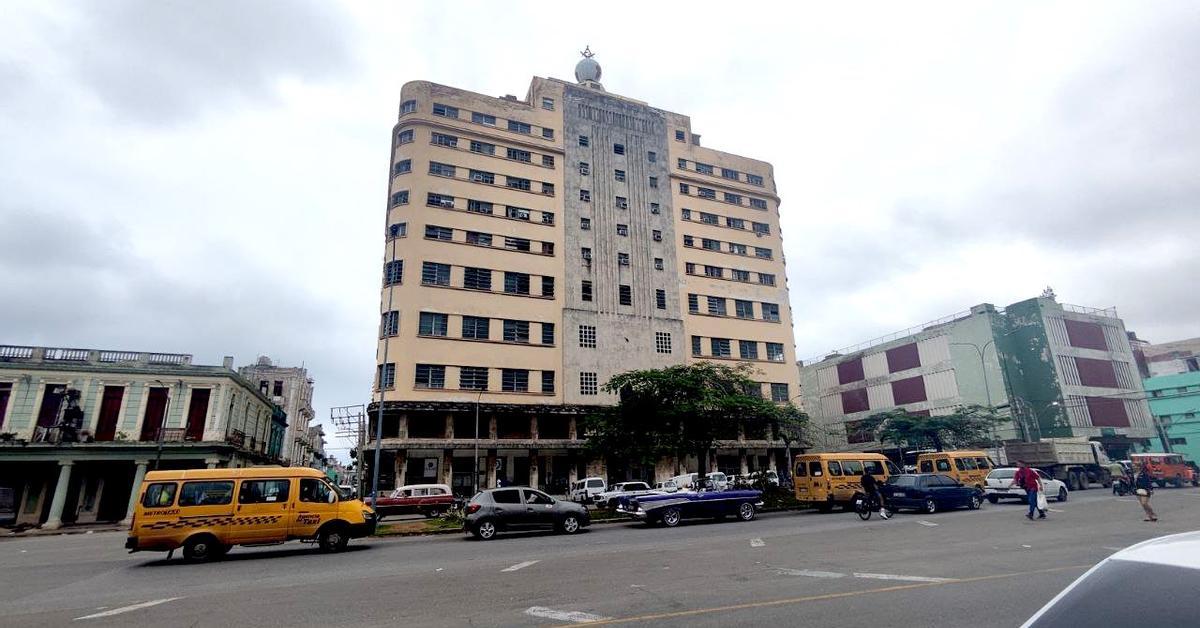
Inaugurated in 1955, the headquarters of Cuban Freemasonry – one of the most emblematic buildings of the capital, on Carlos III Avenue – suffered the onslaught of the Urban Reform Law and lost the plants 8, 9 and part of the 10, corresponding To the National Masonic University, in addition to 6 and 7, all of them now in possession of the monopoly of Etecsa communications.
In addition, the Grand Lodge houses offices of the Post Office on the ground floor, and the Communications Protection Services Company (SEPCOM), although they pay a rental “as a means of self -support” for the Masons, unlike Etecsa , that does hold the property of the confiscated floors.
Marrero invokes a request from the Department of Attention to Religious Institutions and Fraternal Associations – the correlation in the Minister of the Almighty Office of Religious Affairs of the Communist Party – to set the discussion: what is from Etecsa will remain in the hands of the company, But from now on, the property will be recognized on the part of the building it currently occupies.
The document clarifies that the recognition of ownership to the Grand Lodge does not imply “economic affectation, erogation or compensation payment”
The document clarifies that the recognition of ownership of the Grand Lodge does not imply “economic affectation, disruption or compensation payment” by the government. The only return that Etecsa will do in practice is that of a place that served as a “passive file” on the 10th floor. Finally, the agreement indicates that the Masonic authorities will have to go to the Property Registry to formalize the procedure.
In a letter to the Cuban lodges signed by Filema Duarte, to which he had access 14ymediothe great teacher tells that Marrero’s document – was on January 13 – had not been sent to the Grand Lodge. On February 8, the highest Masonic authorities were summoned to a meeting with the Government and the Communist Party. The May official then claimed “not having a way of explaining” the filtration of the document.
According to Filema Duarte, the leaders “listened to all the arguments”, in particular those referring to the Agreement on the Property of Etecsa on the confiscated floors, which “neither historically nor legally are justified.” The Grand Master does not express, in his letter, if there was any promise by officials to review or repeal the document, which has already been criticized for some lodges.
It was the case of the Luz del Maestro, Camagüey Lodge, which has rejected the document with an open letter to Marrero. They agree that the building was built “with the sweat of the Masons” and that there is no justification to ratify the occupation of Etecsa. In addition, they say they trust the Minister Council to reconsider your decision.
Disarrably after a year of institutional crisis – which included robberies, defamations, schisms in the dome and imprisonment of the great teacher himself, Mario Urquía Carreñoallegedly protected by state security – Cuban Freemasonry began the year at all media silence. Its Facebook page has not published anything for months, its website is disjointed, and private masons either want to attract more attention to what they consider not suitable for profane.
Tensions and nonconformities persist with the new great teacher and their administrative decisions
However, in several groups – the same where the decree of Marrero and also documents of the institution – the tensions and disagreements with the new great teacher and its administrative decisions, which some consider “orders” of the government persist.
The characteristic of several of these groups and profiles is that, although in them they dialogue known masons – such as the writer and opponent Ángel Santiesteban Prats -, they also protect themselves under a Masonic pseudonym, a custom that was common in the fraternity during the Cuban independence wars . This is the case of Alias Habaguanex, which signs the Posts of the profile secret truths 2.0.
This profile arose as a reaction to a page related to state security called, in turn, secret truths. Judging by the contents they publish, both know firsthand the ins and outs that could not be accessed without being a Mason.
The measures of Filema Duarte and the reactions of the Cuban masons predict a new and imminent crisis, since – as Habaguanex emphasizes – the problems remain unsolved: the Grand Lodge continues to discuss the authority of the Sovereign Council of Grade 33, the other great institution Masonic of Cuba, and launches constant attacks against its leader, José Viñas, who last year denounced the Theft of $ 19,000 of the Carreño Urquía office.
Viñas continues in the sight of state security And, together with Santiesteban and Gerardo Cepero, the three critics with the Government, have faced legal processes within the institution and ordered by Filema Duarte.
On his Masonic judgment, made in the absence of the accused at the end of last January, Santiesteban himself responded to Habaguanex that “the order is given.” “What a pity that these things are happening,” he said, justifying being absent from a disease, “everything was fixed with a conversation between the great teacher and the sovereign [Viñas]… We think that once Mario Urquía left we would no longer live as these. ”
The document signed by Marrero on the ownership of the buildings atizo the tension and suggests that the Government closely follows the mandate of Filema Duarte
The document signed by Marrero on the ownership of the buildings atizo the tension and suggests that the Government closely follows the mandate of Filema Duarte and the movements of vineyards, Santiesteban and other Masons that led criticism of Urquía Carreño.
The Grand Lodge building was one of the first that the regime intervened. The strategy was useful at the strategic level, as it physically divided the Masonic authorities – which occupy the 11th floor – of the classrooms, library and museum of the 3, 4 and 5. plants. In addition, it dismantled the only private university of Freemasonry in the country and bet in an ideal place to monitor and infiltrate fraternity.
In their Five essays On Cuban Freemasonry, the official historian Eduardo Torres-Cuevas admits that the revolution attacked the order at its time of greatest splendor, when it was considered-with 30,000 members and 311 lodges-“a true Masonic power in the Latin world.”
Ironically, Torres-Cuevas blames the Masons themselves for the order to begin all types of people, including adherents to the regime that ended, reason, for imposing on the “traditionalists.” From there, he continues, that the revolution will find a large and favorable faction to take measures such as confiscation from the Grand Lodge.
In addition, the historian alleges that Cuban Freemasonry was closely related to that of the United States, in particular Florida, and that this influence determined the aggressiveness of some measures, such as the Urban Reform Law, despite the fact that Cuban Masons They had a favorable vision of the revolutionary process in 1959.
A group of exiled Cuban Masons-led by Millionaire Juan José Tarajano, from Camajuaní (Villa Clara), Grand Master in 1959 and 1960– “entered the game” months after the revolutionary triumph, alleges Torres-Cuevas. The criticism of the emigrants caused the radicalism of the Castro leadership and determined the following decades, of “prejudices and discriminations”, “dogmatism and sectarianism,” acknowledges the historian.
Since then, the infiltration of state safety in Masonic ranks has been the reason for countless controversies and scandals like last year. Now, the historian dings, he lives in the “political and social marginality.”