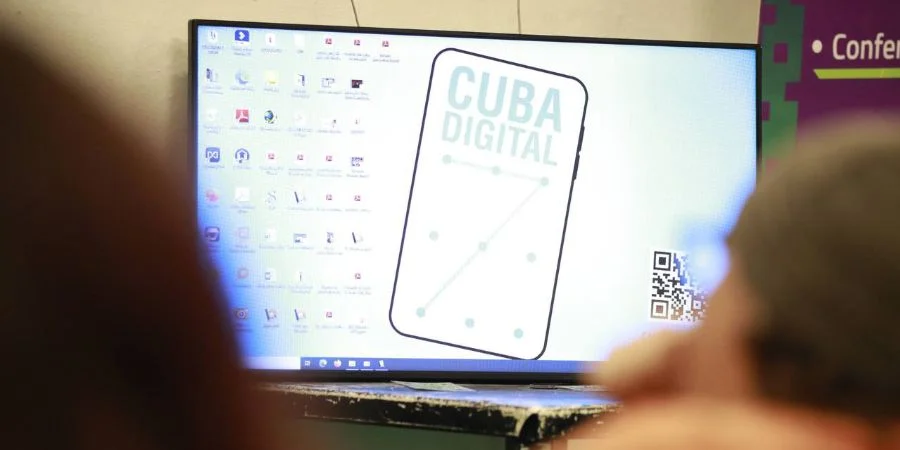
The European country will allocate 441,000 euros to the “Cuba Digital” project.
MIAMI, United States. – The e-Governance Academy Foundation (eGA), an entity based in Tallinn (Estonia), opened a contracting process to acquire technological equipment for digitalization in Cuba, with an estimated cost of 441,000 euros from the European Union (EU), according to information published this Friday by ERR News.
According to that Estonian public media, the purchase is part of “Cuba Digital”, a cooperation project financed by the EU and implemented by eGA together with the International and Ibero-American Foundation for Administration and Public Policies (FIAP/FIIAPP), linked to the Government of Spain. The plan has a planned duration of four years, between June 2024 and July 2028, and eGA sets its budget at €3.1 million on its project page.
The ERR article specifies that the tender, started “on Thursday” (January 8, 2026), includes “IT equipment and peripherals”, development devices, mobile communication equipment, display solutions and other technologies, without detailing brands, models, quantities or the final recipient by agency within the Cuban administration.
The lack of public granularity over the use and custody of equipment is relevant in a country where the State centrally controls a large part of the technological infrastructure and the provision of digital services.
In the official formulation of the projecteGA maintains that the work aims to strengthen capacities and infrastructure for digital public services, as well as to establish service portals and telecare systems based on secure data exchange, in addition to promoting digital identity and electronic signatures. The project itself mentions as areas of intervention the improvement of the digital services of the Tax Office, the national statistics system, public records and cadastral systems.
In parallel, FIAP affirms that the initiative aims to strengthen the use of digital tools to improve access and quality of public services, and includes as an objective the development of a legislative framework that guarantees data protection and privacy.
eGA Head of Communications, Anu Vahtra-Hellat, justified the project in terms of service improvement and transfer of Estonian experience. “In our work, we take as a basis the experience obtained in the development of the Estonian digital State and adapt it to the Cuban context,” he said, adding: “The mentioned equipment is acquired as part of this project to implement the objectives of EU-Cuba cooperation.”
The operation is part of a broader effort by eGA to “export” learnings from the Estonian model. In a previous piece of ERR (January 13, 2025), the executive director of eGA, Hannes Astok, defended the work on the Island and assured: “Our experts advise on secure data exchange and interoperability solutions. The ultimate goal is to build efficient, transparent and citizen-centered information systems in Cuba, improving the lives of the people of Cuba.”
That same report covered practical obstacles, including power outages and communication barriers, and put on the table the ethical debate of cooperating with a non-democratic regime.
In this context, the announcement of a hardware purchase financed by the EU collides with a reality documented by international organizations: Freedom House qualified Cuba as “Not free” in its Freedom on the Net 2024 report, with 20 points out of 100.
The critical question is not only whether digitalization improves procedures, but also who controls the technological architecture, what safeguards operate in practice and to what extent the modernization of state systems can translate into more administrative efficiency without becoming, at the same time, more capacity for surveillance and control over the population.
ERR He also pointed out that Cuba has already taken inspiration from the Estonian state portal eesti.ee following a study visit to Tallinn in 2022, which led to the creation of cubagob.cu.
The new tender for 441,000 euros, however, marks a leap in scale: it is not just about imported “ideas”, but about concrete technological infrastructure paid for from Europe to modernize services of the Cuban State itself.