The permanent representative of Cuba to the UN, Ernesto Soberón Guzmán, stated this Thursday to EFE that the information about alleged contacts between the Secretary of State of the United States, Marco Rubio, and a grandson of Raúl Castro are “speculation” and that Havana is based “on public and verifiable facts.”
“Those same media later say that they have no confirmation of what they are publishing. Therefore, to me that sounds like speculation. I base it on facts,” said the diplomat, referring to information disclosed by the American portal Axios.
The media published that Rubio would have held secret conversations with Raúl Guillermo Rodríguez Castro, grandson of former Cuban president Raúl Castro, in the context of Washington’s growing pressure on the island, which in recent weeks has included new restrictions on the supply of oil in the midst of the energy crisis that the country is going through.
This is the first public statement from the government on this information released yesterday. Previously, Vice Chancellor Carlos Fernández de Cossío also denied that there was a proper dialogue, although he admitted “some message exchanges” at the highest level.
The president of the United States, Donald Trump, assured on Monday night, in line with what he has already pointed out several times in recent weeks, despite denials from Havana, that his Government is holding talks with senior officials of the Cuban Executive.
Regarding the possibility that Mexico could play a mediator role, Soberón limited himself to thanking that country’s “historical solidarity” with Cuba, both in sending aid and in diplomatic efforts.
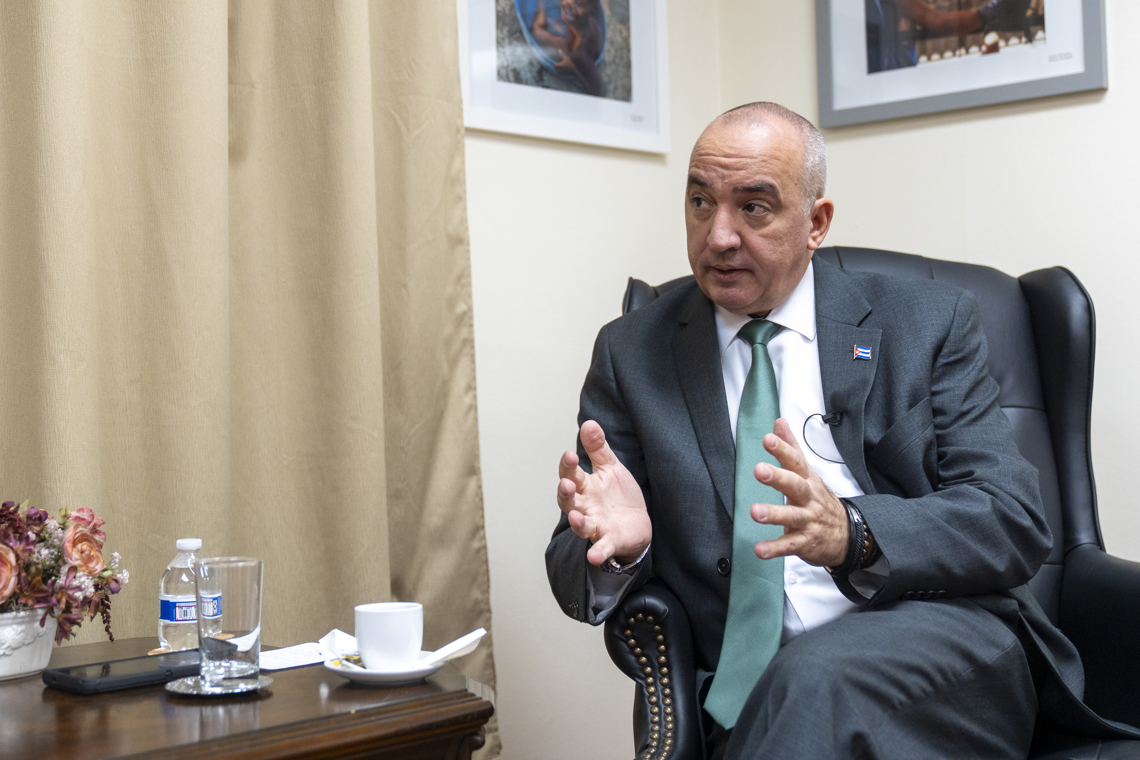
Soberón affirmed that the information about alleged contacts between the Secretary of State of the United States, Marco Rubio, and a grandson of Raúl Castro are “speculation” and that Havana is based “on public and verifiable facts.” Photo: EFE/ Angel Colmenares.
Cuba “is prepared for a total blockade”
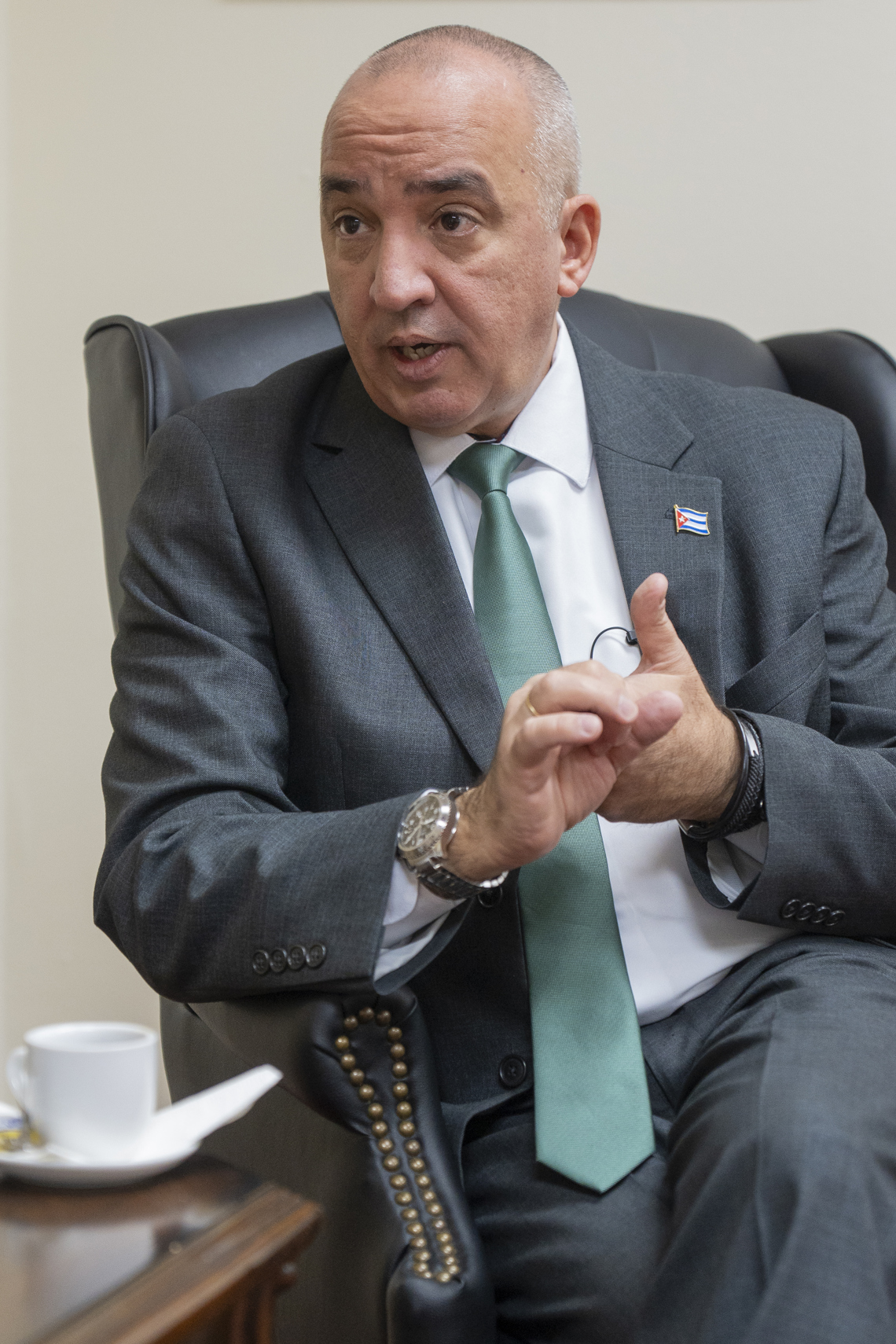
Cuba’s permanent representative to the United Nations, Ernesto Soberón Guzmán, told EFE this Thursday that the island is “prepared” for a scenario of “total blockade” by the United States and that “the word surrender is not in the Cuban mentality.”
“If they apply a complete blockade, Cuba will have plans and resources to confront it. Our priority is to protect the population and guarantee essential services,” said the diplomat.
Soberón maintained in an interview at the headquarters of the Cuban delegation in New York that the oil asphyxiation imposed by Donald Trump’s Administration is part of a strategy designed to weaken the island and provoke social unrest, “a logic that recalls historical documents from the 1960s that proposed denying supplies to Cuba to generate hunger, desperation and the overthrow of the government.”
“In the Cuban mentality there is not the word surrender, there is not the word collapse, there is not the word betrayal,” said the diplomat, and stressed that “Cuba will maintain independence, sovereignty and its ability to decide its own course.”
US pressure is progressively paralyzing the Cuban economy, which was already in its worst crisis in decades. In the last five years alone, the island has lost 15% of its gross domestic product (GDP) and more than 20% of its population.
Soberón acknowledged that the current US oil blockade is already reflected “in the reorganization of airline itineraries”, something called to “reduce income from tourism”, which is “a key sector for the national economy and for financing projects, in addition to complicating internal logistics, from food transportation to mobility.”
Last January, the US stopped oil shipments from Venezuela to the island and threatened with tariffs on those countries that supplied crude oil to Cuba. The energy crisis has caused prolonged blackouts, flight cancellations and cuts to basic services such as transportation, hospitals and garbage collection.
“Cumulative” sanctions
The representative indicated that, after more than six decades of the US embargo, the sanctions have “a cumulative effect” on the Cuban economy and recognized that, without fuel, the situation in the country “obviously worsens.”
However, he recalled that “Cuba has faced similar situations in the past”, such as during the so-called ‘special period’ after the fall of the Soviet Union, although he said that today the island has “greater capabilities and development” to face them.
“Every moment has its peculiarity, but Cuba has been preparing for this type of situation. We even have a ‘zero option’ scenario planned, which would be a total blockade. There are plans to confront it, although we hope it will not be necessary,” he stated.
In the energy field, the representative highlighted that the island is working on the transition from fossil fuels to renewable sources and on the refining of heavy oil for use in electricity generation plants.
Soberón also denounced that the US is trying to interrupt other sources of income, such as medical cooperation programs.
“The main impact is the punishment that is being inflicted on the Cuban population for the simple fact of wanting to maintain their political independence and their system,” he argued.
Dialogue based on “mutual respect”
International organizations, including the UN, have expressed concern about the social and humanitarian effects of the sanctions, noting that restrictions on oil supplies are already affecting basic services such as water, food and health.
For Soberón, US policy does not reflect “the way the world works” and he insisted that “its strategy is not new and has no limits.”
“In 67 years they have not achieved their objectives, and I can assure you that it is not in the Cubans’ mentality to allow them to achieve it,” he said.
Regarding the possibility of dialogue with the United States, he assured that Cuba is willing to “talk on the basis of mutual respect, equality of conditions, respect for sovereignty, independence and non-interference in the internal affairs of the countries.”
“We do not impose conditions on anyone, but we do not accept that they be imposed on us either,” said Soberón, who defended that the willingness to dialogue has been “a constant” in Cuban foreign policy and that, in previous stages, it allowed progress in practical agreements with Washington.
“History has taught us that dialogue works when it is based on equality and mutual respect, not when there are pressures or impositions,” he concluded.
EFE/OnCuba