In the midst of the national debate over health reform, a study by the Externado University of Colombia offers a different look at the predominant narrative, as it maintains that the majority of Colombians They are satisfied with the services of their Health Promotion Entities (EPS).
According to the analysis, based on the Dane Quality of Life Survey (August-November 2024), users perceive a system with good coverage, although with persistent failures in the timeliness of care and the delivery of medications. Likewise, the survey shows that 96.5% of the Colombian population is affiliated to some health regime, which places the country among those with the greatest coverage in Latin America.
Check here: Bioeconomy: the new growth front from which Colombia has not yet taken off
However, only 26.1% of affiliates contribute to the system, while 18.8% are beneficiaries of the contributory regime and 55.1% belong to the subsidized regime. In practice, just over 13 million people finance the care of 51 million, which reveals a structural imbalance that puts pressure on the system’s finances.
High satisfaction, but with gaps
The study, prepared by the director of the observatory, Stefano Farné, & Andrés Escobar, highlights that 86.5% of users of the contributory regime rate their EPS service as good or very good, a percentage that drops slightly to 83.3% in the subsidized regime. Although the figures reflect general satisfaction, they also reveal differences in perceived quality; since only 13.3% of contributory users consider their service “very good”, compared to 7.9% of subsidized users.
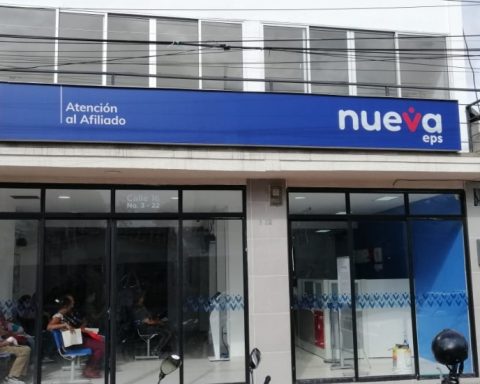
Nueva EPS accounts payable reached $21.37 billion as of March 2025.
“The main complaints coincide in both regimes: the delay in assigning appointments, reported by more than 50% of the dissatisfied, followed by the excess of administrative procedures, poor staff attention and difficulties in accessing medications. In the subsidized regime, this last problem affects 12.3% of users, compared to 6.2% in the contributory regime,” the report explains.
The study reveals a notable difference between the services provided by the EPS and those offered by private doctors. 98.4% of users of the contributory regime who went privately to a general practitioner, specialist or dentist rated the care as good or very good, ten percentage points above those who were served within their EPS.
You may be interested in: The effects for Petro, his relatives and Benedetti of entering the Clinton List
In the subsidized regime, the result was similar, given that 97% of patients who paid for a private consultation rated it positively. This finding reflects a general perception: although the public system is functional and meets its coverage objective, the personalized and formal attention of the private sector generates a much more satisfactory experience.
Access to care and emergencies
On the other hand, access to services, despite criticism, shows favorable resultssince among the members who attended a medical appointment or emergency care in the last month, 88.1% of users of the contributory regime and 86.3% of the subsidized regime rated the service as good or very good.

EPSs with less than 3% of members in a metropolitan subregion will not be able to continue operating in that area.
“In addition, the allocation of appointments with a general practitioner was agile: about 25% of contributors and 30% of subsidized patients obtained care on the same day, while more than 50% were seen within the following ten days,” they noted.
Even so, critical cases persist in which between 3% and 4.5% of patients took a month or more to be treated, a figure that, although a minority, shows the need to strengthen the operational capacity of the EPS and reduce waiting times.
More information: ‘They are taking away the promise of value from Bre-B’
Finally, a striking fact is that 30% of Colombians who faced a recent health problem did not go to their EPS or a private doctor and instead opted for pharmacists, healers, herbalists, alternative therapies or home remedies. In the majority of cases (60%), these were minor ailments, but there were also those who did not consult due to lack of money (4.5%) or because the care centers were far away (3.3%) or the wait was excessive (7.2%).
DANIEL HERNÁNDEZ NARANJO
Portfolio Journalist