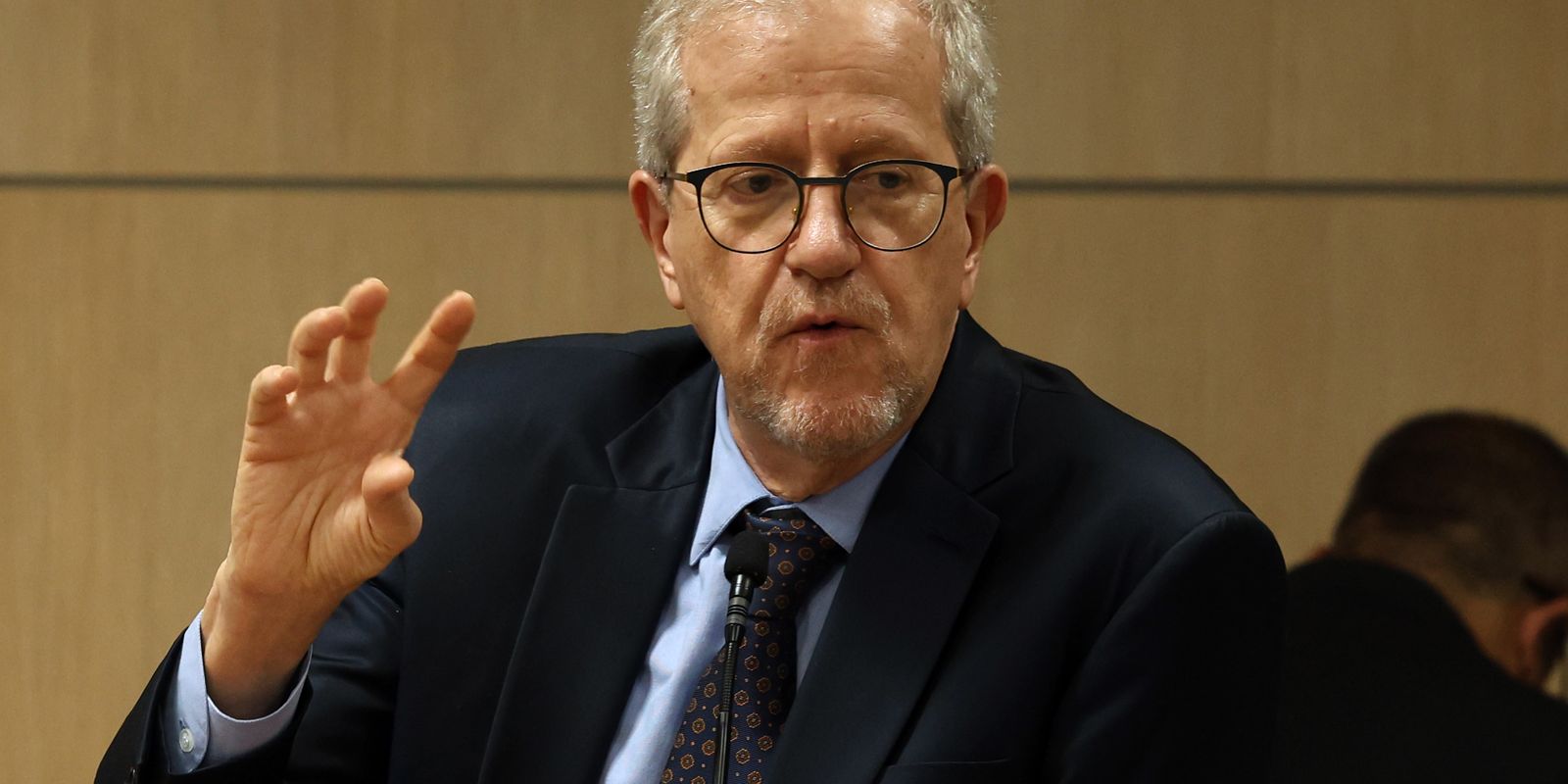
Restoring degraded forest areas is economically viable and a way to make money. The position was defended this Friday (10) by the executive secretary of the Ministry of Environment and Climate Change (MMA), João Paulo Capobianco.
The secretary participated in a meeting on environmental conservation and restoration at the headquarters of the National Bank for Economic and Social Development (BNDES), in Rio de Janeiro.
“We have partners here who are proving, objectively demonstrating that it is possible to do this by making money, generating sales, generating movement, generating savings. We are not talking about donations, we are not talking about philanthropy”, said Capobianco.
The event was attended by representatives of companies operating in forestry – the commercial use of planted forests, which results in the production of raw materials such as cellulose and logs for furniture and civil construction.
He was referring to forest recovery initiatives taking place in Brazil. According to Capobianco, in addition to combating deforestation, the country needs to continue with restoration actions to achieve its commitment to reduce carbon dioxide (CO₂) emissions, which cause the greenhouse effect, by 59% to 67% by 2035, compared to the 2005 level.
“If we are very efficient, we can reach 2035 emitting 850 million tons, which is the lower part of this range. It would be an absolutely exceptional feat”, assesses the secretary.
Reducing emissions is one of the Nationally Determined Contributions (NDC), an international commitment made by Brazil to combat global warming.
>> Follow the channel Brazil Agency on WhatsApp
Zero deforestation
The meeting at BNDES takes place exactly one month before the start of 30th United Nations Climate Change Conference (COP30)which takes place from November 10th to 21st, in Belém.
Capobianco stated that Brazil, under the current government, has reversed the course of deforestation and is on track to reach zero deforestation in 2030, whether illegal or legal.
“We reduced the deforestation rate in the Amazon by 45% that we inherited from an absolutely denialist government, which allowed deforestation to explode in a very short time,” he stated, who also cited declines in the Cerrado and the Atlantic Forest.
Financing announcement
At the event, BNDES – a public development bank linked to the Ministry of Development, Industry, Commerce and Services – announced two financings for activities aimed at environmental restoration with funds from the Climate Fund, which brings together national and foreign resources destined for environmental conservation in the country.
In one of them, the bank released R$250 million in loans to the company Suzano – the world’s largest cellulose manufacturer – to work on the recovery of 24 thousand hectares (equivalent to a little more than the area of the city of Recife), in São Paulo, Bahia, Espírito Santo, Maranhão, Pará and Mato Grosso do Sul. The action includes the Amazon, Atlantic Forest and Cerrado biomes.
It is the largest volume of resources ever approved with money from the Climate Fund for the recovery of degraded native forest.
Another initiative finances R$100 million for the Belterra Group, which works with the agroforestry concept. The objective is to restore areas in Bahia, Pará, Rondônia and Mato Grosso. The action is in partnership with small and medium-sized rural cocoa producers. This is the first large-scale productive restoration project and involves the planting of 2.9 million seedlings.
Indigenous lands
BNDES also launched a public tender that allocates R$10 million for forest recovery in a potential area of 61 indigenous lands in Mato Grosso, Tocantins and Maranhão. This initiative has the support of the Bunge Foundation (linked to the agribusiness company), which will contribute an approximate amount.
The resources are non-refundable and are part of the Floresta Viva program.
Commercial forests
The public bank also detailed the BNDES Floresta Inovação project, which will invest R$24.9 million in non-reimbursable resources for forestry, that is, the planting of forests for sustainable and commercial management. The initiative has a dual objective: restoration of degraded areas and production of native wood for commercial purposes.
In addition to simple cultivation and management, the project reserves resources for research and innovation in forestry, in order to reduce costs and increase productivity.
Floresta Inovação is coordinated by the Federal University of São Carlos/SP (UFSCar) and the Brazilian Agricultural Research Corporation (Embrapa), linked to the Ministry of Agriculture and Livestock.
The president of BNDES, Aloizio Mercadante, recalled that the country is already one of the main producers of cellulose (paper raw material) in the world and pointed out that Brazil “has an avenue to grow” in forestry.
“We have a sector that will present exuberant results from the point of view of its investment potential, private participation, not only environmental but also economic returns, employment, innovation, in technology, as a result of advances. I think Brazil has a very strong path to follow”, he declared.
According to the Brazilian Institute of Geography and Statistics (IBGE), in 2024, 77.6% of forestry areas were dedicated to eucalyptus cultivation, ahead of pine (18.6%) and other species (3.8%).
Mercadante also highlighted that “there is nothing older, more efficient and cheaper to sequester carbon than planting trees”.
COP30
On the eve of COP30, the Socio-Environmental Director of BNDES, Tereza Campello, said that this Friday’s announcements are part of an effort to show “that Brazil has effective and robust deliveries”. The director anticipated that the bank’s forest area still has at least four announcements to make before COP30.