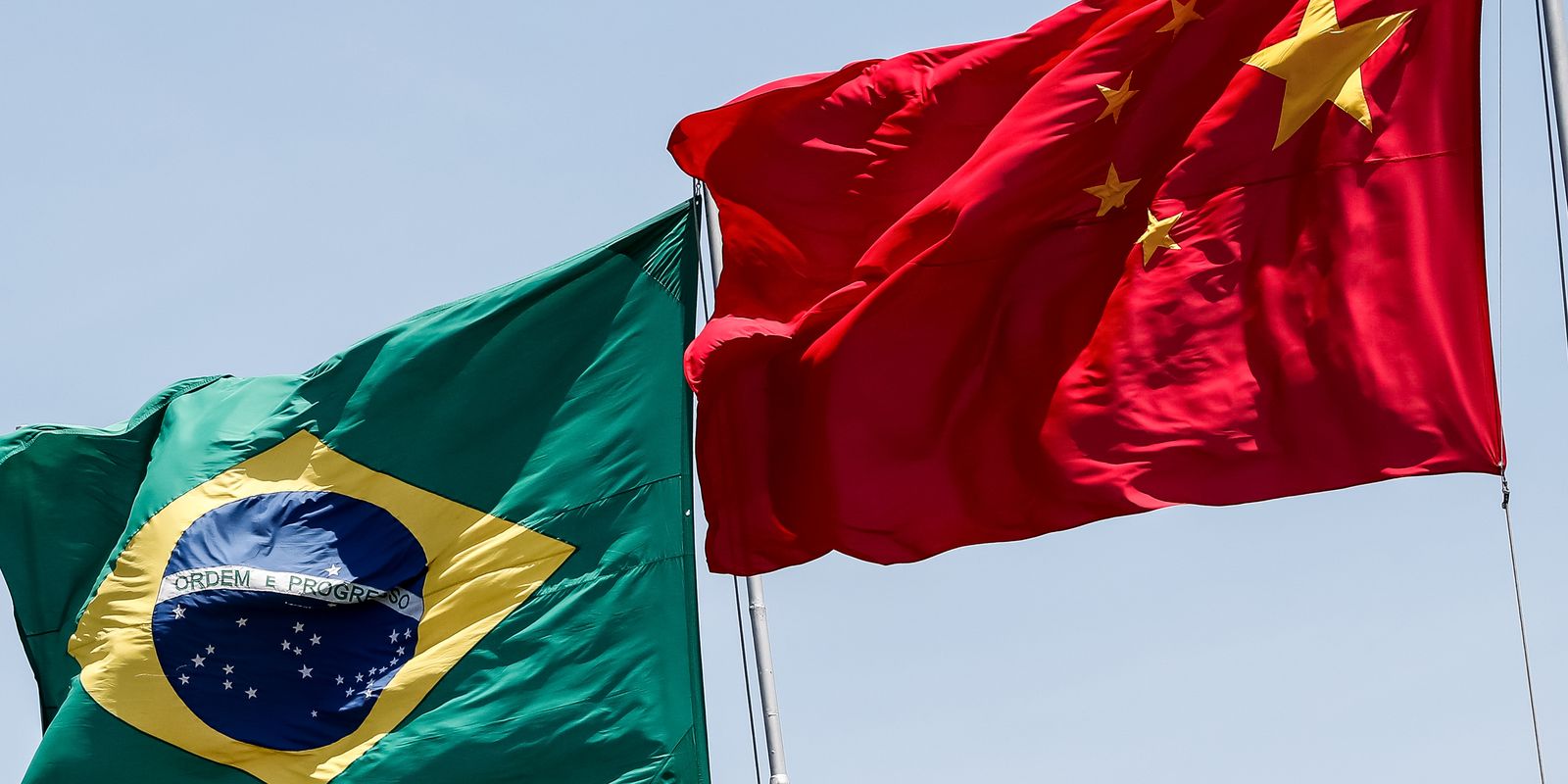
THE Commercial partnership between Brazil and China It has yielded to the Brazilian economy a growth in the number of formal jobs greater than the expansions provided by other partners.
From 2008 to 2022, the number of export jobs to China grew 62%, exceeding the expansions identified in partnerships with the United States (32.3%), Mercosur (25.1%), European Union (22.8%) and other South American countries (17.4%).
In the same period, formal work posts related to import activities from China grew 55.4%, above the expansions registered in importing trade with South America (21.7%), European Union (21%), United States (8.7%) and Mercosur (0.3%).
The finding is in the study Socioeconomic Analysis of Trade Brazil-Chinareleased this week by the Brazil-China Business Council (CEBC), in partnership with the Ministry of Development, Industry, Commerce and Services (MDIC).
CEBC is a non -profit institution that promotes dialogue between companies in both countries. The survey considered partners at Mercosur to Argentina, Paraguay and Uruguay.
More job in import
According to the study, In import activities, the Brazil-China partnership is the largest employer, with more than 5.567 million jobs, 145 more than the European Union (EU). The year 2022 was the first in the historical series (started in 2008) in which the bean trade has reached the top of the job ranking.
Already the activities related to the export sector employed more than 2 million people in Sino-Brazilian trade.
Although it was the largest increase compared to 2008 (+62%), the exporting trade to China is behind other absolute employment partners, losing to Mercosur (3.8 million), European Union (3.6 million), South America (3.5 million) and the United States (3.4 million).
CEBC analyst Camila Amigo explains that sino-Brazilian trade is the least jobs in export because of the profile of the export agenda to China, dominated by agricultural products and minerals.
“These sectors, although highly competitive and strategic, generate less jobs proportionally due to their high level of mechanization compared to more diverse industrial segments, such as those that have the highest weight in Brazilian exports to the United States, European Union and Mercosur,” he says to Agência Brasil.
Data on vacancies were collected by the researchers through the annual relationship of social information (RAIS), a report that companies provide to the Ministry of Labor and Employment. Thus, research data refer to formal jobs.
CEBP separates the number of jobs between importers and exporters, as some companies operate at both ends, which would cause duplicity if the two contingents were added.
Half of the Brazilian surplus
China is Brazil’s main economic partner, either in exports or imports. In 2024 there were about 3 million companies that exported to China and 40,000 with import activity.
In 2024, according to the study, the Asian country was a destination of 28% of Brazilian foreign sales and origin of 24% of our external purchases.
The partnership has resulted in surplus on the Brazilian side, that is, we sell more than we bought. In ten years, Brazil has accumulated a positive balance of US $ 276 billion. This amount represents half (51%) of our surplus with the world as a whole in this period.
For the study authors, the commercial relationship with China is strategic not only in foreign trade, being also a pillar of macroeconomic stability.
“The maintenance of Brazil’s commercial surplus with China for so many years has contributed to reduce the external vulnerability and raise the country’s international reserves,” says.
“This scenario favored the balance of payments with the net entry of dollars, which helped to soften exchange rate volatility, protect the economy from international shocks and anchor expectations in periods of global instability,” the text adds.
Future of the relationship
Analyst Camila Amigo evaluates that in scenario in which Brazil faces the tariff Taxed by the United States Government, which applies rates of up to 50% part of Brazilian products sold to Americans, Sino-Brazilian trade has solid and structural bases and is supported by complementarity between the two countries.
“China depends on Brazil as a stable supplier of food, energy and minerals, while Brazil guarantees access to the largest consumer market in the world and imports important products for national production,” he says.
“The future of the Sino-Brazilian trade relationship must be based on trust, seeking diversification of exports, sustainability and socioeconomic inclusion, taking advantage of not only the demand for commoditiesbut also the space for new products and new companies in this trade, ”he concludes.