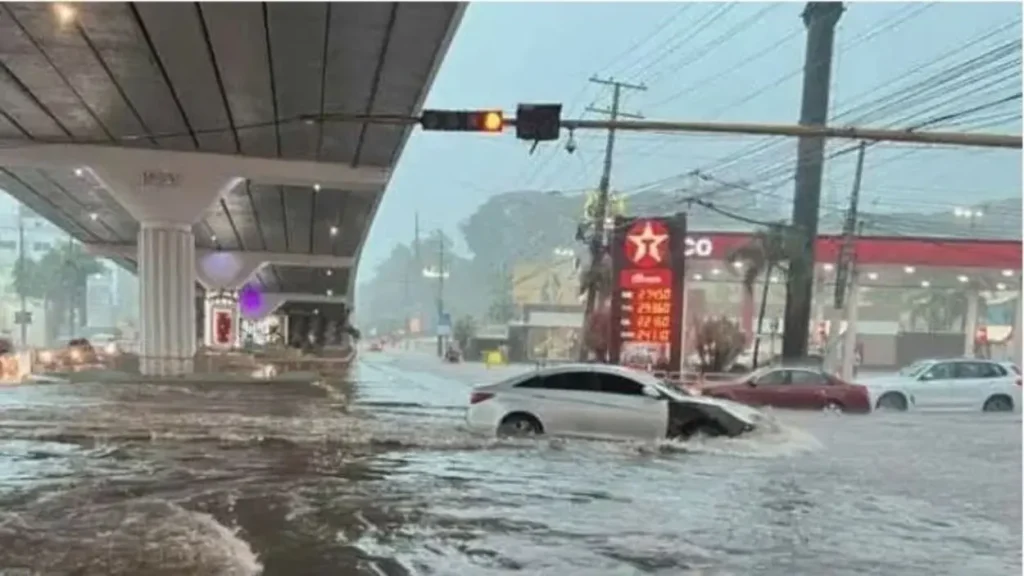
Venezuela faces a paradox in its risk management. Despite being exposed to Geological and climatic threats (earthquakes, floods, landslides), lacks an early alert system (SAT) that uses telecommunications infrastructure.
While neighboring countries send direct notifications to cell phones, in the national territory the mass alert continues to depend on obsolete methods. This technological and operational deficiency exposes millions of citizens at an unnecessary risk.
The silence of the cell phone before the risk
The most notorious failure of the Venezuelan system is the absence of alerts through text messages (SMS) or notifications Push direct to cell phones. In an era of hyperconnectivity, the most effective tool to warn the population of imminent danger, such as an earthquake or river flood, remains inactive. Citizens, therefore, do not receive a priority notice, which endangers lives and goods.
The country’s technical agencies, such as the National Institute of Meteorology and Hydrology (INAMEH) or the Venezuelan Foundation for Seismological Research (Funvisis), monitor Risk variables. However, his work culminates when issuing notices to civil protection authorities. He “Last link” From the alert chain, crucial to save lives, it is broken at the time of mass diffusion.

The technological gap: Cell Broadcast absent
The main reason is the lack of implementation of specialized technology for emergency dissemination. Unlike Chile, Mexico or Japan, Venezuela has not launched a system of Cell Broadcast (cell diffusion). This technology allows the authorities to send a priority and simultaneous message to all cell phones in a specific geographical area, even if the network is saturated.
Inaction is due to two great interwoven obstacles. The first is the technological gap: implement and maintain this mass infrastructure requires significant investment in hardware and software. The second is the political coordination Between the state and telephone operators, an agreement that the prolonged economic crisis and the lack of foreign exchange have made unfeasible.
The degradation of telecommunications infrastructure
The operation of the SAT depends intrinsically on a functional and robust telecommunications network. The economic crisis and the lack of sustained investment have deteriorated the infrastructure of mobile and fixed operators. A weak network cannot guarantee that alerts arrive in a timely manner to the population in times of emergency, when the demand of the network is triggered.
This situation condemns communities to depend on very localized alert systems, often rudimentary. There are success examples, such as community developments to monitor the Milla River in the Mérida state, which use rainfall or colored murals. However, these efforts are the exception and do not replace a national scope strategy.

The challenge of financing and priorities
The Government has sometimes expressed the intention of “perfecting and modernizing” early alert systems. Even cooperation with countries such as China for the acquisition of technology has been mentioned. However, these statements have not translated into an effective execution or the activation of the mobile dissemination platform.
Investment in disaster security and prevention competes directly with other primary and urgent needs in the country. Limited resources are prioritized, and the technological modernization of the SAT, despite its vital importance, is relegated to the general crisis of Venezuelan infrastructure. This keeps most of the national territory in a state of vulnerability.
What is required to activate alerts by cell phones?
Venezuela has technical knowledge for risk monitoring, but suffers from a paralysis in the dissemination of alerts to the population.
The absence of a massive and modern system, transmitted by cell phones, is a direct reflection of the deep economic crisis and the consequent divestment in technological infrastructure. Overcoming the risk of the “word warning” requires political will, agreements with the private telecommunications sector and a strategic investment that raises citizenship protection to an unavoidable national priority.