Matanzas/On May 12, 2025, Eduardo was released after spending a year and four months in the southern team, a maximum security prison in the province of Matanzas. His crime: having bought a passage from Russia for February 2024 at the same agency and the same flight as a group of 11 people currently processed in total secret for the crime of mercenarism.
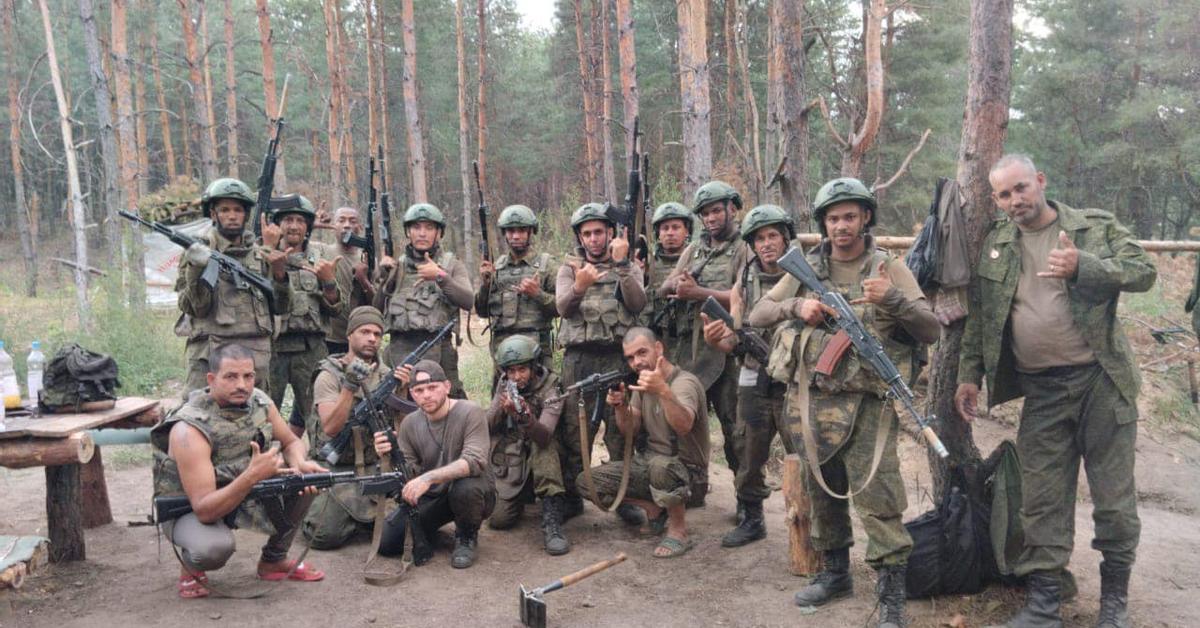
All detainees are investigated for their alleged intention to participate as soldiers in the service of the Russian army in the War against Ukraine. In Cuba, the mercenarism It is a serious crime, punishable by the Criminal Code with up to 30 years of deprivation of liberty. Although the government has officially denied its participation in the Russian-Ukrainian conflict, it has also recognized-ambiguous-the existence of recruitment networks to send Cuban fighters to the war front.
Eduardo denied knowing those involved, but they did not believe it and ended with their bones in a cell with three members of the group that was going to travel to Russia. Among the detainees is a former member of the Ministry of Interior, a native of Bayamo but resident in Havana. His name amaury, has training as a sniper at the Military School and had worked as a driver in units of the FAR.
Another detainee, known as Tasé, is from Baracoa and was part of an alleged mixed martial arts team
Another detainee, known as Tasé, is from Baracoa and was part of an alleged mixed martial arts team. He traveled, according to his version, to participate in a “cultural exchange” in Russia, a repeated alibi in other similar cases.
All the detainees, except Eduardo, had some link with the armed forces or the security apparatus of the Cuban State. Several carried military titles, combat skills or specialized training. One of them, detained after confessing that the war was “a possibility”, became a key piece of the case. Although the investigation has not revealed formal employment contracts, the stories point to an informal recruitment network that worked under the command of an officer nicknamed “the teacher.”
Identified as a FAR officer, the teacher was known for leading a martial arts team of a paramilitary nature. At least one of those involved was a member of that group. According to sources linked to the process, it is indicated as the operational axis of the network, managing flights, connections, procedures and contacts. Although he is not imprisoned with the other detainees, his process is carried out in parallel from the prison of Gutlet in Jovellanos, Matanzas – not confusing with the homonymous prison of the blind of Ávila. This separation has fed the theory that its isolation responds to a control strategy: avoid leaks between processed or preserve hierarchies within the prison system.
“The teacher had everything square with the Russians,” says one of those involved
According to one of the detainees in the South team, whose comments have reached 14ymedio Through a relative, there is suspicion that the teacher was sacrificed as a scapegoat to calm the waters and deny any participation of the State when the scandal of the Cubans sent to war broke out. The hypothesis that the recruiter acts on his own is also handled. “The teacher had everything square with the Russians,” says one of those involved.
Some testimonies of those who did reach the battlefields demonstrate the effects that war left on them. Francisco García, a 37 -year -old Cuban, assures that His “life is over” upon discovering that the promised employment – repair buildings in exchange for Russian passport and $ 2,594 per month – was nothing more than a lie to turn it into mercenary. After witnessing the death of dozens of Cubans and Russian soldiers, subjected to psychological violence to act as “robot on the battlefield,” he defected in October 2024. García paid almost $ 13,000 to a trafficker to flee to Greece and now lives in the streets of Athens, without help, regretting the price of having survived a war that “has nothing to do with him.”
There is also the case of three young Matanceros who were arrested months ago on the Russian-Finland border. They tried to leave Russia when they were arrested by the immigration police and taken to a detention center where they were pressed to sign a military contract. The Cuban embassy, as reported, never intervened. Only thanks to the viralization of its history – through a video sent to their families and broadcast on social networks – they managed to return to Cuba.