Cuba will face a “difficult, although slightly better” 2026 than the calamitous 2025 in terms of electricity generationaccording to the Minister of Energy and Mines, Vicente de la O Levy.
In an interview published this Friday by the newspaper Granmathe official recognized that the lack of fuel is the Achilles heel of a strategic industry that has suffered several collapse events in the last year.
Likewise, he admitted that, despite the expected incorporation of thermal units that have undergone long maintenance and a greater weight of renewable energies – in particular, solar photovoltaic -, prolonged blackouts will persist on the island.
The Cuban National Electrical System has experienced five complete national blackouts and several partial outages in the last fourteen months, within an energy crisis that has been exacerbated since the 2021 pandemic.
The situation reflects an extremely vulnerable system, with daily blackouts that simultaneously affect much of the country, with territories where outages have even exceeded 30 consecutive hours.
This Friday, not to go any further, the maximum impact amounted to 1981 MW and for today the official forecast is even higher: 2040 MW. This, after another partial fall was reported this week in the West and two new negative records, both above 2100 MW.
Maintenance and renewable energy
During 2025, four critical units of the national electrical system were subject to capital maintenance: Céspedes 3 and 4 in Cienfuegos, Renté 5 in Santiago de Cuba and Este Habana 2 in Santa Cruz del Norte. Two of them have already connected – although they have had other problems later – and the other two must synchronize in December, according to de la O Levy.
The minister assured that 2026 will begin with all these plants in operation, which represents additional power since January. Céspedes 3, with 158 MW, and Renté 5 have been achieving stability after the repairs. The same performance is expected from Céspedes 4 and Este Habana 2.
“In 2025 we had months without these units. In 2026 they will all be generating from the beginning,” he optimistically promised, while confirming a new postponement of the capital maintenance of the Antonio Guiteras thermoelectric plant, initially scheduled for before the end of this year.
Regarding photovoltaic solar energy, the official assured that on occasions it has generated 30% of the electricity “at one time of the day” and thus “has mitigated the blackout.”
If not, he said, “the effects during the day would be similar to those that occur during peak demand hours.”
In addition, he stated that by the end of the year the promised 1,000 MW must have been installed, which “will be available from the first day of 2026.” For next year, “a large amount of power” in solar matters must also be incorporated and work will be done on the development of the Herradura 1 wind farm, according to what he said.
However, he did not give details on how the officially planned 51 new 21.8 MW parks will be reached, when until this Friday there were only 33 already in operation.
The “unavoidable” capital maintenance of Guiteras is postponed again
Distributed generation and the Achilles heel: fuel
De la O Levy considered that the availability of distributed generation, which in 2021 barely reached 30%, is now above 80%. Together with emergency generator sets, this capacity allowed hospitals and vital centers to continue functioning during weeks of crisis, according to the official narrative.
However, a large part of those 1000 MW installed remain out of service due to lack of fuel. “The fuel deficit is the fundamental cause of the blackouts,” the minister admitted, at a time when Venezuela, the main emitter of oil to the island in recent decades, is experiencing uncertain times and imports from other countries have also fallen.
Although the system technically has more than 3,200 MW available, fuel shortages considerably limit its operation and put government promises and strategies in smoke. The official insisted that dependence on imports is unsustainable, given its cost in the international market, and that the energy transition seeks to reduce it.
By 2026, he said, there is a fuel allocation from the Government for electricity generation, but without a significant increase. “There will be a decrease in the effects, but we will continue with blackouts due to lack of fuel,” he said.
The national plan includes increasing oil and gas production, which had decreased due to lack of financing. In 2025 a rebound was achieved and in 2026 it is expected to start with higher volumes, according to the minister.
The island consumes eight million tons of fuel, only produces three million and buys five million on the international market, according to data from the Ministry of Energy and Mines (Minen).
Cuban crude oil, highly heavy because it contains a lot of sulfur, is used to operate the old thermoelectric plants, a practice that wears them out and accelerates their deterioration, while diesel and fuel oil is imported and consumed by distributed generation engines and floating plants, the number of which has been drastically reduced due to non-payment.
In addition, recent regulations require that in three years the forms of economic management – state and private – generate at least 50% of their consumption with renewable sources.
“The energy transition is not a slogan, it is a national program in which everyone must participate,” the minister warned.
Felton 2 and new investments
Minen is also working on the recovery of Felton 2, a block affected by a fire three years ago and whose boiler must be built completely new. The project, along with future units in Nuevitas and Mariel, is part of the strategy until 2030.
“They are long-term investments, adapted to our soil, location and crude oil conditions,” explained De la O Levy.
On the other hand, the severe impact of the Supertanqueros base in Matanzas due to the 2022 fire complicated fuel distribution. The reconstruction of the facility is progressing with firefighting systems, lightning rods and ducts, but it is not yet clear when it will be completed.
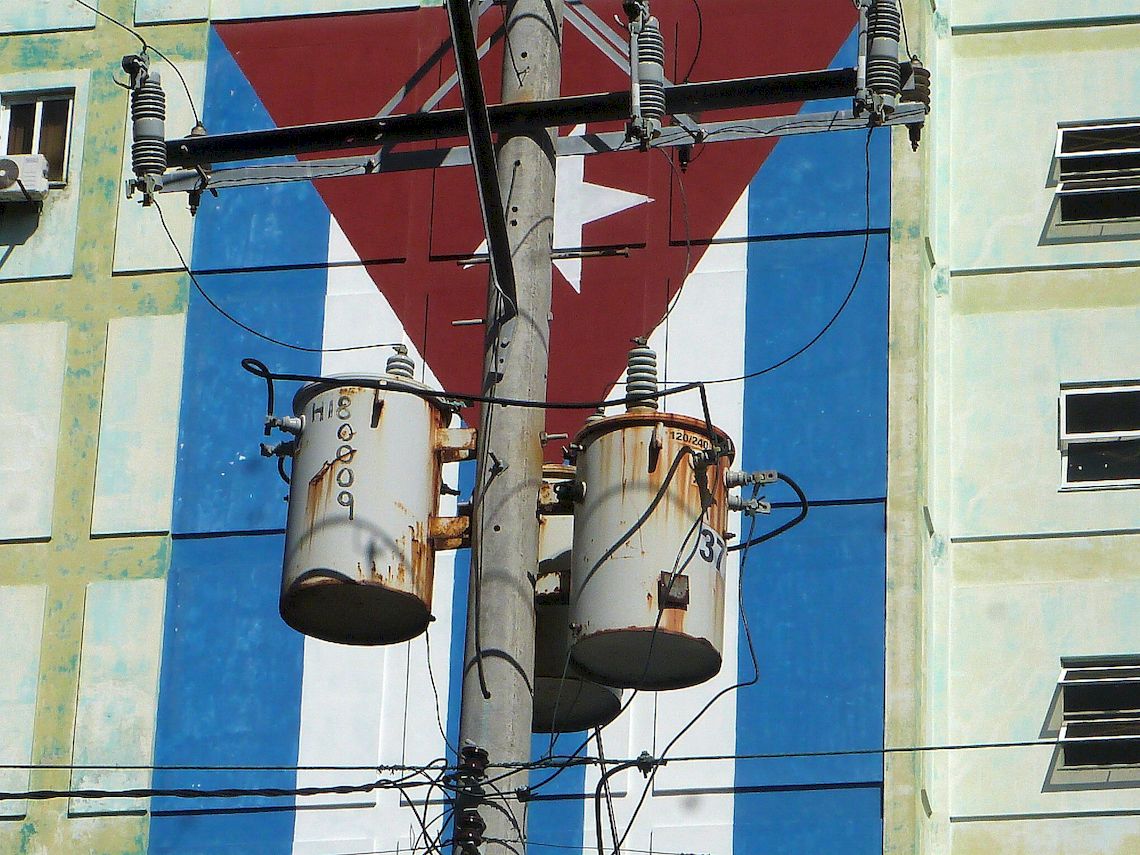
The minister also highlighted the need to maintain transmission networks and substations, which cover almost 100% of the population. “It is an immense challenge, with thousands of kilometers of cables and transformers requiring constant maintenance,” he said.
Regarding international aid, Vietnam donated four 20 MW solar parks and China delivered 5,000 solar systems for homes after Hurricane Melissa. In addition, the first seven parks of a 120 MW project were inaugurated, also with Beijing, and the remaining ones are planned for the first quarter of 2026.
“Friendly countries have opted for renewables, just like us, so that Cuba is independent of fuel imports,” highlighted the minister, who described 2025 as “the beginning of the energy transformation,” although marked by the greatest absence of fuel in years and blackouts of up to 24 hours in some regions.
Regarding 2026, he was clear: “It will be a difficult year, slightly better, with more generation, but we are not going to eliminate blackouts. There will be a decrease, but there is still a long way to go.”