For Tello Mendoza, whose book is a compilation of studies and arguments in defense of the TEPJF decision, the magistrates had no option, so he insists that if they want to change the interpretation and even the rules, The moment is this electoral reform that is in the making.
“The magistrates have to resolve what is in the dispute, and this was whether the INE’s decision had been constitutional,” he explains about the sentence.
The decision, it abounds, was that “the rules of the game cannot be changed like this.” “Although it hurts our hearts, The rules are the rules of the game and what they had to determine was whether or not it was constitutional and well they said yes and that it adhered to precedents of more than a decade,” he points out.
Remember that the electoral reform of 2007 was the one that left the matter subject to interpretation, since previously in the coalition agreements the percentages in which the votes would be distributed between the coalition parties were agreed.
That was eliminated because the decision was not up to the electorate, hence it was changed to establish that the way to quantify the vote of the coalition parties is according to the votes they actually receive at the polls.
However, then came electoral engineering to circumvent locks and allow the assignment of more legislators than corresponded according to the vote achieved.
Pure proportionality and other antidotes to overrepresentation
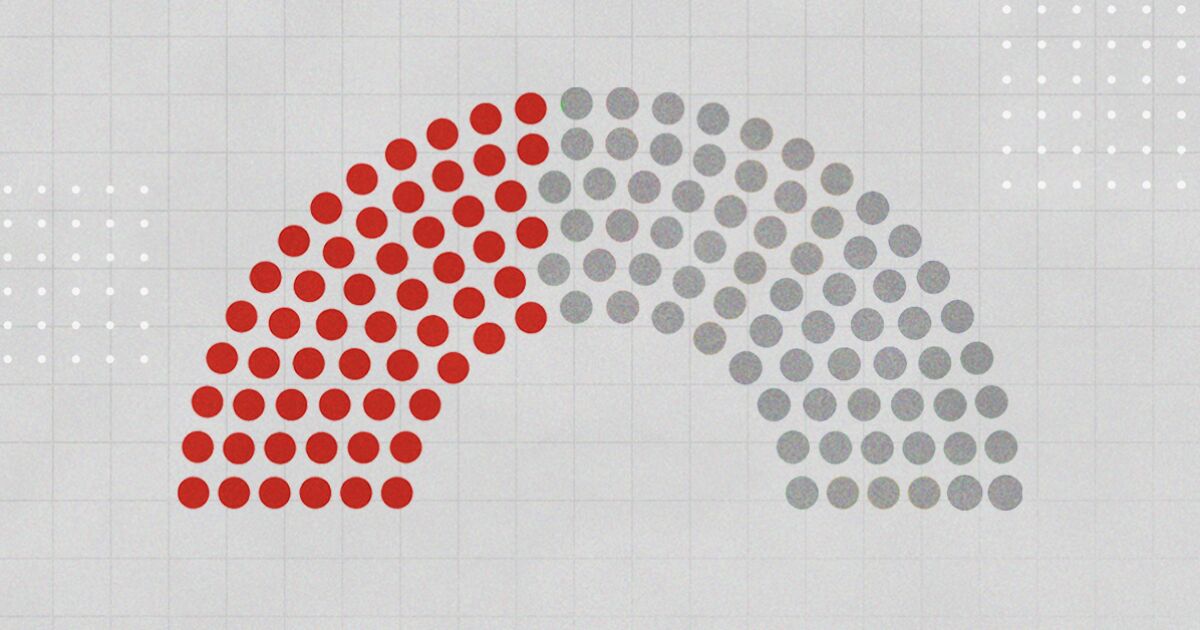
Medina Torres, the UAM expert, establishes that the formula to avoid stratagems would be to go to the pure proportionality: the idea is to leave only the rule that the proportion of votes becomes a proportion of seats.
“And that each political party, I emphasize the political party, because that was part of the trap, obtains the percentage of seats that corresponds to its percentage of votes and not in the trick that was made of sending majority candidacies to the parties allied with Morena to lose, and then obtain compensatory seats through proportional representation,” he points out.
He explains that in the case of 40% of the votes, transferred in pure proportionality, it is 40% of the seats. “As today we have Congress, 500 seats, 40% of those are 200 seats,” he details. Thus, if someone has 10% of the votes, then they would have 10% of the seats. In a congress of 500, 10% is 50 seats.
“That is pure proportionality. That the percentage you get in votes translates into the percentage of seats,” he says.
However, given the tricks that have been applied, there would also be a need for new locks, for example one that establishes that the coalitions can only compete for Executive positions, that is, the presidency, the governorships, but not for legislators.
That would prevent tricks to nominate them for other forces or to hide high votes and have a better right to the distribution of multi-members.
There would also be the possibility, if we wish to end the controversy surrounding overrepresentation, of legislating to prohibit transfuguismo, that is, for deputies to change benches.
However, he admits that if the Constitution were reformed to establish these new controls, it is likely that there will be those who resort to constitutional controversy or through electoral challenges to defend their right to change parliamentary groups.
Tello Mendoza also considers that the coalition system allows strategies for the parties to have more seats than those they won, so it is viable to limit them.
“That’s what we saw, right? That small parties like the PT or the Green can win districts, without having the majority vote in that district, relying on the majority parties and that the majority parties can have more multimembers by having coalitions with these small parties,” he points out.
This, he remembers, is “an agreement that has suited all political parties for decades and that is precisely what would have to be reviewed with all intellectual honesty, because the opposition parties did not denounce it because it suited them now that it affected them, they wanted the electoral authorities to be the ones to modify that. So, in my opinion, the coalition system would have to be reviewed.
Remember that the party system theorist Sartori even proposed “thinking in Mexico about a double-round system for Congress to avoid this type of distortions.”
And although he saw it as difficult because that would increase the cost of new processes, he considers that it could be a way out.
There is also the proposal, outlined by the president of the board of directors of the Chamber, Kenia López Rabadán, to establish from the Constitution the prohibition of all overrepresentation.
The PAN legislator also spoke out in favor of going to pure proportionality, that is, “each vote must be worth the same and be faithfully translated into the formation of the legislative bodies, without overrepresentations or distortions.”