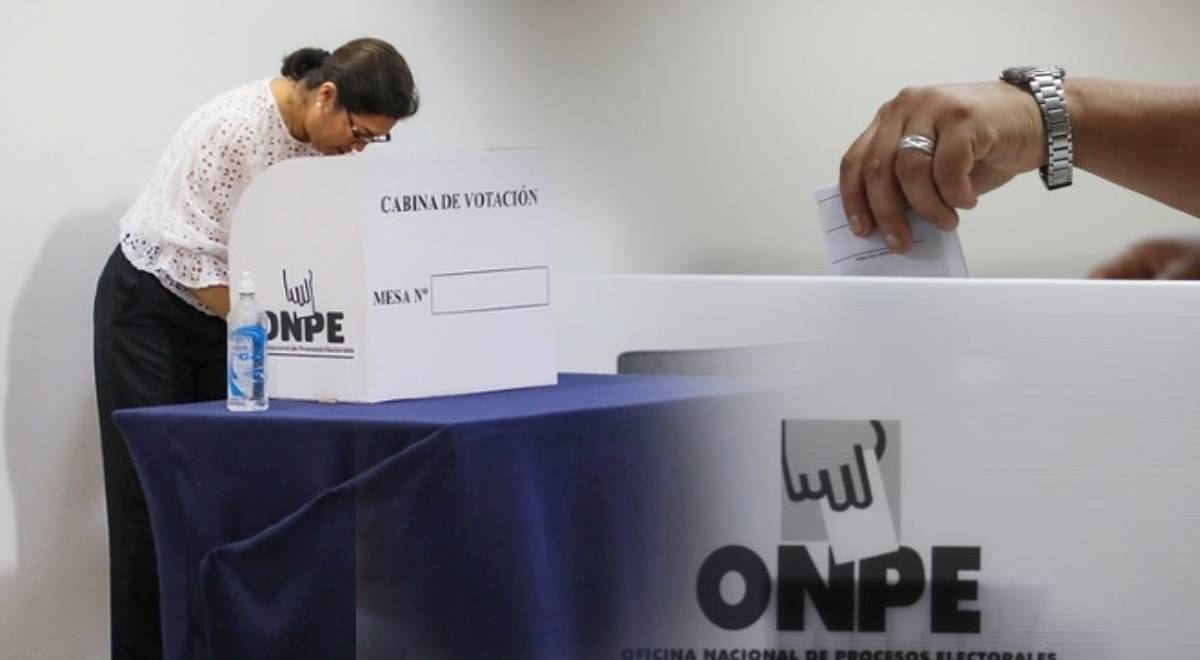
The General Elections 2026 They are closer than ever. In this final stretch, Peruvians are just over three months away from going to the polls to elect the new authorities who will lead the country during the next five years. However, despite the proximity of the electoral process, there are still aspects of the system that raise doubts among citizens. One of the most relevant—and also one of the least understood—is the electoral fence.
Although it is a mechanism frequently mentioned in conversations about elections, television debates and political analyses, there are still many Peruvians who do not clearly know what role the electoral fence plays, how it works and what its specific effects are on political representation. In a scenario marked by historical party fragmentation, distrust in institutions and the proliferation of political organizations, understanding this mechanism is key to exercising an informed vote.
For this reason, La República was able to speak with the spokesperson of the National Elections Jury (JNE), an autonomous constitutional body in charge of administering electoral justice and ensuring the legality of the process. Through a series of questions, the electoral institution explained what the electoral fence consists of, how it will be applied in the 2026 general elections and what implications it will have for political parties and voters.
What is the electoral fence and how does it work?
The electoral fence for the distribution of seats is a mechanism provided for in Peruvian electoral legislation that establishes a minimum threshold of citizen support that political organizations must reach to access parliamentary representation. Its application seeks to organize the political system and guarantee that those who make up legislative bodies have a minimum basis of national legitimacy.
In Peru, this mechanism is applied exclusively to the election of the Congress of the Republic and the Andean Parliament. It does not affect the presidential election or other subnational positions. Its design responds to the historical concern about the fragmentation of the party system, a phenomenon that intensified from the 2000s onwards.
The central purpose of the electoral fence is to avoid excessive atomization of Parliament. When Congress is made up of numerous small groups, it becomes difficult to build consensus, form stable majorities, and develop a coherent legislative agenda. In this context, the fence acts as a political-institutional filter.
For the 2026 general elections, this mechanism is applied under a different institutional framework, due to the reestablishment of the bicameral system. Congress will once again be made up of a Chamber of Deputies and a Chamber of Senators, which has forced the validation criteria of the electoral fence to be adjusted.
As explained by the spokesperson for the National Election Jury (JNE), a political organization must meet two simultaneous requirements to access the distribution of seats: reach at least 5% of the legal number of members – that is, 7 deputies or 3 senators – and also obtain 5% of the valid votes at the national level in the corresponding chamber. Both criteria must be met concurrently.
This same 5% threshold is also applied for elections to the Andean Parliament, although in that case the requirement is limited to the percentage of valid votes at the national level.
Is my vote lost if the party does not pass the fence?
From a strictly representative perspective, the vote cast by a citizen in favor of a political organization that does not exceed the electoral barrier does not translate into parliamentary representation. That is, these votes do not generate seats nor do they allow the elected candidates to hold positions in Congress or the Andean Parliament.
The National Elections Jury has been clear about this. The requirement of a minimum representativeness implies that candidates from parties that do not reach the threshold do not enter office, even if they have received valid votes. In legal and practical terms, these votes are excluded from the distribution of seats.
However, from a broader democratic perspective, the vote does not completely lose its meaning. Suffrage fulfills functions that go beyond the assignment of positions, such as expressing ideological affinities, supporting certain political agendas or expressing discontent with the majority options.
Furthermore, electoral results allow us to measure the real weight of certain political currents within the electorate. Even if an organization does not achieve representation, the percentage of votes obtained can influence public debates, future alliances or reconfigurations of the party system.
Even so, the system forces voters to be aware of the practical consequences of their decision. Voting for parties with little national support may not translate into parliamentary presence, which leads many citizens to combine ideological conviction with strategic calculations when casting their vote.
Is the fence the same for all games?
Yes. The electoral fence applies uniformly to all political organizations participating in an election. There are no exceptions or differential treatment based on the historical trajectory of the party, its size, its number of members or its territorial presence.
This principle of equality seeks to guarantee formal conditions of competition between all groups. From a normative perspective, all parties compete under the same rules and must meet the same thresholds to access parliamentary representation.
Peruvian electoral legislation does not contemplate compensation mechanisms for new or emerging parties. Nor does it establish benefits for organizations that have had previous representation in Congress. In that sense, each electoral process represents a new starting point for all political forces.
However, this formal equality has been the subject of criticism. Various analysts maintain that, in practice, the electoral fence favors parties with greater financing capacity, organizational structure and media visibility, which can make it difficult for new options to enter Parliament.
Despite these criticisms, the criterion remains one of the pillars of the electoral system. For the JNE, the uniform application of the fence is a necessary condition to preserve institutional stability and avoid fragmentation that complicates the functioning of the Legislature.
Does the fence also apply to the presidential election?
No. The electoral fence for the distribution of seats does not apply to the presidential election. The process to elect the head of state is governed by different rules, focused on obtaining an absolute majority and the eventual holding of a second electoral round.
This means that a party may not overcome the parliamentary hurdle and, even so, its presidential candidate can compete on equal terms with the other candidates. The legitimacy of the Executive is defined exclusively by the number of votes obtained in the presidential election.
Likewise, it is possible for an elected president to take office without having his own caucus or significant representation in Congress. This scenario has been recurrent in recent Peruvian politics and has generated tensions between the Executive and the Legislative.
The separation between presidential logic and parliamentary logic responds to the design of the Peruvian political system. While the Presidency is defined based on direct electoral majorities, Congress is structured based on criteria of proportional representation and minimum thresholds.
This difference explains why governability does not depend only on the presidential result, but also on the composition of Congress. In that sense, the electoral fence has indirect effects on the relationship between both powers of the State.
Do alliances also have to cross the fence?
Yes. Electoral alliances are subject to the same requirements as individual parties to access the distribution of seats. The law does not establish differentiated thresholds or special conditions for coalitions.
An electoral alliance must reach at least 5% of the valid votes at the national level and meet the minimum representation required in each chamber. In legal terms, the alliance is considered a single electoral unit for the purposes of the fence.
Precisely for this reason, alliances are usually formed as strategies to overcome this threshold. By joining forces, parties seek to gain votes, expand their electoral base and reduce the risk of being excluded from Parliament.
In the 2026 general elections, three electoral alliances have been registered. These are National Unity —made up of the Popular Christian Party (PPC), Unidad y Paz, and Peruanos Unidos: ¡Somos Libres!—; Fuerza y Libertad —made up of Fuerza Moderna and Batalla Perú—; and Venceremos —composed by Nuevo Perú por el Buen Vivir and Voces del Pueblo—.
However, forming an alliance does not automatically guarantee overcoming the hurdle. Coalitions must also achieve internal cohesion, present competitive lists and attract sufficient citizen support to translate party unity into effective votes.
What happens if a party does not pass the electoral fence?
The immediate consequence for a party that does not overcome the electoral hurdle is total exclusion from parliamentary representation. The organization does not obtain seats in either Congress or the Andean Parliament, as applicable.
But the effects are not limited to the short term. The electoral legislation establishes that parties that do not reach the minimum required percentage lose their registration with the electoral system, which implies their legal disappearance as a political organization.
By losing registration, the party is prevented from participating in future elections, presenting candidates or receiving public financing. To compete again, you would have to start the registration process again, complying with all current legal requirements.
This mechanism fulfills the function of purifying the party system, reducing the number of active organizations and forcing political forces to demonstrate real citizen support to remain in force. In this way, the electoral fence not only defines the distribution of seats in a specific process, but also has structural effects on the national political map, influencing which parties survive, merge or disappear from the electoral scene.