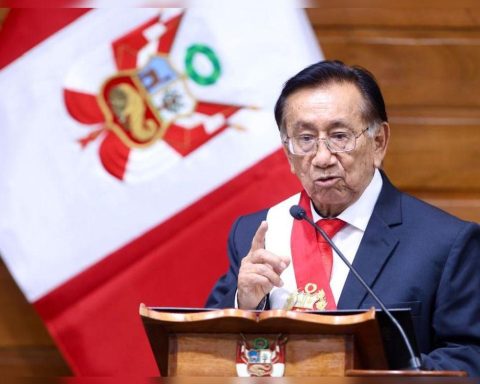
A total of 38 political parties are ready to run in the General Elections on April 12. Following the electoral schedule, the Plenary Session of the National Election Jury (JNE) proclaimed the results of the primary elections, a process carried out within each organization to determine the candidacies and their order on the corresponding list for the elections.
The groups that exceeded the established participation threshold are authorized to present the formulas and lists of candidates for the elections until 11:59:59 p.m. on December 23 through the Declara+ System of the JNE, which is already enabled.
This was the development of the primary elections
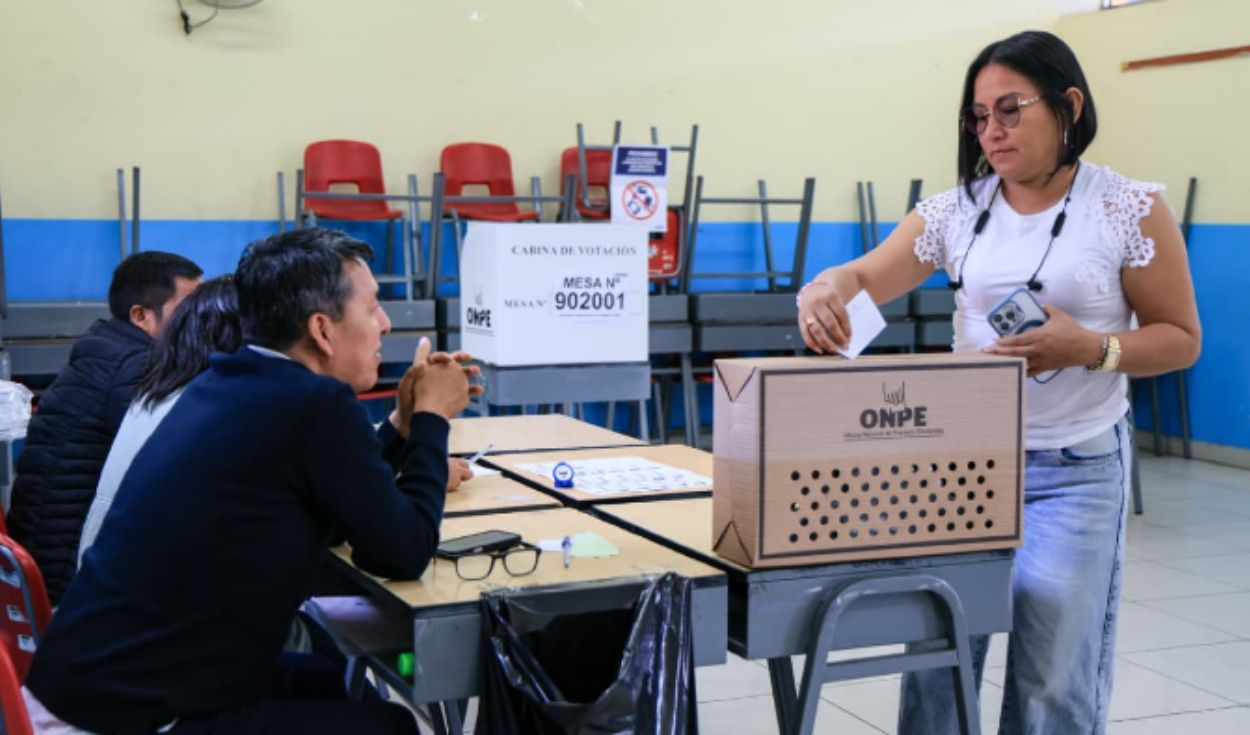
Each of the 39 parties held internal elections on November 30 and December 7, dates on which the delegates and candidates were elected, respectively. The calculation of results was carried out by the National Office of Electoral Processes (ONPE) respecting the chosen election modality (affiliates or delegates).
According to information from the ONPE, on Sunday, December 7, 1,015 of the 1,206 delegates registered in the primary election registration system (REP) voted. The delegates were elected on November 30 in elections organized by each organization. They also decided the number of delegates who voted on December 7, their scope of representation and the place where they would vote.
Two political parties did not present candidates for their presidential ticket: the Citizens for Peru Party and the Popular Agricultural Front of Peru – FREPAP. This last group was the only one whose delegates voted in all regions of the country. The delegates of the Patriotic Party of Peru voted in 12 departments and those of A different path, only in Trujillo. The delegates from the other groups, although they represented different regions, voted in Lima.
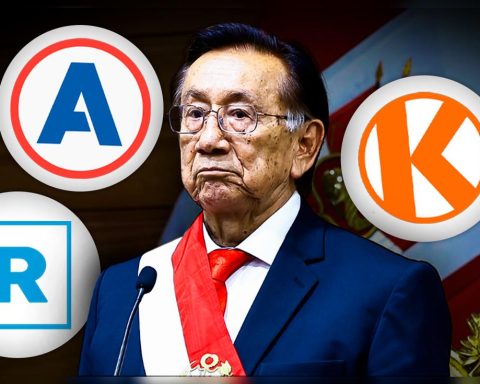
Results of the primary elections: draw in Save Peru and nullity of Acción Popular
There were no contested votes or observed minutes, which facilitated the counting of 100% of the minutes. In addition, there was a tie between the presidential formulas of the Save Peru party, headed by Antonio Ortiz and Mariano González.
Following the electoral norm, in cases of a tie the candidate is defined through a public draw, which is carried out by throwing a coin into the air or drawing a ball.
Candidacy left to chance in Save Peru
The draw took place on Saturday, December 13, in a public event held at the premises of the Transparencia Civil Association, in the district of Jesús María, with the presence of representatives of the JNE.
The party opted for a coin toss as a tie-breaking method. Ortiz Villano chose ‘face’ and was the winner, with which he was automatically proclaimed as the group’s presidential candidate.
The winning formula led by Ortiz Villano is made up of Jaime Freundt López and Giovanna Demurtas Moya as candidates for the first and second vice presidency, respectively. The other list, which failed to win the coin toss, was headed by former minister Mariano González, accompanied by Wilbert Portugal and Katherine Ramírez.
“I come from the business community, I see our country as rich as it has coast, mountains and jungle from another perspective and we have to leave a legacy for the next generation,” the winning candidate declared to La República.
Vices in internal election of Popular Action
On the other hand, of the 39 matches, only one match failed to cross the fence. Resolution No. 745-2025-JNE declared the primary elections of Popular Action void after determining that the process was flawed and the list of delegates was altered, which violated the right to vote of its members and affected the legality of the election of candidates for the Presidency, the Senate, the Chamber of Deputies and the Andean Parliament.
The electoral institution determined that delegates validly elected on November 30, 2025 did not appear in the final registry used for the December 7 vote and that, in their place, there were people who had not been elected.
These are 28 delegates who were replaced by others in regions such as Áncash, Cajamarca, Cusco, Huancavelica, Metropolitan Lima, Lima Provinces, Loreto, Junín and Madre de Dios. This substitution caused the votes to be carried out with an adulterated registry, which invalidates the results “in 100% of the voting tables,” indicated the JNE.
The resolution also specified that “it is not possible to roll back said electoral process and call new primary elections,” as the electoral schedule would be affected.
Given this, the Head Legal Representative of Acción Popular, Fernando Luis Arias-Stella Castillo, presented to the JNE a request for annulment “due to the serious effects on the constitutional rights of defense, due procedure, due motivation, presumption of innocence, to elect and be elected and others,” according to the document.
Along the same lines, Alfredo Barnechea, in an interview with Canal N, supported the argument of an alleged arbitrary action contrary to the principle of legality. He announced that he will appeal what was decided by the electoral body and will denounce its members. Days later, he publicly apologized for the statements against the JNE, which he considered “excessive,” and said that he was not in a moment of “complete lucidity.”
Candidate registration
After the exclusion of Acción Popular, 38 parties are authorized to continue and participate in the next elections. Now, the task of each group is to generate their presidential formulas and lists of candidates.
In this last aspect, they can incorporate designated candidates, those who are invited by the political organization to be part of their lists to the Senate, the Chamber of Deputies or the Andean Parliament, without having to have gone through primary elections. The percentage of appointees on a list cannot exceed 20%.
Parties may request the registration of their candidates before the corresponding Special Electoral Juries (JEE) until 11:59:59 p.m. on December 23 through the Declara+ System of the JNE, which is already enabled.
Likewise, through the virtual modality, the sending of the aforementioned requests can be completed until 12:00 p.m. on December 24, through Declara+. This applies only if the legal person entered the system with their username and password and started recording the information up to the indicated date and time at most. In this case, the legal representative must remain in the system uninterruptedly until the request is sent.