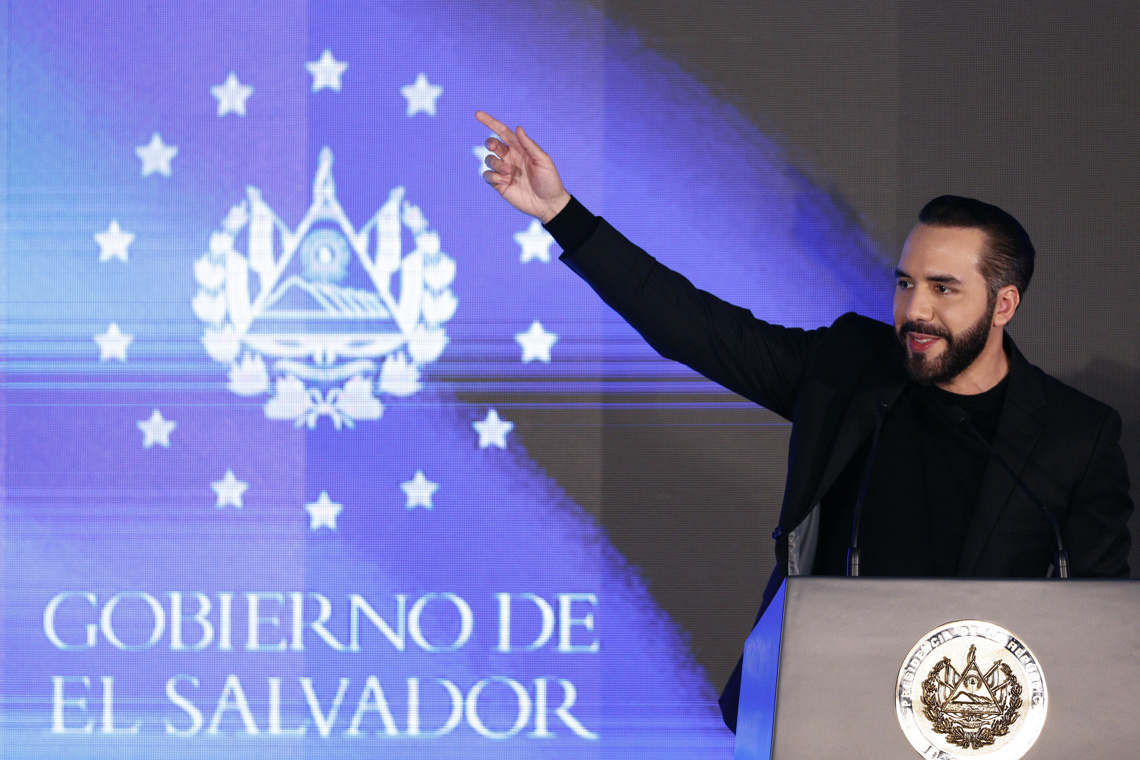
The Legislative Assembly of El Salvadordominated by the New Ideas Party (Ni) of President Nayib Bukele, ratified a reform that allows indefinite presidential re -election on Thursday.
The reform of five articles of the Salvadoran Magna Carta also annuls the second electoral round and extends the six -year presidential term, a report of EFE.
El Salvador | Bukele’s party promotes an express constitutional reform to allow indefinite presidential re -election.
They are touring the same path as Venezuela. Start with a leader who uses his popularity to concentrate power, and ends in dictatorship. pic.twitter.com/52Akanzxfx
– Juanita Goebertus (@juanitagoe) August 1, 2025
The reforms include the 6 -year extension of the period in the Presidency, the suppression of the second round in the presidential elections and the cut of the current period to end in 2027 and not in 2029, this so that it agrees with the legislative and municipal votes of that year.
In February 2024, within the framework of the presidential elections, where he was re -elected, President Bukele was asked if he saw a constitutional reform necessary that included indefinite re -election and replied: “I think constitutional reform is not necessary.”
Power of the people?
Deputy Marcela Villatoro, of the opposition Nationalist Republican Alliance (Arena), now criticized this reform and said that legislators “have made a public confession to kill democracy disguised as legality” and that “they have killed the Constitution.”
For his part, Claudia Ortiz, of the opposition party Vamos, said that the legislators of the ruling party “are saying lies to make believe that this reform is to return power to the people.”
Bukele, 44, began on June 1, 2024 his second consecutive mandate, despite the fact that several articles of the Constitution prohibit him, after a change in criteria of the Constitutional Chamber of the Supreme Court, that the first legislature dominated by or in 2021 appointed in a questioned process.
He added that Salvadorans “are going to have the power to decide how long do they want to support the work of any public official and including its president.”