Report prepared by RONIN
The report of the Multisectoral Committee in Charge of the National Study of the El Niño Phenomenon (Enfen), issued in January 2026, has set off alarms by changing the alert status from “not active” to “vigilance” for El Niño Costero (FEN Costero).
According to the document, since April there is a greater than 50% probability that weak to moderate warm conditions will occur on the northern coast of Peru, which could extend until October and configure a FEN event (see graph 1).
Although the uncertainty of Enfen’s forecasts remains high, episodes such as those in 2017 and 2023 show that changes in climatic conditions can be abrupt (see graph 2), which requires evaluating the probable economic impacts to anticipate risks and mitigate damages.
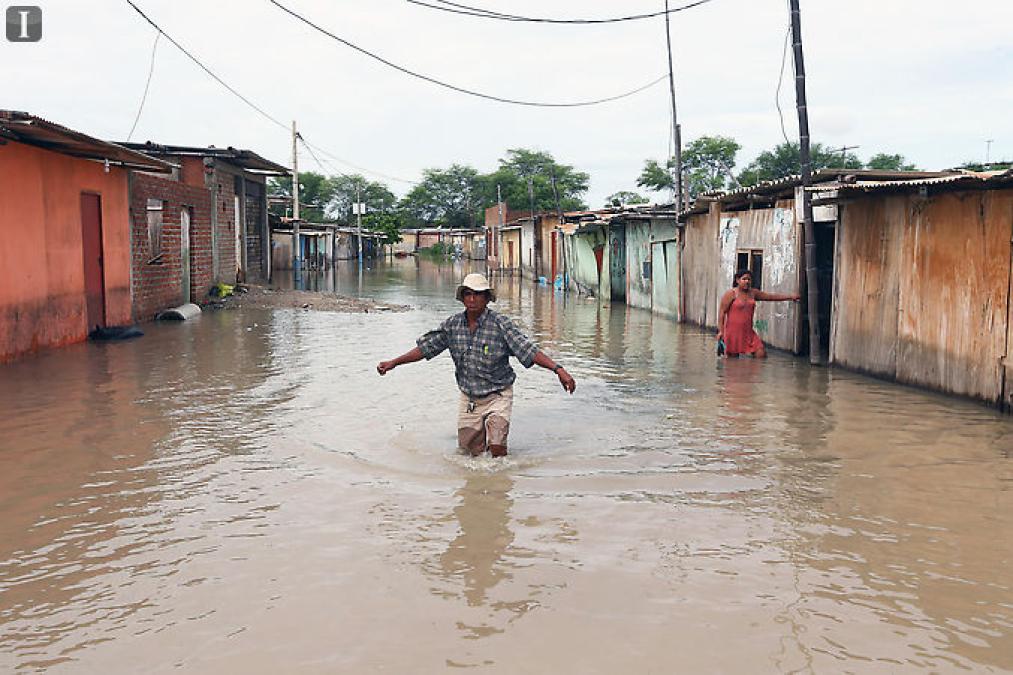
The FEN alters weather patterns by generating high temperatures, intense rains, floods and landslides that interrupt the normal functioning of the economy. Damage to infrastructure such as roads and ports delays the transportation of goods, interrupts production chains and increases operating costs.
Impact
The hardest hit sectors are agriculture and fishing. In agriculture, high temperatures affect the development of various crops destined for both the domestic market (lemon, rice and potatoes) and the external market (blueberries, avocados and mangoes). This generates lower production, loss of jobs, shortages and increased prices, which affects the purchasing power of families.
In fishing, the most affected is the capture of anchovy for industrial use. The species goes deeper and migrates south in search of colder waters, making it difficult to capture and affecting the available biomass. In past episodes, the season was even suspended to protect the sustainability of the resource.
In manufacturing, factories dependent on raw materials such as anchovy and agricultural crops can paralyze operations due to lack of inputs or damage to facilities. Added to this are impacts on construction, commerce and services, due to logistical interruptions, risks of landslides and cancellations of activities, which affects investment, sales and employment, especially in vulnerable areas.
Geographically, the impact of the FEN is distributed unevenly, with the northern coast suffering more from its exposure to river overflows, while the southern mountains experience severe droughts.
Past episodes illustrate the magnitude of the risk. Extraordinary events such as those of 1982-83 and 1997-98 had impacts of 12% and 6% of GDP, respectively1. More recently, the 2023 strong magnitude NEF reduced the GDP2 growth rate by 1.1 percentage points (pp), which would have been 0.7% and not a 0.4% drop. By economic sectors, agriculture fell more than 3% and fishing more than 20%, which had as a correlation a fall of more than 2% in primary manufacturing. By geographical area, the north coast contracted more than 1%, with the drop being greater in Lambayeque (-3.7%) and Tumbes (-4.3%).
If a NEF of weak to moderate magnitude occurs, as forecast in 2026, we estimate a negative effect on GDP growth of between 0.2 pp and 0.4 pp. Given this scenario, the NEF is presented not only as a climate challenge, but as a latent economic risk that could slow down Peru’s growth trajectory this year.
The need to be prepared
Historical experience shows that the country must strengthen its response capacity in the face of increasingly frequent climate and economic shocks, said Isaac Foinquinos, chief economist at Ronin.
In this sense, he highlighted the importance of investing in resilient infrastructure, such as dikes and drainage systems, that allow reducing future damage and costs. Added to this are financial contingency policies, including emergency funds and parametric insurance, designed to act quickly in the event of extreme events.
Foinquinos warned that these risks also highlight the need to preserve adequate fiscal space, so that the State can respond to contingencies without compromising macroeconomic stability.
1 COFFEE. (2000). The lessons of El Niño. Peru. Retrieved from https://scioteca.caf.com/handle/123456789/676.
2 https://www.bcrp.gob.pe/docs/Publicaciones/Reporte-Inflacion/2025/setiembre/reporte-de-inflacion-setiembre-2025-recuadro-2.pdf
Peru needs us informed to make decisions. Subscribe for free to the Perú21 newsletter: THE TOP 5 NEWS YOU SHOULD KNOW TODAY. Click on the next link.
RECOMMENDED VIDEO