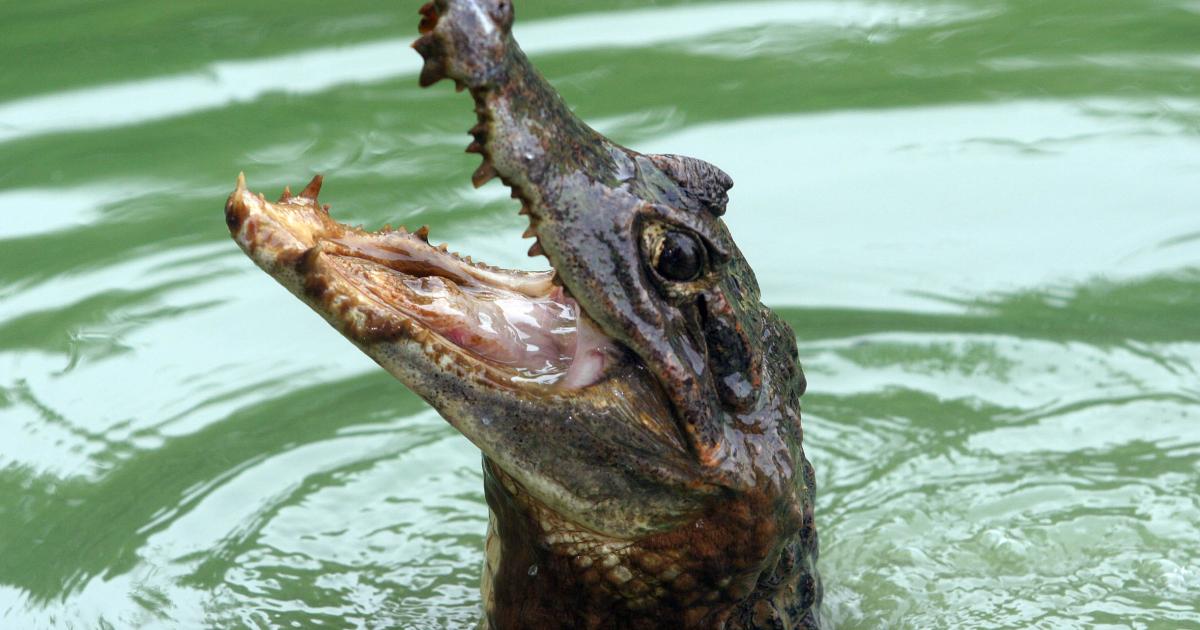
Eight slugs were rescued after being trapped for more than two weeks in a rainwater tank in a rural area of Neiva.
A CAM team rescued eight slugs that remained trapped for more than 15 days in a rainwater tank in Neiva. After a veterinary evaluation, the specimens were released into wetlands and safe areas of the Magdalena River, guaranteeing their well-being and return to their natural habitat.
Eight slugs that remained trapped for more than 15 days in a rainwater tank in the rural area of Neiva, were finally rescued and released by a specialized team of the Corporation Autonomous Regional of Alto Magdalena, CAM.
The situation, which put the lives of these reptiles at risk, was reported by a company that operates in the sector and which warned about the presence of the animals inside a covered storage with plastic geomembrane, a structure thatdue to its smooth texture, prevents the slugs from being able to climb or get out on their own.
When the CAM professionals arrived at the scene, they found the animals, some barely reaching 30 centimeters in length, while others exceeded one meter. However, none of them were in a position to escape from the warehouse.
Read here: The new life of “Colonel Bizcocho”, the mistreated dog in Bolívar that moved Colombia
Once secured, the stifles were transferred to a safe point where a medical-veterinary evaluation was carried out. There it was determined that, despite the time of confinement, the animals were in good general condition. However, two of them were underweight, possibly associated with lack of food and stress. accumulated for more than two weeks in a reduced environment and without natural resources.
Once the assessment process was completed, the CAM fauna team began the transfer of the specimens to strategic points previously selected for their release. The smallest slugs were taken to a wetland in the municipality of Aipe, an ecosystem suitable for their development and growth, where they have food, shade, shelter and enough space to adapt again to the natural environment.
The largest ones were released in safe and protected areas of the Magdalena Riverthe species’ natural habitat and key ecological corridor for its survival.
You may be interested in: Simple! This is how you can receive payments from the United States with Nequi
The CAM stressed the importance of companies and citizens reporting these types of situations as soon as possible, since rapid action can avoid irreparable losses in wildlife.
Likewise, he reiterated the need for industrial, agricultural and livestock activities to implement prevention and monitoring measures to prevent animals from falling accidentally in structures which, although designed for water or waste management, can become dangerous spaces for native species.
This successful rescue demonstrates, once again, the relevance of articulated work between environmental entities, private companies and the rural community to protect the biodiversity of Huila. If the presence of these sputums had not been reported in time, the consequences would have been fatal.
Source: Integrated Information System