By Deniz Torcu, IE University
a few days ago, Guardian public a strong warning: According to Yvette Cooper, British Home Secretary, foreign governments, with Russia as a leading actor, are spreading fake videos generated by artificial intelligence to weaken Western support for Ukraine and foment division in European countries.
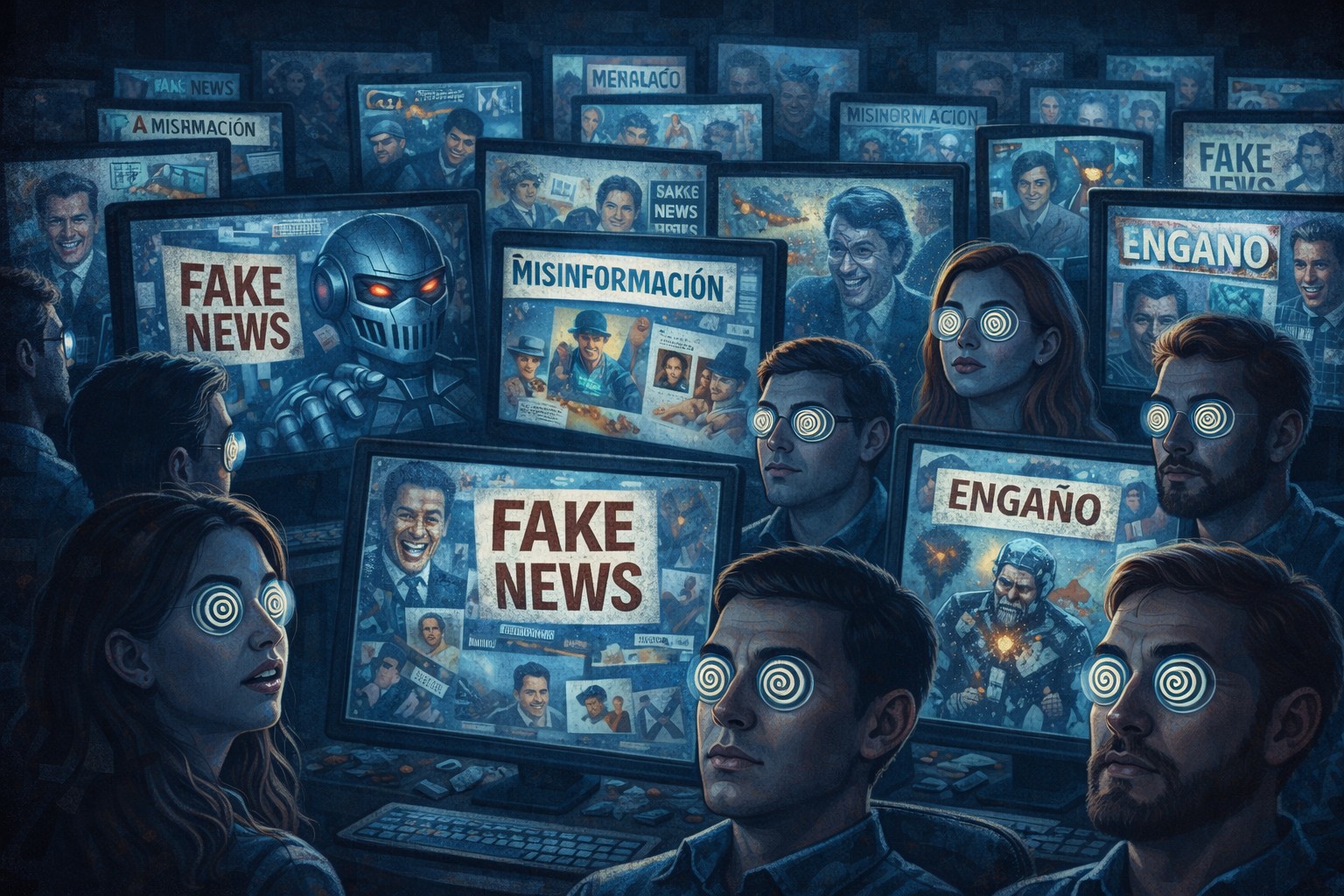
These campaigns are not simple propaganda maneuvers. They are part of a large-scale disinformation strategy whose impact goes far beyond politics. Disinformation, especially when it uses generative AI, is becoming a structural economic risk.
Disinformation is often interpreted as a social, political or cultural phenomenon. However, more and more research indicates that it has direct effects on the real economy. The erosion of trust, social polarization, delays in investment decisions, destabilization of the labor market and the difficulty in approving effective public policies generate an increasing economic cost.
Trust, a rapidly deteriorating economic asset
Trust is not a moral abstraction, but an economic resource with a direct impact on growth. Researchers like Robert Putnam and Luigi Guiso have shown that countries with higher levels of interpersonal and institutional trust obtain better results in investment, productivity and innovation. International institutions also recognize this: the World Bank incorporates institutional quality and trust in its governance analysis.
Misinformation deteriorates this resource rapidly. When citizens doubt the authenticity of what they see, hear or read, the minimum consensus that allows economic decisions to be coordinated disappears.
Economic evidence confirms this effect: the OECD has shown that the fall in institutional trust, one of the first effects of a contaminated information environment, increases uncertainty, reduces the effectiveness of public policies and slows down investment decisions. Your report “Trust and Public Policy” offers a detailed analysis of how the erosion of trust affects economic performance.
Added to this is a growing body of research that shows how misinformation erodes key economic variables. A model developed by the Japanese researcher and professor Taiji Harashima demonstrates that the spread of false information reduces mutual trust, essential to coordinate expectations and productivity. A 2024 international review concludes that misinformation weakens institutional legitimacy and makes the implementation of public policies difficult. In Europe, a report from the IBERIFIER digital media observatory documents how the degradation of the information ecosystem aggravates tensions and directly affects governance.
When trust erodes, the economy loses one of its foundations: predictability. Investing, hiring or innovating becomes more difficult in societies that no longer share a common basis of facts.
When a lie goes viral, the economy notices
Generative AI has transformed the scale and speed of misinformation. There is no longer a need for complex propaganda machinery. It is estimated that the deepfakes grew by 550% between 2019 and 2023, illustrating the extent to which the capacity of produce digital manipulation.
All you need is a video created in seconds that simulates non-existent statements to alter the public conversation. A recent example is the video of former US president Joe Bidenreleased during the 2024 presidential campaign, which showed a chaotic future under a hypothetical second term for Biden. This type of material seeks to sow fear, manipulate public opinionmodify media agendas, amplify political tensions and erode public trust.
The video, generated with AI, was widely shared on social networks before it was confirmed to be false and was part of a broader pattern of information manipulation during the campaign.
Growing uncertainty and lower investment
Investment depends on the predictability and stability of the environment. The proliferation of fake videos, manipulated audio or coordinated campaigns introduces informational noise and increases the perception of risk.
According to an analysis by the consulting firm Deloittecountries that tend to see higher per capita GDP growth and a ten percentage point increase in the share of trusting people can raise annual real per capita GDP growth by about half a percentage point.
That is, small variations in social trust can have significant cumulative effects on the economy, making misinformation a much deeper economic risk than it appears at first glance.
A systemic risk for an already stressed continent
Europe faces an unprecedented combination of challenges. Accelerated aging, loss of industrial competitiveness, foreign dependence on technology and energy, geopolitical tensions in Ukraine, also in the Middle Eastand increasing migratory pressure.
In this scenario, misinformation works as an amplifier of fragilities. It does not generate problems, but it magnifies them until they become crises.
The alert published by Guardian must be read in this framework. The instrumentalization of lies for geopolitical purposes is inserted in a context in which disinformation has been identified as one of the main global risks. For the World Economic Forum, disinformation and misinformation constitute the most serious short-term risk globallysince it can erode social cohesion, intensify polarization and increase political instability in already stressed societies.
In this sense, countries that manage to strengthen their information defenses and institutional resilience will be better positioned to sustain their growth and stability, while those most exposed to disinformation could experience a deterioration in their social cohesion, their investment attractiveness and their international influence.
What Europe can do to mitigate the economic impact
The answers exist and many are already on the table.
-
Technological regulation and mandatory traceability. He Digital Services Act and the AI Act of the European Union They represent important advances, but not enough. Traceability of AI-generated content, such as mandatory digital watermarks, will be essential to prevent manipulated videos from spreading uncontrollably.
-
Media education for the entire population. Information literacy should not be limited to young people and students. It is also necessary to train adults, workers and public officials. The Nordic countries offer a valuable example: in countries like Finlandmedia education is present from childhood and extends throughout life, with public policies that integrate media literacy at all levels of the educational system and in continuing training programs for adults.
-
Strengthening the media and the information ecosystem. The OECD and the World Economic Forum have pointed out that solid journalism is an economic stabilizer, not just a democratic one. Supporting rigorous means and strengthening verification mechanisms helps reduce uncertainty.
Public policies that regenerate social capital
Social cohesion is also an economic investment. Recent studies show that it is societies with higher levels of trust, inclusion and institutional stability that tend to record better economic performance. An analysis of 2025 demonstrates that social cohesion has positive direct and indirect effects on growth, especially through increased investment. Besides, the cohesion policy of the European Union has historically documented that reducing territorial and social inequalities contributes to sustainable economic development.
Therefore, strengthening equal opportunities, citizen participation and the community fabric is not only a democratic issue: it is an economic strategy that increases resilience against misinformation and facilitates the adoption of effective public policies.
Deniz TorcuAdjunct Professor of Globalization, Business and Media, IE University
This article was originally published in The Conversation. Read the original.