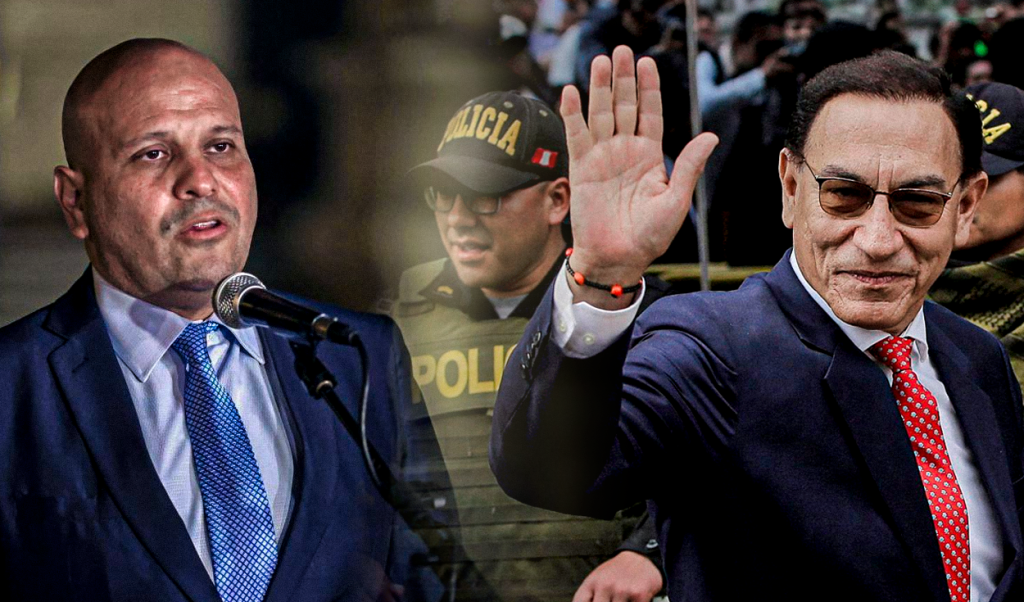
“We have the lowest levels of poverty… it is the lowest level of poverty since we have records.” However, Esquivel also clarifies that the objectives are not the same throughout the country. “On the northern border… the minimum wage is enough for two baskets,” he explained during a Sura Investments event, regarding economic projections towards 2026.
There, he says, the objective has already been met and the increases are beginning to find limits that, if not taken into account, can have a negative impact on the creation of formal jobs, inflation or company profits.
When mandatory labor costs grow faster than marginal productivity, businesses face pressures on their cost structure that can translate into a reduced ability to sustain fully formal labor arrangements.
Gerardo Esquivel, former deputy governor of the Bank of Mexico.
Weak productivity and high informality
While salaries rise, labor productivity practically returned to 2018 levels and, although the employment rate remains at a minimum of around 2.9% of the employed population, informality is beginning to gain ground and already represents 55% of employees.
Geronimo Ugarte Bedwellchief economist at Valmex, warns that the increase in the minimum is exceeding the advance of productivity in low value-added sectors and that small companies show signs of pressure in ups and downs of the IMSS. The main affected are microbusinesses that, due to lack of access to financing, may suffer the greatest magnitude from the increase in labor costs.
The rising cost of labor can also be transferred to prices, underlying inflation in services exceeds 4.5%, and Ugarte estimates that, if the wage-productivity gap continues to widen, there will be more labor costs passed on to the consumer and less competitiveness compared to other manufacturing destinations.
“Employment has come to a standstill… we have observed a growing labor cost… (and) productivity has fallen compared to 2018,” he highlights. Alejandro Saldanachief economist of Banco Ve por Más.
Capital investment incentive
Rolando Silvavice president of the IMCP tax technical commission, explains that increases by decree generate pressure on companies’ margins. “If my margin does not allow me to pay the salaries that by law I have to pay, what I have is not a business.”
And he warns about technological replacement, that is, when employers decide to make “a larger investment in technology (that) can replace this labor expense.”
Furthermore, the specialist explains that if the minimum wage worker reaches his supervisor, the supervisor also has to have a modification… it is effectively becoming more expensive [la nómina].” This increase in cost can lead to cuts, automation or even greater use of informality.
The government seeks more increases
In the morning conference on November 19, President Claudia Sheinbaum made it clear that her administration will continue to push for significant increases. “I committed that the minimum wage had to reach 2.5 basic baskets (…) The increase in the minimum wage has to be greater than inflation… that is no longer under discussion (…) There is still room… we hope it will be much more,” he said.
He also defended that the increases are not decided unilaterally, but are the result of negotiations and a consensus between workers, companies and the government. In fact, Coparmex decided not to issue any comments for this note because, precisely, they are in the negotiation phase.
The president, however, recognized that competitiveness must be taken care of on the northern border, where the salary floor “increased almost three times.”
An analysis by Banamex anticipates that inflation will rebound to 4.5% at the beginning of 2026, combining tax effects (such as modifications to the IEPS) and salary adjustments. And it projects an increase of around 11% in the minimum wage for next year, an increase that could encourage persistent inflationary pressures in services. Among the upside risks he mentions:
A salary increase greater than expected, a broader transfer to the rest of the salaries and climatic or health effects on agricultural prices.
According to IMEF data, of the 21.5 million formal workers, 54.6% earn between zero and two minimum wages, and therefore directly resent the adjustments.
Across the workforce, about 14.5 million people fall into those ranks, many in highly informal sectors such as retail, agriculture, food and accommodation.
The organization Citizen Action Against Poverty proposes for 2026 a differentiated increase in the minimum wage that allows progress in the recovery of purchasing power without generating adverse effects on employment and investment.
Its central approach is to raise the general minimum wage (SMG) by 16%, up to 323 pesos per day – equivalent to about 9,700 pesos per month, enough to cover two basic baskets – while in the Northern Border Free Zone the adjustment is only 4%, since this minimum wage exceeds from 2022 the cost of the 2.5 basic baskets set as a goal for 2030.
An unequal impact between sectors
At the beginning of the year, the IMEF warned that the 12% increase in the minimum wage has a very unequal impact between sectors. In low-profit activities such as agriculture, food services, lodging, museums or social assistance, the increase can consume up to a third of the operating margin, putting pressure on the viability of maintaining formal jobs.
On the other hand, in more productive or capital-intensive branches—such as computing, messaging or certain specialized manufacturing—companies do have room to absorb the increase without slowing down hiring.