The growth of the bicycle sharing system will occur to the north, south and east of the city, by expanding its coverage area.
This is part of the 2025-2030 Cycle Plan launched by the Head of Government, Clara Brugada, which includes the construction of 300 kilometers of new cycle lanes.
In addition, capacity will be expanded in high-demand areas where Ecobici already operates, which covers six municipalities: Cuauhtémoc, Benito, Miguel Hidalgo, Coyoacán, Álvaro Obregón and Azcapotzalco.
A model system
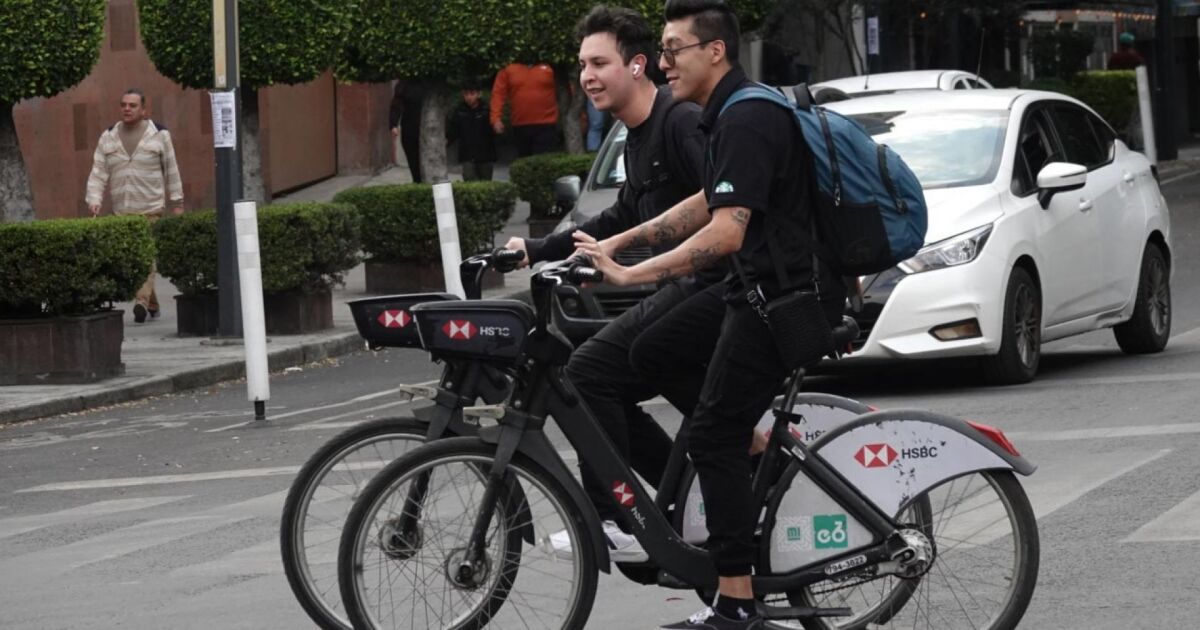
Currently Ecobici is positioned as the most important bicycle sharing system in Latin America with 9,300 bicycles and 689 stations.
67% of people who use Ecobici use it to go to their work or school, with trips lasting 20 to 25 minutes on average.
It is part of the Integrated Mobility Network and facilitates the connection of people with other transportation options such as Metro, Metrobús and Trolleybús.
(Photo: Special.)
With up to 10 trips per bicycle per day – double the international standard – to keep Ecobici going, strategic balancing is carried out to guarantee the continuous availability of bicycles, in addition to real-time monitoring to maintain availability greater than 94%.
Furthermore, it is estimated that between 2022 and 2025, the use of Ecobici helped avoid the emission of 3,200 tons of carbon dioxide (CO2)the equivalent of planting 157,000 urban trees.
60,000 trips are made every day on average on Ecobici, which is equivalent to:
-Go around the Mexican Republic three times every day.
-In energy burned pedaling each day is consumed what it would take to play a two-hour movie 52,000 times.
-14 million annual trips are made each year, which in kilometers represents circling the world 290 times.
-Each person who uses Ecobici pedals the equivalent of crossing from Polanco to Xochimilco more than 30 times a year.