A magnitude 6.5 earthquake with its epicenter in Guerrero, in the southwest of Mexico, shook that tourist area of the Pacific coast and nearby Mexico City this Friday morning, causing at least one dead in the capital but without leaving “serious damage.”
The earthquake was recorded at 7:58 a.m. (local time) and had a magnitude of 6.5 according to data from the Mexican National Seismological Service.
Mexico City authorities reported the accidental death of a 60-year-old man who fell while evacuating his home during the earthquake.
“The man vacated his apartment on the second floor, stumbled and lost consciousness,” reported the local mayor’s government Benito Juárez. When the paramedics arrived, “he no longer had vital signs,” he added.
In addition, 12 people were injured, reported the mayor of the capital, Clara Brugada, on the social network X.
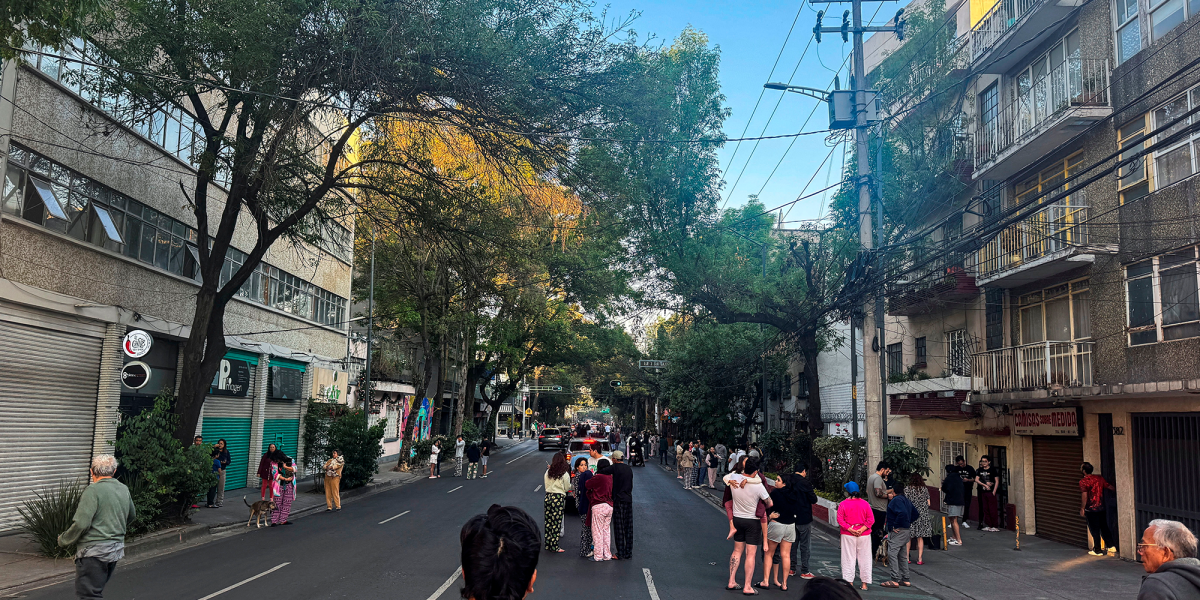
The violent shaking was preceded a minute earlier by the warning alarms, which on a long weekend at the beginning of the year woke up many Mexicans and tourists, some of whom took to the streets still in their pajamas.
The earthquake also forced the suspension of the usual press conference that President Claudia Sheinbaum It takes place every morning at the National Palace in Mexico City.
The earthquake had its epicenter 15 kilometers from San Marcos, near the tourist town of Acapulco, in the state of Guerrero, Sheinbaum reported upon his return minutes after the tremor.
The president assured that there are preliminary reports of “serious damage” neither in the capital nor in Guerrero.
“The scare is horrible”
The ground began to shake at 7:58 a.m. (local time) and caused residents of the capital to evacuate their homes.
“I was still asleep and the street alarm started ringing,” Karen Gómez, 47, who lives on the 13th floor of a building in the Álvaro Obregón district of Mexico City, told AFP.
“The cell phone alarm, that one scared me,” explained this corporate employee, in reference to a mobile phone alert system recently implemented by the Mexican government in 2025.
“The scare is horrible, you can feel the building moving,” said Norma Ortega, 57, a resident of an adjacent apartment tower.
In Acapulco, Guerrero, Ricardo, a nervous tourist who left his hotel without a shirt, regretted finding himself “starting the year and with this scare.”
The traveler from the state of Morelos, in central Mexico, told AFP he felt an aftershock outside his accommodation.
As of 9:00 a.m. local time (3:00 p.m. GMT), 151 aftershocks had been recorded, according to the National Seismological Service.
Deadly earthquakes
Part of Mexico City, mainly the central area, is located on a muddy subsoil of what was previously a lake, which makes it particularly sensitive to earthquakes.
Those that suffer the most are those generated on the coast of Guerrero, being less than 400 km away.
On September 19, 1985, an 8.1 magnitude earthquake devastated a large area of the capital.
With its epicenter on the Pacific coast, between Guerrero and Michoacán, it also shook a large part of the center and south of the country.
For years, official figures varied in death estimates from the 1985 earthquake. According to a count of official death certificates published in 2015, it caused 12,843 deaths.
Also on September 19, 2017, a 7.1 earthquake left 369 dead, most of them in Mexico City.
With the support of National Seismological Alert systems have been developed, including smartphone apps, that warn of the occurrence of a strong earthquake and give residents of the capital up to one minute to get to safety.
The mayor’s office has installed speakers on the public lighting poles that emit the so-called “seismic alert.”
Mexico is located between five tectonic plates, whose movements make the country one of those with the highest seismic activity in the world, particularly on the Pacific coast from the border with Guatemala to the state of Jalisco (west).