Ten months after the administration of donald trump impose a 10% rate on Dominican products exported to USA due to its new tariff policy – representing a cost of 396.4 million of dollars for local exporters until last November – the Dominican authorities are preparing to begin a negotiation process similar to that of Guatemala and El Salvador with its American counterparts.
According to statements given by the Ministry of IndustryCommerce and MSMEs (MICM) when consulted, both countries have maintained 18 meetings in person, virtual and telephone from the entry into force of the tariffs, in April 2025, until now.
“The competent authorities in the country have been analyzing the executive orders, the impact they have on the country, the agreements that have been published and the inputs received in exchanges with the different agencies of the USA“, indicated the MICM.
Thus, both nations “have been actively following up to begin the process of bilateral negotiationsimilar to that carried out by El Salvador and Guatemalacountries selected by the USA in April 2025 due to the political issues that unite them,” he noted. Industry and Commerce.
Although the institution reserved details about the progress achieved in these meetings, citing reasons of confidentiality signed between both states, suggested that the environment for the Dominican Republic will be favorable in this negotiation. “In the next few days we will important announcements“he highlighted.
“Although the total amount collected is significant, there is no structural loss of competitiveness or a reduction in the market share of the Dominican Republic in the United States”(Adoexpo).
He assured that the Government has kept relevant public and private sector actors duly updated on the process and progress, and reiterated that the USA–especially the ambassador, Leah Campos– have reiterated their commitment to maintain business relationships “deep” and “close.”
“Dominican Republic does not have surplus facing the US, does not send fentanylnor is it a migrant bridge, among other issues. In that sense, we hope to soon conclude this issue for the peace of mind of our productive sectors“he emphasized MICM.
Zero rate, but…
El Salvador and Guatemala They are the only two countries in the Western Hemisphere that have managed to negotiate with the USA to avoid the impact of tariff rate which, as in the Dominican Republic, was 10%.
Both agreements – signed on January 29 and 30 of this year, respectively – reduce the rate to zero on all items that had been taxed in the Executive Order 14257 on April 2, 2025 by the White House, and stipulates that any other tariff to products not listed in this agreement will be equal to or less than 10%.
Except for slight variations in their wording to adapt it to the context of each country, the United States’ requests to access the agreement are essentially the same in critical points. In exchange, both nations agreed to an extensive series of conditions that forces them to align their trade policy in favor of the North American giant.
Among the agreed pointsare cited:
- Do not require non-automatic import licenses for US goods – except for public health, safety or national security.
- Allow “non-discriminatory” access of US agricultural goods to their local markets,
- Avoid any type of commercial barrier
- Refrain from imposing taxes on digital services to the detriment of American companies.
Furthermore, if USA imposes a tariffquota, prohibition, tariff, charge or other restriction on the importation of a good or service from a third countryso much El Salvador as Guatemala must take “restrictive measures equivalent”.
What Dominican exporters paid
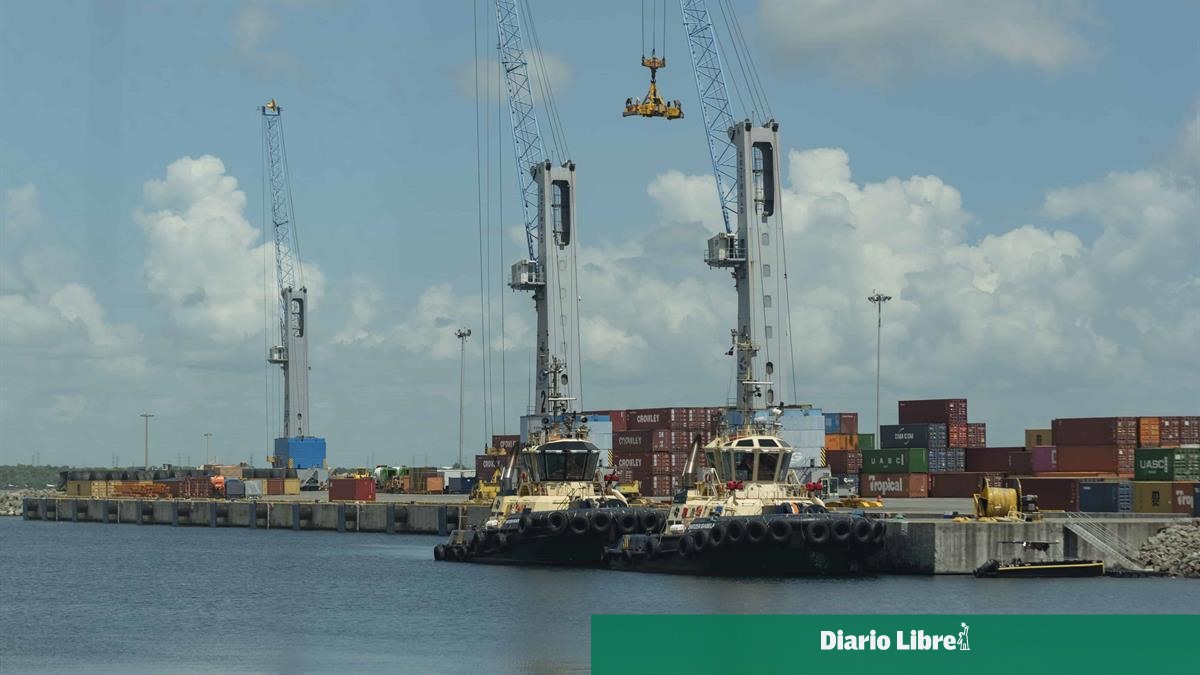
The Customs Office and Border Protection of USA collection 396.4 million dollars for the tariffs applied to Dominican products until November 2025 according to its most recent data, an amount that the country stopped receiving in the foreign currency generated by these purchases, which in that period was 6,568.7 million dollars according to local customs.
The greatest weight of this tariff fell on the industriesthe sector that had to pay this rate the most (62.08%), followed by agriculture (27.04%), textiles (10.63%) and, lastly, the mining sector (0.25%).
After collecting and analyzing this data, the Dominican Association of Exporters (Adoexpo) indicated that, although the tariff announced was 10%, the effective rate average applied was 7.2% as of November, because the data is recorded by tariff item and not all products were fully subject to this rate.
In addition, there is a provision that allows an adjustment of up to 20% downward on the value subject to the tariff when the exporter demonstrates that the product incorporates raw materials either original inputs of the USA.
“Although the total amount collected is significant, there is no structural loss of competitiveness nor a reduction in the market share of the Dominican Republic in USA“said Adoexpo, after adding that the export sector has shown the capacity to adapt, since the main affected items maintained their dynamism.
He indicated that many local companies managed to absorb part of the cost, readjust pricesoptimize logistics structure and benefit from exceptions and lower effective rates.
Adoexpo stated that it values the technical effort and deployed diplomat, trusting that the dialogue “allows to preserve conditions predictable and competitive access conditions”.
“The objective now must be to continue strengthening competitivenessmarket diversification and logistics efficiency to reduce vulnerabilities to changes in international trade rules,” said the export union.
Meanwhile, the North American giant topped – as it has traditionally done – the list as the main destination country for Dominican exports at the end of last year, with 48.65% (7,124.4 million dollars) of the 14,645.2 million dollars sold in total.