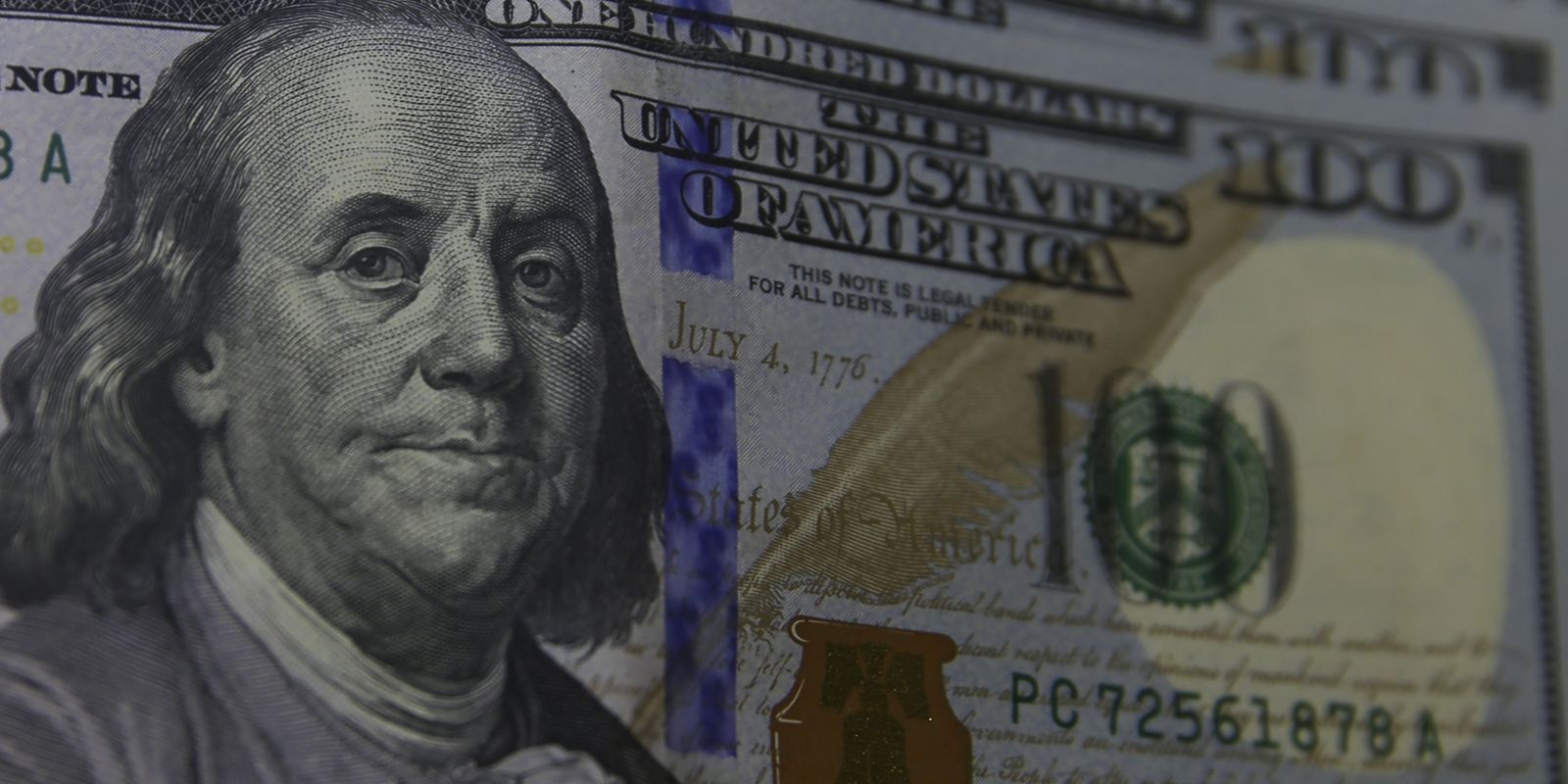
On a day of external adjustments and internal political tensions, the financial market had a nervous day. The dollar ended Friday (22) on a sharp rise in the Brazilian market, returning to a level above R$5.40. The stock market fell for the fourth time in a row and lost 155 thousand points.
The spot dollar closed at R$5.401, up R$0.063 (+1.18%). The price operated higher throughout the session. At the high of the day, around 12:30 pm, it reached R$5.42.
The US currency is at its highest value since October 17th. The currency accumulated an increase of 1.97% in the week, but will fall 12.6% in 2025.
The stock market also had a tense day. B3’s Ibovespa index closed at 154,758 points, down 0.4%. Shares of mining companies and banks rose, but most shares fell this Friday.
The US currency followed the global movement. On Thursday (20), while the Brazilian market was closed due to Black Awareness Day, the United States Department of Labor informed the creation of 119 thousand vacancies in September – above the projection of 50 thousand – and an increase in the unemployment rate to 4.4%, compared to expectations of 4.3%.
The mixed data reinforced international volatility and boosted the dollar abroad, leading the local market to make an adjustment this Friday. This is because the creation of higher-than-expected vacancies reduces the chances of the Federal Reserve (Fed, Central Bank of the United States) cutting basic interest rates in December.
The strengthening of the US currency against other emerging and linked currencies commodities (primary goods with international prices) also contributed to sustaining the rise in Brazil, on a day of falling oil prices.
The removal of the 40% tariff on Brazilian products – such as beef, coffee and orange juice – announced by Donald Trump on Thursday was not enough to contain exchange rate pressure. The measure opens up space for the recovery of exports to the North American market, but the potential effects on the exchange rate flow were overshadowed by other risk factors.
Tensions between Planalto and Senate
In addition to the turbulence abroad, the market was influenced by the increase in political tensions between the Planalto and the Senate after the appointment of Jorge Messias to the Federal Supreme Court (STF). The announcement by the president of the Senate, Davi Alcolumbre, that he will plan a project that readjusts the minimum wage for health agents, with an impact on public coffers, worried investors.
*With information from Reuters