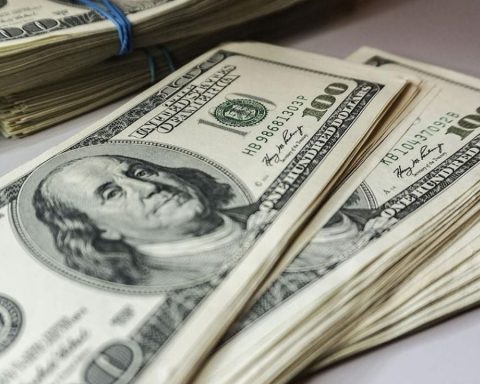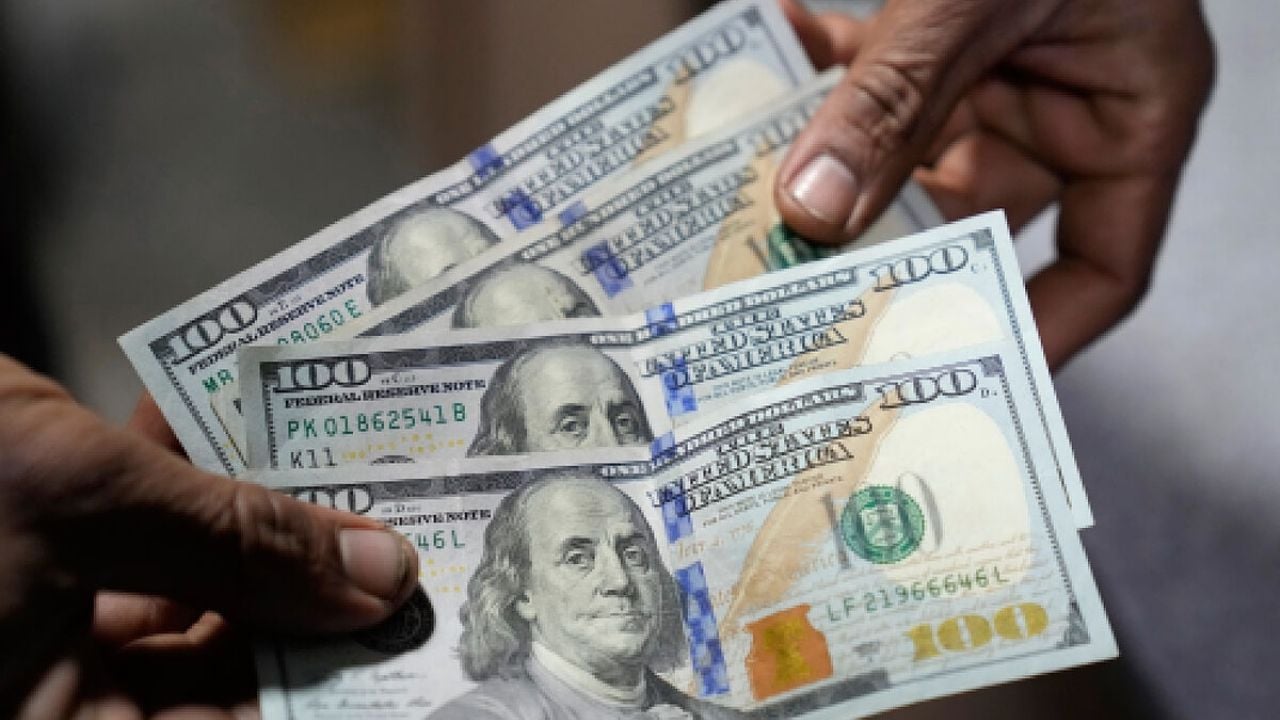
The exchange day began with moderate movements in the Argentine currency market, in a context of relative stability after weeks of financial tension. The attention was focused on the evolution of the dollar Blue, the official dollar and the different financial exchange rates, such as the MEP and the one with liquidation (CCL), which remain key indicators to measure the economic temperature of the country.
According to data published by specialized means and financial entities: Dollar Officer (National Bank): Purchase: $ 1250 and sale: $ 1300. Dollar Blue (informal market): Purchase: $ 1285 and sale: $ 1305. MEP dollar (bag): Purchase: $ 1289.90 and sale: $ 1294.80.
Dollar CCL (counted with liquidation): Purchase: $ 1300 and sale: $ 1269.20. Dollar Card: Quote: $ 1699.53. The exchange gap between the official dollar and the Blue dollar was around 3%, a relatively low difference compared to previous periods, which reflects a certain convergence between both values.
During the month of July, the dollar Blue showed a rise of 9% compared to the previous month, although so far in 2025, it records a decrease of 9.82% compared to the closure of 2024. This dynamic responds to several factors, among them:

Fountain: Dollar today
The implementation of a new flotation scheme between bands by the Government. The flexibility of the exchange rate, which allowed natural persons to buy dollars without the limit of US $ 200 per month, although a cap of US $ 100 is maintained for the purchase of physical tickets in the window.
The intervention of the Central Bank in the change market, which has been more moderate in recent weeks. For its part, the official dollar has had an increase of $ 85 since the beginning of July, which represents an acceleration in its adjustment rhythm. This rise responds to the government’s need to maintain exchange competitiveness without generating an inflationary trigger.

Perspectives
In the short term, the dollar Official continue with gradual adjustments, while the blue dollar could be kept at similar levels if there are no shocks in the economy. The exchange gap will continue to be a key indicator to evaluate the confidence in the weight and effectiveness of the policies of the Central Bank.
In this scenario, savers and small investors are still attentive to market signs, seeking to protect their capital against possible fluctuations. The price of the dollar, beyond its numerical value, remains a thermometer of the Argentine economy and a reflection of its structural challenges.
Follow us in Google News And in our channel of Instagramto continue enjoying the latest news and our best content.