The Cuban regime’s press seems not to know (or does not want to know) about the potential catastrophe that is coming.
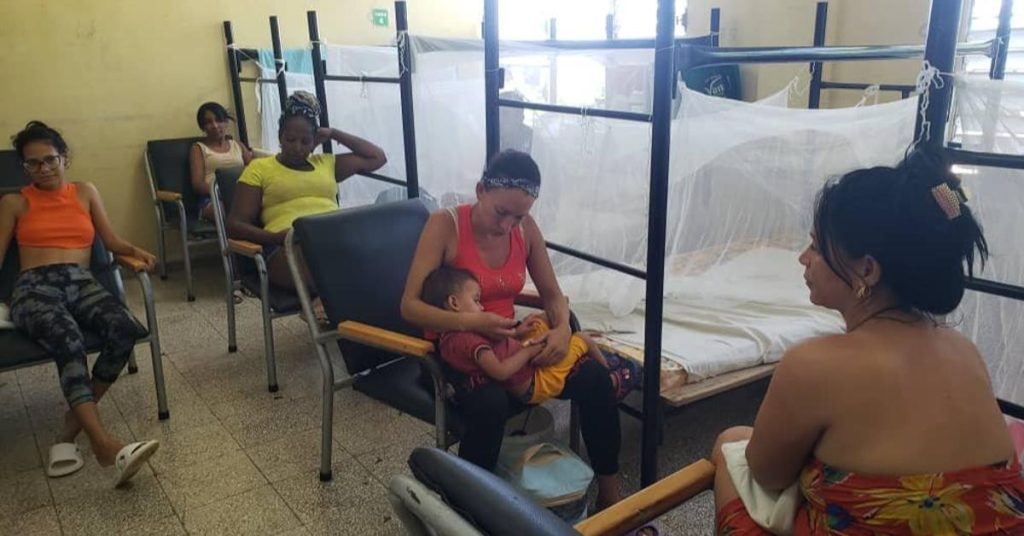
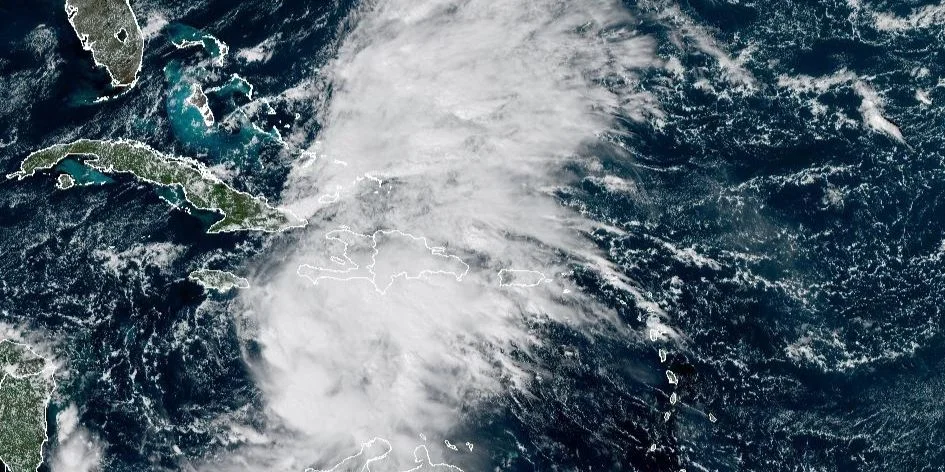
HAVANA, Cuba – Millions of Cubans remain without mobile connection and without electricity, some for more than 20 hours, as Tropical Storm Melissa moves through the Caribbean and turns into a hurricane category four about to directly affect eastern Cuba.
Foreign media, like independent ones, issue alerts, publish reports constantly and even broadcast live with maps updated in real time, but the Cuban regime’s press seems not to know (or does not want to know) about the potential catastrophe that is coming and is more interested in reporting the visit of Miguel Díaz-Canel to Pinar del Río this Friday the 24th, to talk about tobacco production in Viñales and, incidentally, remember the importance of securing photovoltaic parks without even showing interest in human lives.
It does not matter that due to the intense rains and the overflowing of a river in Sagua de Tánamo, Holguín, two people are already reported missing at this time, or that a little over a year ago, just as the passage through eastern Cuba of Hurricane Rafael, category 1, left seven dead, because the first and most important news in the News of Cuban Televisiondespite having declared an Information Phase at 2 pm, is that in Pinar del Río – where Melissa will not pass by even by chance – the raw materials are assured so that Chen Zhi, the Chinese who bought 50 percent of Habanos SA, can become richer, along with the owners of the other half of the business.
Only 10 minutes later – which for a news program of just over half an hour is a very long time – they decided to give way to the meteorological situation but without elaborating too much on the probable impact points of the hurricane, on the complexity of each scenario, the differences in criteria in the models, the intensity with which it could make landfall, the volume of water it will bring and, most importantly, whether the Institute of Meteorology (which, according to information on its official site, has half of its radars turned off) and the Civil Defense General Staff have some strategy to send information as urgently as possible to those localities in danger where it is known that people are misinformed due to the lack of electricity or because the weather conditions have already deteriorated due to the intense rains that precede Melissa.
I don’t know if they do it on purpose or because they really have plans to annihilate us through hunger or abandonment, but the truth is that showing Díaz-Canel walking through Pinar del Río – that is, at the opposite end of the Island, hundreds of kilometers away from where a catastrophe could occur in a few hours – is a message that audiences could interpret as “nothing is happening”, “there is nothing to worry about” and that not only contributes to the misinformation but rather consciously minimizes or eliminates the perception of risk.
With all its manipulations and lies, unfortunately the Television News continues to be the only means of (mis)information that many Cubans turn to, especially when high internet connection rates imposed by ETECSA and the terrible coverage (both as covert strategies of political censorship) make it difficult to access other alternative and reliable news sources, for this reason delaying information that can help save lives, relegating it to second place in the middle of a dangerous situation – knowing that many people, not being interested in that first news content, will skip the entire transmission – is criminal more than a clumsiness or communication error.
In a situation like the one that the eastern provinces will face in a few hours, it is necessary for the media to dedicate all spaces, informative or not, to providing constant, uninterrupted, precise and updated information, as well as guidance on what to do in the different scenarios before, during and after the hurricane.
It was done before, although Fidel Castro He used the opportunity to make those extensive monologues of pedantry that did not allow Dr. José Rubiera to open his mouth, but the “continuity” stopped doing so. Nobody knows for what reasons that perhaps only those who are more concerned with producing a good cigar to sell in dollars than with reproducing the same fatality scenario of Hurricane Alberto, or perhaps a worse one, since this time it is a probable category four.
But nothing else can be expected from either the Cuban regime or its “official press.” Díaz-Canel himself has insisted on letting us know that if the problem breaks out in Guanabacoa, then he will go to Marianao to solve it; if it is in Santiago, it appears in Pinar; and if things are too hot in the whole country, then he goes on a tour of Moscow or China to “borrow” or play the Swede.
In a few days a hurricane of great intensity could wreak havoc in Cuba, which will add to another more than delicate situation such as the “routine maintenance” that will continue this coming week to the Antonio Guiteras thermoelectric plant outside the national electrical system for at least four days. So it will be a long and intense day in every sense between blackouts and disasters. As if between nature and the denatured “continuists” they had proposed to annihilate or drive us all crazy.