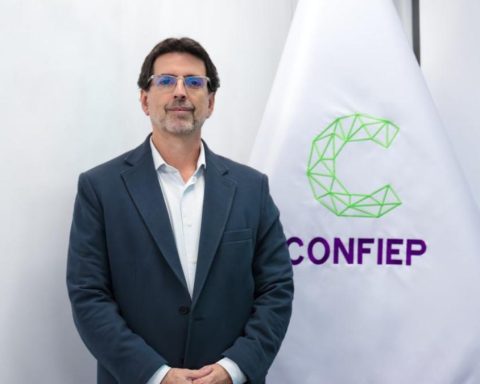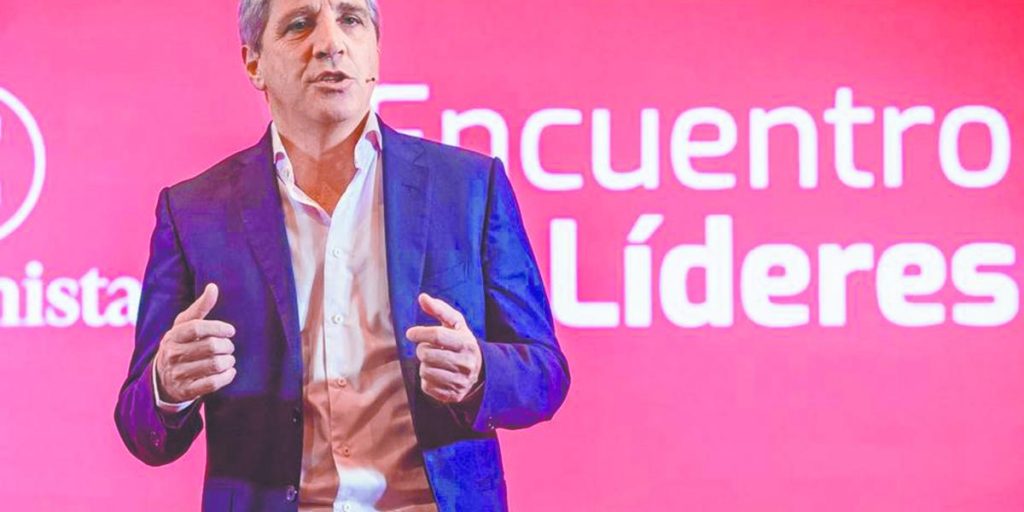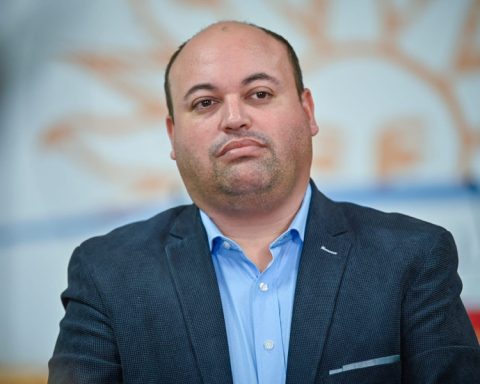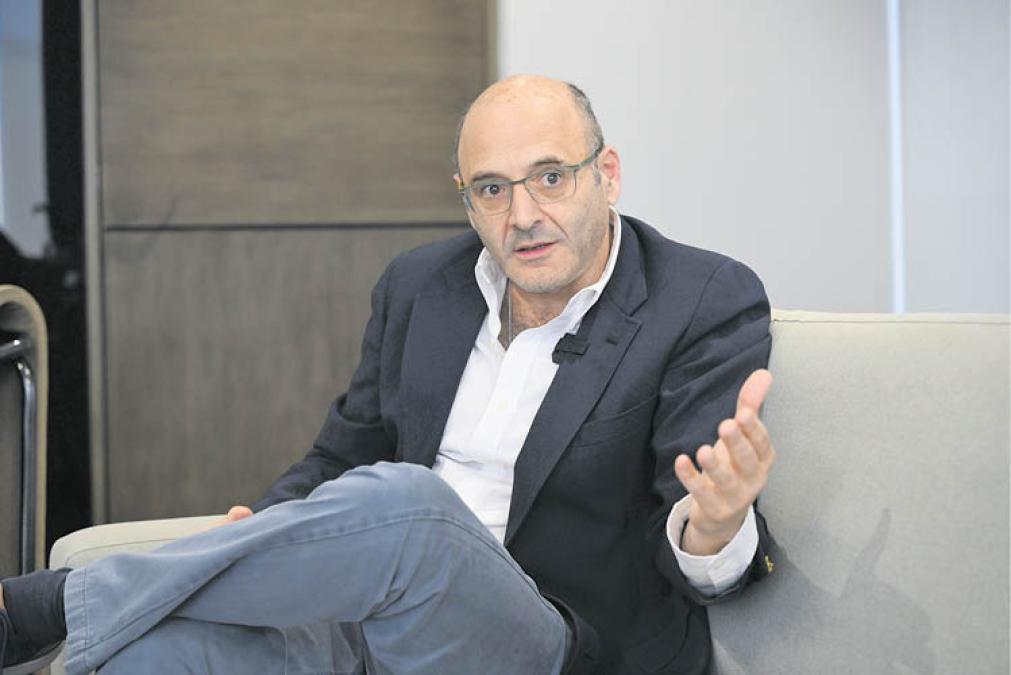
After 25 years, Dionisio Romero Paoletti This month he says goodbye to the presidency of the Romero Group and the Romero Foundation. He does it, he says, with mixed feelings, but with great enthusiasm for future projects, always linked to education. A sector that has also been important for the foundation, which has promoted the granting of scholarships, training and programs. The last of them, Academy of Trades.
He leaves the presidency of the Romero Group and the Romero Foundation after 25 years. What is the feeling?
There are mixed feelings, but I am more excited about what lies ahead for the next generations and very happy with what we have done in these 25 years.
Has it been difficult to carry out an entire business conglomerate in a country that has gone through such difficult times of insecurity, economic issues, and terrorism?
Yes of course. There were very hard moments. The agrarian reform was very hard, not only for us, but for all businessmen in the provinces. Then there are times of great inflation, of terrorism, of kidnappings (…) But there have also been times of growth when the country grew 5, 6, 7%. Our country is very diverse in all ways, and suddenly very volatile politically and socially as well.
What has the Peruvian taught the Romero Group and the foundation?
I think what we have learned the most is tenacity, which is one of the most important characteristics of the Peruvian; that through these ups and downs of the economy, hard times and booms, you always have to be fighting to achieve your goals. That is why education seems so important to us and that is what we do at the foundation.
How is the work of the Group different from that of the foundation? Are they divided or do they complement each other?
I think they work very well together. There are some large companies, such as Alicorp, that have their own aid programs such as Pots that Develop. But the foundation complements and basically has two main lines of action. The most important is education through scholarships, and what we are going to inaugurate: Trades Academy. Another angle—which deepened with COVID-19 and the Pisco earthquake—is help. We learned that although there was good will on the part of many companies and the State to help those in need, what was missing was the
early help.
Finally, entrepreneurship is an important factor.
Yes, I believe that what we have to promote is that there is a good relationship between the State and companies; It doesn’t have to be a distant relationship and even less an antagonistic one if we can complement each other very well. What we have in private companies is the possibility of developing new things, what we do not have is the scope.
Is it possible to quantify the help that the foundation has given?
I don’t have an exact figure, but I would say that it could be around 14 or 15 million dollars in the last 10 years at the foundation level, and it did not include Alicorp, which is a similar figure perhaps, and neither did Credicorp.
And as for beneficiaries?
We reach different groups of people through different projects and initiatives. The largest to date is the Grupo Romero Scholarships and to date we have reached 2 million different people who have taken our courses and whom we have helped access a better job or family business.
The foundation’s latest program is the Trades Academy. What does it consist of?
Trades Academy is a new initiative. Through scholarships we launched projects for different need groups, one very important one, which we did not have the ways or the tools to reach, were the students who were leaving school and who did not have the resources to continue studying at universities or institutes, nor the necessary knowledge to obtain that first job; the so-called NEETs, who neither study nor work, and who are not a small group; In Peru there are one and a half million people in this situation and there are more or less 400,000 students who graduate from public schools each year.
And it is difficult for them to enter the labor market because they have just left the classroom…
And knowledge, and they don’t have it to be an accounting assistant, how to run a warehouse. What we saw is that companies look for them, but kids don’t have those capabilities. But the difficulty was how to reach them with this training. (…) In Peru, 95% or more of homes have a smart cell phone, so we said: “Why don’t we do it through that?”, and we have already closed an agreement with Entel and we are close to closing with another company so that people who come to take these courses do not consume the data, so that the course and communication are free. (…) We spoke with the Ministry of Education and the Ministry of Labor, both to complement us and form the courses; The UPC also helped us there. There are, at the moment, 12 courses: 4 transversal, mainly in personal finance, in soft skills, 8 functional: that is, so that the student who goes through the process comes out with a trade, that’s why Trades Academy.
It is a farewell program.
It is the last program. At the end of the year, I will retire as an official of the Romero group. I have other initiatives that I continue to explore and that I will carry forward next year, and I am very excited. One of them is in research, exactly on the topic of education that I am passionate about.
Why are you retiring so young?
(Smiles) Thank you for being young: this is a cultural trait of our family. My great-grandfather returned to Spain, he retired very young and left his young son in his early thirties in charge, he also retired very young and left my uncle and my father, and my father was also in his early thirties when he took over. That is my case, when I took over the presidency of the Romero Group I was 34 years old, 35, and now my nephew Manuel is going to take over the presidency.
What do you feel is your legacy?
I think the most important thing is not necessarily the investments that were made; The most important thing is the conceptual and organizational that is left, with its ups and downs, twists and turns, because not everything has been success, there have also been crises, problems. My cousins and I have created a very powerful way of working in which not only do companies put up the projects, but they have a counterpart of a highly qualified human team that does their own analysis. Regarding the legacy of the foundation, what it has done and the team it has allow us to carry out these important, complex initiatives, where there are many actors who participate, and it is seen not only by the number of scholarships and the quantity, the most important and the greatest point, and my legacy, is going to be the Academy of Trades, an extremely important project that can be very transcendent.
What’s left to do?
I have many things left to do. I still have many ideas and a lot of enthusiasm to continue investing and working.