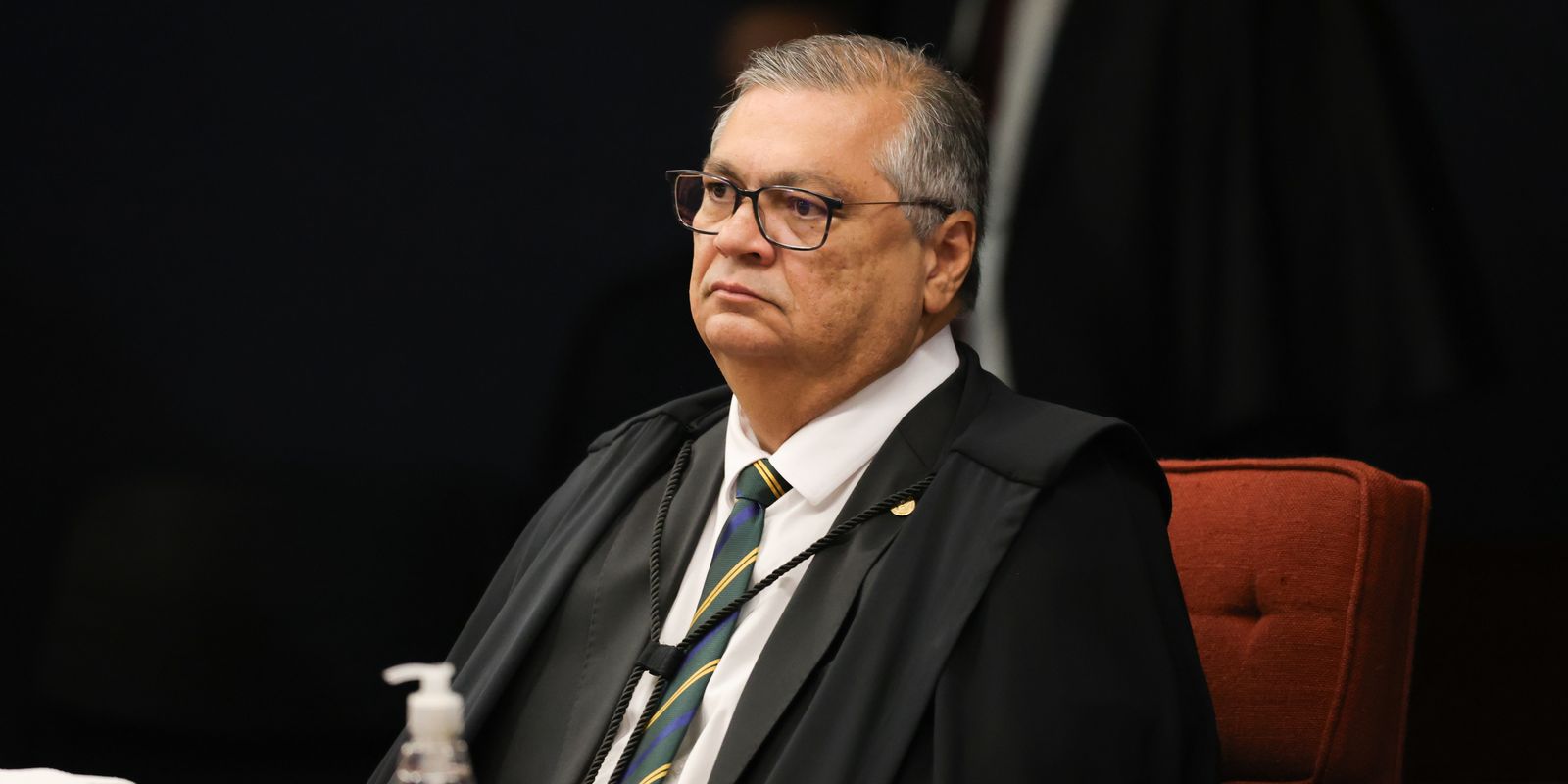
The Minister of the Federal Supreme Court (STF) Flávio Dino suspended this Sunday (21) the effects of Article 10 of the Bill (PL) No. 128/2025approved by the National Congress, which allows the payment of the so-called rapporteur amendments (RP 9), known as the secret budget.
The section revalidates the remainders payable since 2019, which are the unpaid committed expenses that had been canceled as of the 2023 law.
These amounts may be paid off by the end of 2026, including appeals from parliamentary amendments. The estimated impact on government coffers is around R$3 billion.
Dino’s decision is preliminary in nature, but will be subject to a referendum by the Court’s plenary. It was taken in an action presented by federal deputies and the Rede Sustentabilidade party. They state that, of the approximate amount of R$1.9 billion in outstanding payments from parliamentary amendments included in the budget since 2019, around R$1 billion corresponds to outstanding payments arising from RP 9.
The PL was approved by the Senate last Wednesday (17) and went to presidential sanction. The deadline for sanctioning President Luiz Inácio Lula da Silva is January 12th. If the section is vetoed by Lula, the act must be communicated to the reporting minister.
For Dino, the revalidation of unprocessed or already canceled unpaid balances relating to rapporteur amendments is incompatible with the current legal regime. “In effect, care is taken to resurrect a modality of amendment whose very existence was considered unconstitutional [pelo STF]”, says Dino, in the decision.
The minister also gave a period of ten days for the Presidency of the Republic to provide information on the compatibility of the “resuscitation” of the rapporteur’s amendments with fiscal responsibility and with the work plan approved by the STF plenary..
Understand
The impasse over releasing the amendments began in December 2022, when the STF understood that the amendments called RP8 (commission amendment) and RP9 were unconstitutional. After the decision, the National Congress approved a resolution that changed the rules for distributing resources through rapporteur amendments to comply with the Court’s determination.
However, PSOL, the party that filed the lawsuit against the amendments, pointed out that the decision continued to be in non-compliance. In August last year, Dino ordered the suspension of the amendments and decided that the transfers must follow traceability criteria.
At the beginning of this year, the STF approved the work plan in which Congress committed to identifying the deputies and senators responsible for amendments to the Budget and the beneficiaries of the transfers. The decision also released payment for amendments that had been suspended.
“In such a Work Plan, however, there is no provision regarding the possibility of ‘resurrecting’ outstanding amounts to be paid, which shows that the discipline now challenged goes beyond the institutional parameters and the goals set jointly, by the 3 Powers, to overcome the unconstitutionalities recognized at the time”, says Dino.
For the minister, the approval of Article 10 of the bill is an affront to the Constitution. “I see evidence that the contested complementary bill promotes violation of due constitutional budgetary process, Fiscal Responsibility and the essential clauses [sobre separação dos Poderes e direitos e garantias fundamentais] of the Federal Constitution”, he says.
In addition to dealing with the remaining payments, the approved PL cuts tax incentivesthe government’s main bet to balance the 2026 Budget. With the potential to increase revenue by around R$22.4 billion next year, the proposal also increases taxes on online betting companies (bets), fintechs and large companies that remunerate partners through interest on equity (JCP).
Active collaboration
In the preliminary decision, Minister Flávio Dino recalled that the country’s current context is marked by “serious fiscal difficulties” and that all Powers of the Republic have a constitutional duty to “actively collaborate” to preserve fiscal balance. For him, public authorities cannot create or increase expenses that are abusive, disproportionate or dissociated from the State’s fiscal capabilities.
“Such a duty of restraint is unequivocally projected onto problematic practices, such as the proliferation of ‘remuneration hang-ups’ within the scope of the Judiciary and essential functions of Justice — Public Prosecutor’s Office, Public Advocacy and Public Defender’s Office — as well as the repeated and non-transparent granting of tax benefits to certain economic sectors, without a consistent assessment of the budgetary and financial impact,” he wrote.
“The same constitutional logic of containment must apply, rigorously, to attempts to reactivate resources arising from parliamentary amendments outside the regular budget cycle. It is worth saying: the three Powers are faced with the urgent duty of complying with the constitutional dictates of Fiscal Responsibility, so that there is fidelity to ethics in the exercise of the highest positions in the Republic”, stated Dino.