The MINSAP recognizes more than 20,000 suspected cases of chikungunya, but only confirms 692.
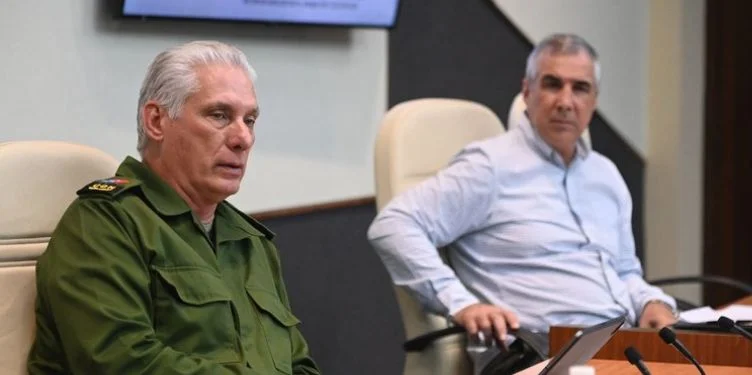
MIAMI, United States. – Miguel Díaz-Canel announced that his government will replicate the management scheme used during the COVID-19 pandemic to confront the current “epidemic of cases with Nonspecific Febrile Syndrome (SFI), caused, above all, by arboviruses,” according to an official report from the Cuban Presidency.
“We are going to work on this epidemic as we worked on the COVID-19“, stated the ruler at the Meeting of Experts and Scientists on Health Issues held at the Palace of the Revolution.
The Ministry of Public Health (MINSAP) stated that the recently concluded week was the second consecutive week with a decrease in SFI, with decreases in eight provinces (Havana, Matanzas, Villa Clara, Cienfuegos, Ciego de Ávila, Granma, Santiago de Cuba and Guantánamo).
However, the report itself recognizes that feverish rates increased in 68 municipalities. Regarding arbovirosis, dengue transmission was reported in 38 municipalities and, in the case of Havana, there were cases in all municipalities.
Regarding chikungunya, a cumulative 21,681 cases were reported (more than 20,000 with clinical suspicion and 692 confirmed) distributed in 14 provinces, 93 municipalities and 151 health areas; Matanzas, Havana, Camagüey, Cienfuegos, Artemisa and Villa Clara account for 98.5% of the cases. Regarding Oropouche fever, the authorities indicated that, from September 26 to October 11, no confirmed or suspected cases had been reported.
After the meeting, Dr. Yagen Pomares Pérez, general director of Primary Care of the MINSAP, explained to the official press that the priority is to admit all patients with IFS, either at home or in institutions, according to current criteria: “The fundamental objective of our system,” she stated, “is to achieve the admission of all patients who have febrile syndrome. This admission can be either at home – through a home admission – or it can be based on the criteria that are already approved.”
The official specified that the protocol “is approved in its second version” and recalled the experience of COVID-19. To monitor patients, he said that the teams are reinforced with “fifth year” medical students, who already have all the skills to be able to do so.
Regarding hospitalizations, he pointed out that all children under two years of age with SFI, as well as pregnant women, should be admitted; In adults, admission is indicated due to warning signs (prolonged fever, loss of consciousness, persistent abdominal pain or other manifestations), and in older adults due to their greater vulnerability and comorbidities.
In vector control, Dr. Madelaine Rivera Sánchez, national director of Surveillance and Anti-Vector Fight of the MINSAP, recognized that the greatest citizen concern is fumigation and admitted coverage limitations: “It has not been possible to reach all the places, as we have been accustomed to during all the years in which we have had epidemic outbreaks.”
The official report commits the Government to a single command with weekly meetings and presents territorial data on dengue and chikungunya; However, it does not offer key information to assess the health magnitude of the emergency: hospitalization and occupancy rates, severity of cases, fatality, mortality, or diagnostic capacity (for example, number of tests and positivity) are not reported.
In the case of chikungunya, the disproportion between “suspected” cases (more than 20,000) and confirmed cases (692) highlights the dependence of clinical criteria on laboratory confirmation, but the availability of tests or confirmation times is not explained. Neither are the levels of vector infestation (Aedes indices) nor the actual frequency of fumigation cycles by territory specified.