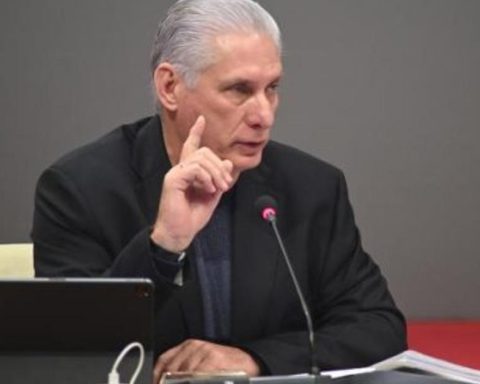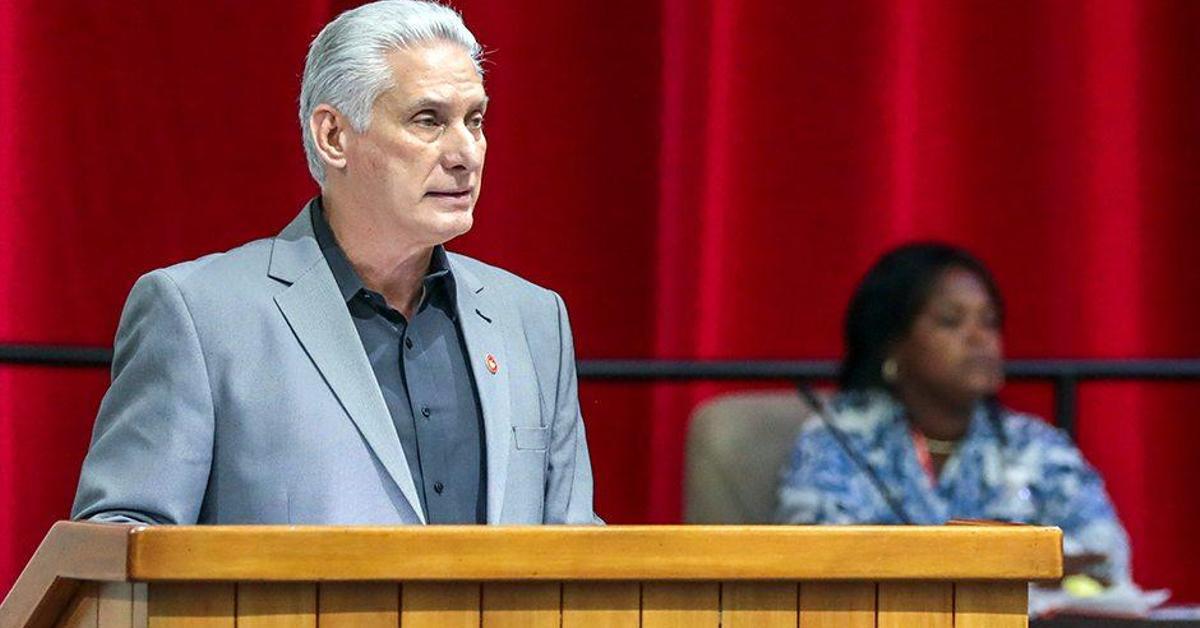
Havana/Miguel Díaz-Canel recognized this Friday that the dollarization of the island’s economy has given rise to “widening” of the “gaps that mark social inequality.” However, far from questioning the efficacy of a policy that has been increasingly plunging into poverty to citizens, the president justified the situation with “the fierce enemy pressure”, which has left the country – according to the official discourse – operating “under many risks.” The solution to reduce that inequality, he said, is not to think of better public and economic policies, but to avoid the “concentration of wealth in a few hands.”
In the discourse of the closing of the National Assembly of Popular Power, the president said that giving more presence to the dollar in daily life was a decision that was made to “overcome” the effects of the economic crisis, which translates into a shortage of basic goods and long blackouts. “To overcome this situation we have been forced to the partial dollarization of the economy, which has somehow favored those who have certain resources and capital or receives remittances,” he said.
Therefore, he proposed, the state’s ability to redistribute resources must be improved. According to Díaz-Canel, in relation to a year earlier, in 2024, and so far from 2025, the State achieved that purpose: ensure that companies, especially private ones, completely pay their taxes. “We closed the year 2023 with a 35% increase in the fiscal deficit. Many will remember the alarm that caused (…). A year and a half later, the encouraging news is that we could achieve a significant reduction. Even, during the first four months of this year we had overlapping results and until this moment the current account closes without deficit, which was not achieved more than ten years.”
“Discipline and demand”, which in practice translate into excessive controls, fines and surveillance to private businesses, were the formula of success
“Discipline and demand”, which in practice translate into excessive controls, fines and surveillance to private businesses, were the formula of success, he said. “This result (…) will allow us to redistribute those income to the most vulnerable sectors, such as our retirees,” he added in allusion to the increase in pensions. The state aid will go from 1,528 Cuban pesos (about $ 12.70 to the official change) to 3,056 pesos ($ 25.40), a figure that, although duplicates the current amount, barely reaches two bags of powdered milk in the informal market.
The president also stressed the importance of gaining presence in the international market, which will attract the desired currencies to the country. “We cannot remain impassive (…). We must focus on all export capacities, which inevitably start from an increase in production in all possible lines that are possible (…) that allows us to impose on the fence and world competition.”
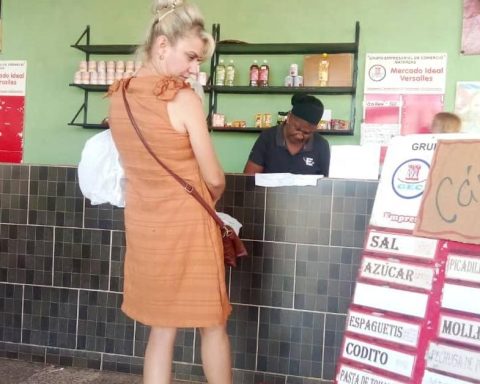
The island requires foreign currency to import from fuel to start its electrical system to a good part of the basic basket, and its dependence on imports makes the lack of strong currency feel in each of the aspects of the daily life of Cubans, from the lack of current to the impossibility of buying the most basic items.
It is the first time that Díaz-Canel refers directly to the increase in inequality marked by access to currencies and depreciation of the national currency
It is the first time that Díaz-Canel refers directly to the increase in inequality marked by access to currencies and depreciation of the national currency. The Gini coefficient, the main indicator of social inequality, has gone from 0.25 (over a maximum of 1) in 1989 to be between 0.4 and 0.5 today, according to the conservative official calculations, which would place Cuba in the average of Latin American countries.
In the last five years, GDP has also registered an 11%drop, a collapse that the Government attributes – like everything – at the American embargo, in addition to the effects of the pandemic. However, much of the food acquired by the country come from the United States. From January to May 2025, the purchases of the island to Washington amounted to more than 205 million dollars16.6% more than in the same period last year.
On the other hand, at a start, Raúl Castro got up from his chair this Friday and launched several slogans before the National Assembly. “Long live Díaz-Canel!” “Long live the revolution!” The former 94 -year -old ruler exclaimed. The unanimous response choir was swift from the deputies. With the fists raised, the closest parliamentarians followed Castro’s shouts that wore completely military uniform.