In an article in Newsweek, Congressman Mario Díaz-Balart and Parliamentarian Markus Wiechel summarize six decades of links between the Cuban regime and terrorist groups and warn that its current support for the Russian offensive confirms the continuity of that pattern.
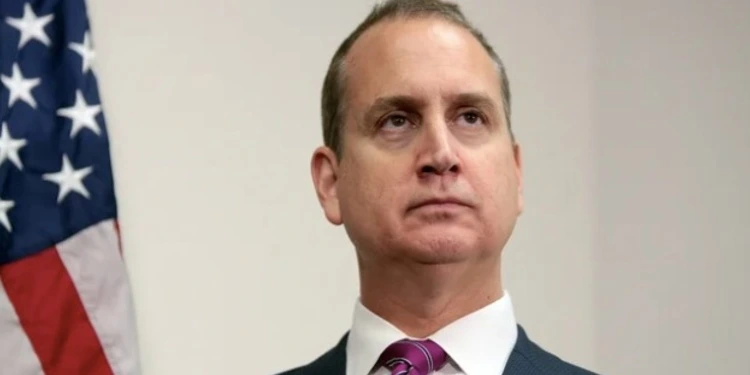
MADRID, Spain.- US Congressman Mario Díaz-Balart denounced in a opinion article published in Newsweek that the Cuban regime has maintained a “terrorist support network” for decades and that today it plays an active role in one of the greatest international security challenges: Russia’s war against Ukraine. The legislator signed the text together with the Swedish parliamentarian Markus Wiechel, with whom he presents an account of historical and recent actions of the regime that, they claim, justify Cuba being recognized globally as a State sponsor of terrorism.
In their analysis, the authors point out that since 2022 thousands of Cuban citizens have been sent as mercenaries to Russia. They maintain that this scale of participation “would not be possible without the approval of the regime” and that it corresponds to a historical pattern of collaboration with armed groups and allied governments. Some estimates cited in the article suggest that the number of Cuban fighters in Russian ranks could reach 20,000.
The text recalls that, since the 1960s, the dictatorship has provided weapons, training and shelter to groups such as the FARC and the ELN in Colombia. He emphasizes that Havana hosted negotiations with these organizations, but not as an impartial mediator, but rather protecting leaders responsible for attacks such as the one in 2019 in Bogotá, which left 22 dead and more than 60 injured.
The authors also mention that Cuba continues to shelter American fugitives wanted for serious crimes, sustains disinformation and cyberwar operations, and maintains alliances with Iran and North Korea, which, they warn, aggravates regional threats by combining economic pressure with intimidation tactics.
Díaz-Balart and Wiechel highlight that Cuban support for Russia—including sending citizens to fight in Ukraine and political support for Moscow—makes the regime a participant in a war that they describe as a form of “state-backed terror,” with attacks that have hit Ukrainian schools and hospitals.
The article recalls that the United States once again included Cuba on the list of countries sponsoring terrorismor due to its intervention in Venezuela and other destabilizing actions. Both signatories urge democratic governments to formally recognize this classification and “not look the other way” in the face of Havana’s actions.
Wiechel and Díaz-Balart conclude that classifying the regime as a state sponsor of terrorism is a necessary step to stop its actions and protect democracies.