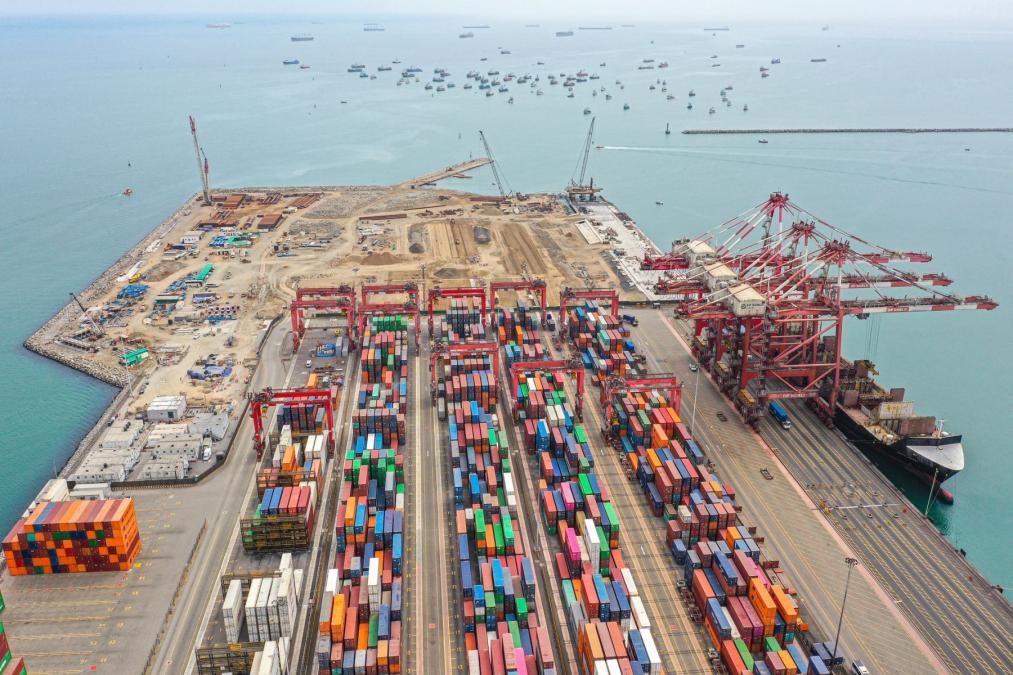
After the duty taxes by the administration of donald trump in the United States to different economies around the world, the Central Reserve Bank (BCR) considered in a report that Peru maintains a competitive position in markets where it has a high participation.
For example, one of those markets is the blueberry market. Peru exported US$1,246 million in 2024 and concentrated 57% of the US market. With this result, it was the main supplier of said economy, above Mexico, Canada and Chile. This fruit now faces a 10% tariff, as in Chile, while Mexico and Canada maintain 0% due to the exemption of goods registered in the T-MEC (Treaty between Mexico, the United States and Canada). It should be noted that next year the trade agreement between the three northern countries will be reviewed.
“In tariff terms, Peru would be placed at a relative disadvantage, especially compared to Mexico, the second main supplier. However, the high participation of Peruvian exports in the United States market could constitute a resilience factor as long as said supply cannot be easily supplied by its main competitors,” the BCR stated in its report.
For the textile sector, in products such as t-shirts, shirts, cotton sweaters, among others, something similar occurs. The FTA between our country and the North American economy allowed free tariffs for Peruvian products related to this sector, but today the rate amounts to 10%. However, one of the advantages is that Central American and Asian textile competitors have a 16% tax.
“Peru’s main large-scale competitors, such as India, Bangladesh, Vietnam and Indonesia, face additional tariffs of between 15% and 50%. (…) This improves Peru’s relative position in several markets, such as cotton shirts for men or children, where the country is the third largest supplier to the US market, with a value of US$100 million,” the monetary entity indicated.
In the fishing sector, one of the products affected by the new United States taxes is fish oil, which did not have a tariff, but which, after Trump’s measures, was also raised to 10%. Despite this, Peru continues to be less taxed than its three main competitors, among which Vietnam, Norway and Iceland stand out.
“In the case of semi-finished and manufactured copper, the tariff increase is generalized for all imports in the world, which limits the impact on Peru’s relative position compared to other suppliers,” he said.
Receive your Perú21 by email or WhatsApp. Subscribe to our enriched digital newspaper. Take advantage of the discounts here.
RECOMMENDED VIDEO