Madrid/Cuba was the fourth country with the highest rate of femicides in Latin America in 2024, a position it shares with Puerto Rico and Bolivia, with 1.4 murders per 100,000 women. The figures, however, are calculated with the official data that the authorities provided to the Economic Commission for Latin America and the Caribbean (ECLAC), the organization that has prepared the reportthat is: with the 76 cases that were tried in Cuban courts that year, regardless of when they were committed.
The report, at least as it relates to the Island, must be taken with caution because the number of deaths due to sexist violence that actually occurred continues to be ignored, but this data does not leave Cuba in a very good position. Ahead are Honduras (4.3), Guatemala (1.9) and the Dominican Republic (1.5). Behind are Brazil, Costa Rica, Mexico and Uruguay, with a rate of 1.3; and Panama and Argentina (1). The best placed of the 16 that provide statistics are Ecuador (0.9), Paraguay and Colombia (0.8) and Chile, which closes with the best possible data, a rate of 0.4.
Furthermore, it must be taken into account that America is the continent with the worst values in this sense. Global data from 2022 indicate that only Africa, with 2.8 murders per 100,000 women, exceeded the 1.5 in America, far ahead of Oceania (1.1), Asia (0.8) and Europe (0.6).
Global data from 2022 indicate that only Africa, with 2.8 murders per 100,000 women, exceeded the 1.5 in America, far ahead of Oceania (1.1), Asia (0.8) and Europe (0.6).
ECLAC has also looked at other aspects, one of them being how many femicides are at the hands of the partner or ex-partner and how many are perpetrated – for gender reasons – by third parties. Cuba has 72.4% of cases of the first type, almost in the middle of a table that ranges between 100% of cases in Puerto Rico versus 0% in Guatemala, whose rare official data reflects that none of the murders were committed by a partner or ex-partner of the victim.
Cuba has also provided data on indirect victims of feminicide in 2024, which it places at 70. These are, for the most part, children of the murdered women, although it includes other close friends who are left helpless as a result of the crime. Ten countries in total provided these numbers, showing that in addition to the 648 deaths recorded, there were 587 affected.
The ECLAC report also highlights that 100% of the women who were murdered in Cuba in 2024 lost their lives for reasons of gender. This situation also occurred in Grenada and Panama, while in six other countries and territories the percentages vary between 40% and 90% (Brazil, Costa Rica, Guatemala, Puerto Rico, Dominican Republic, Suriname and Uruguay), and in another five the proportion is less than 35% (Antigua and Barbuda, Barbados, Colombia, Mexico and Jamaica), where violent homicides predominated.
The conclusion drawn from reading the data is the difficulties in establishing comparisons between countries that collect such disparate data and have such different legislation. The report notes that there are 14 countries that have enacted comprehensive laws to combat violence against women and girls: Argentina (2009), Bolivia
(2013), Chile (2024), Colombia (2008), Ecuador (2018), El Salvador (2010), Guatemala (2008), Mexico (2007), Nicaragua (2012), Panama (2013), Paraguay (2016), Peru (2015), Uruguay (2018) and Venezuela (2007).
Cuba is not in that group, but rather one of the 20 countries that have made specific legislative modifications that have incorporated the concept of feminicide or establish it as an aggravating circumstance. To all of the above, in addition to the Island, are added Brazil, Costa Rica, Honduras, Puerto Rico and the Dominican Republic. In the Cuban case, reference is made to Decree 198, approved in 2021 and called the National Program for the Advancement of Women, which includes policies to “promote the advancement of women and equal rights, opportunities and possibilities in the economic, political, social and family spheres.”
To date, the program has not served to stop sexist violence, which so far this year, according to the records of 14ymediohas been charged the lives of 37 women. The calculation is conservative, since it only includes deaths reported through social networks and verified on the ground by the organizations Alas Tensas and Yo Sí Te Creo in Cuba. Although in the Latin American context it is not an extreme number, it is if compared with the data for Spain, where today there are 38 women murdered in 2025 for reasons of gender, for a population five times that of Cuba.
To date, the program has not served to stop sexist violence, which so far this year, according to 14ymedio records, has claimed the lives of 37 women.
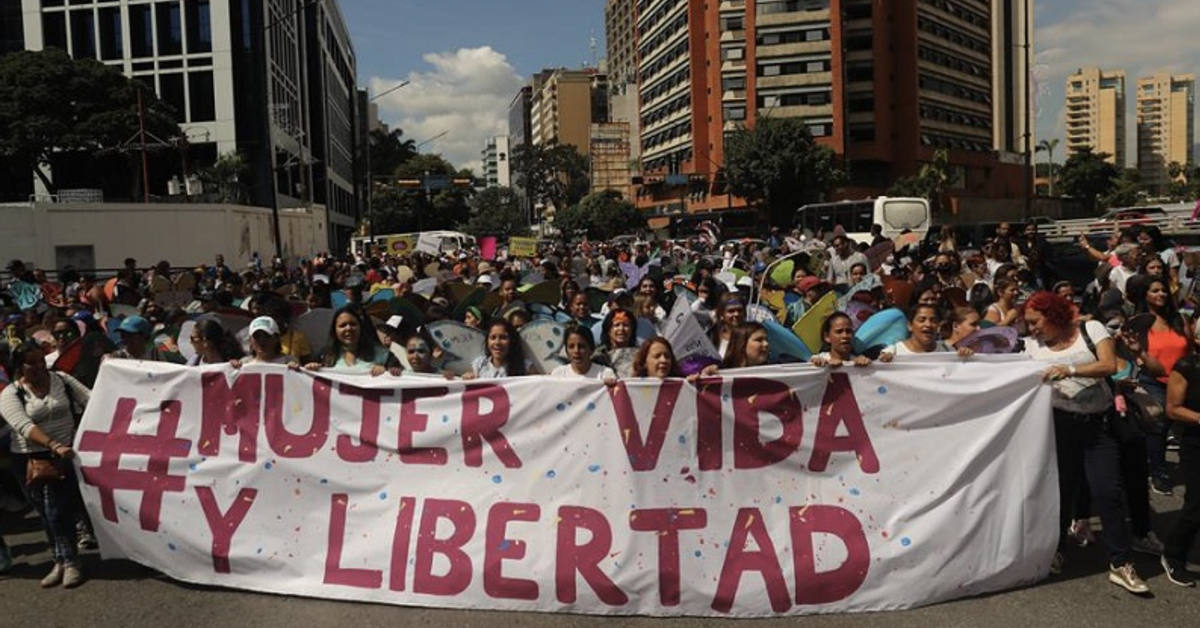
The ECLAC report comes on the occasion of the International Day to Eliminate Violence against Women, which is commemorated every year on November 25. In 23 countries in the region, at least 3,828 women were victims of all types of violence and 11 per day for gender reasons.
Although the organization specifies that “it is not possible to make regional comparisons because each year a different number of countries report official information,” it does consider that
“Monitoring national data over time clearly shows that femicidal violence persists in the region and affects the lives of thousands of women and girls, impacts communities and limits development, equality and peace in the countries.”
“The prevention and elimination of feminicide is not an issue limited to public security, but rather an urgent objective for the achievement of substantive gender equality and a caring society,” said José Manuel Salazar-Xirinachs, executive secretary of ECLAC.