Havana/The supply of drinking water for the population “remains critical” in several provinces in the east of the country. This is how Yulian Omar Rodríguez, vice president of the Terrestrial Water Management Business Group, defined the current situation in the distribution of the liquid, despite the recovery of the reservoirs due to the rains recorded in September and October.
The official explained in the Round Table that the national accumulated from May to September reached 609 millimeters, which represents 72% of the historical average for that period. By region, western Cuba is at 70% of its average, the central region at 71%, and the east at 76%. However, although the large-scale figures are positive, in provinces such as Holguín, Santiago de Cuba and Guantánamo, the reservoirs are between 30% and 40% of their capacity.
The real problem, they recognize, is now supplying that water to the population. To guarantee the service there are a variety of difficulties that require a different response in each case. The most important refers to the 12 existing transfers in the country, of which only six will be in operation for the remainder of this year and next. “They are equipment that has been in use for a long time, and we have faced low technical availability,” the official alleged.
Of the 12 existing transfers in the country, only six will be in operation during the remainder of the year and next
If the first step is achieved and water reaches residential areas, prolonged blackouts prevent it from being pumped into homes. Given this, Yunior González Núñez, first vice president of Water and Sanitation, explained that they are seeking to implement internal combustion devices so that the liquid can rise “even when the electrical flow is interrupted.” “It is the last step in the water supply service. Individually, if there is no power in the buildings, the water is made accessible to the homes, which is where we really need it,” he said. However, he forgot to mention that in several provinces of the country the lack of electricity can exceed 24 hours and he did not say where the fuel for these pumping equipment would come from, when there is a shortage in the country.
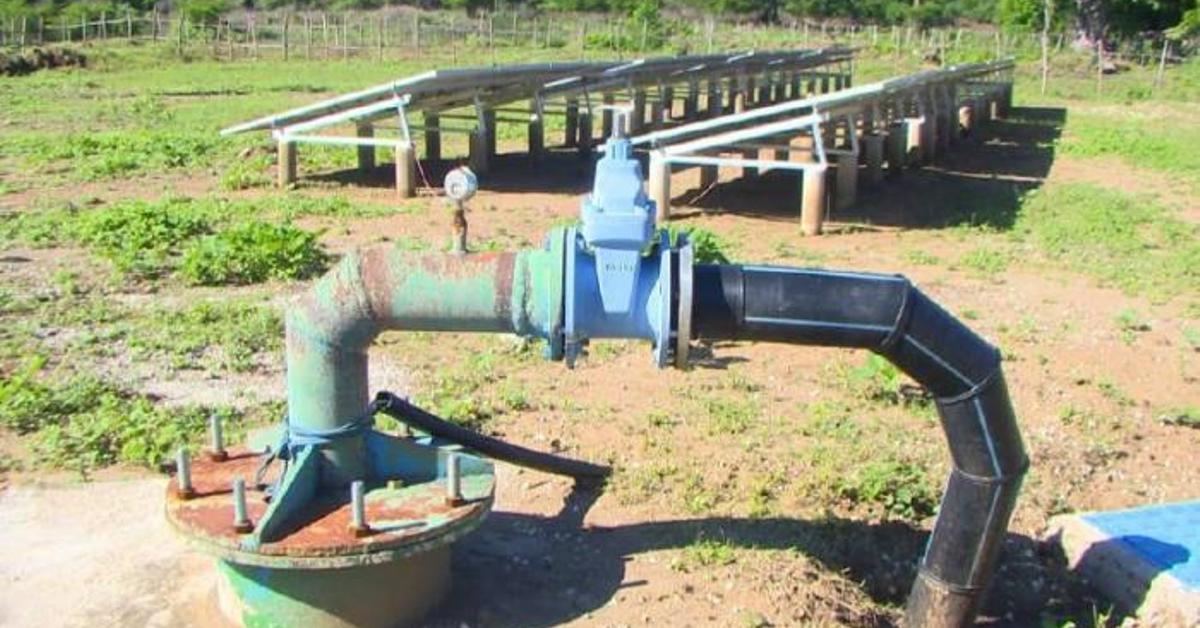
Faced with this panorama, there are provinces that have opted for other types of technology for these tasks. In Santiago de Cuba, 57 water pumping systems based on solar energy have been launched. With this, they have replaced old equipment, with more than 15 years of operation, and many of them with breaks, caused by the lack of electricity, because when the pumping stops “a vacuum is generated in the pipes that forces them to work in a compression regime,” according to Yunior González.
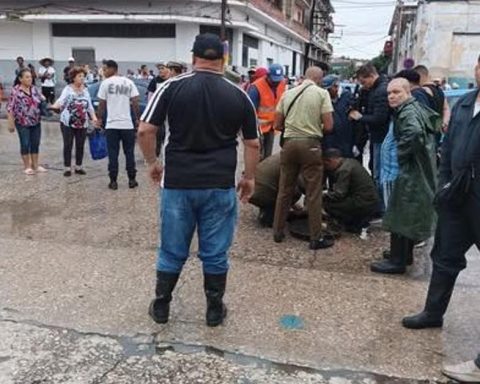
Meanwhile, in many parts of the country, citizen unrest has been growing. According to officials, there are currently 1.7 million inhabitants affected by water shortages, although that number reached 3.5 million “at the most critical moment of the drought,” almost half of the country’s total population, 8,025,624, according to the census presented last March by the renowned Cuban economist and demographer Juan Carlos Albizu-Campos.
In many parts of the country, citizen unrest has been growing
“They have spent years talking about the same thing, but the problem persists: the reality is that the town does not have water,” claimed a resident of JobaboLas Tunas, in mid-October on social networks, after almost 20,000 residents did not receive a single drop of water since September.
“The situation in Jobabo is truly critical. The solution seems to take a little while. However, we in Zabalo have been without drinking water service for more than a month because there is no wire to repair the submersible turbine. It’s not that we are selfish, but if they don’t have a solution for the big problem in Jobabo, why don’t they take care of the small problems that exist with four rural communities,” said another resident.
As a solution, the ruling party calls for “the need to plan consumption well, control its exploitation and avoid the waste of a vital resource, whose scarcity has been felt in recent years in many parts of the archipelago.”