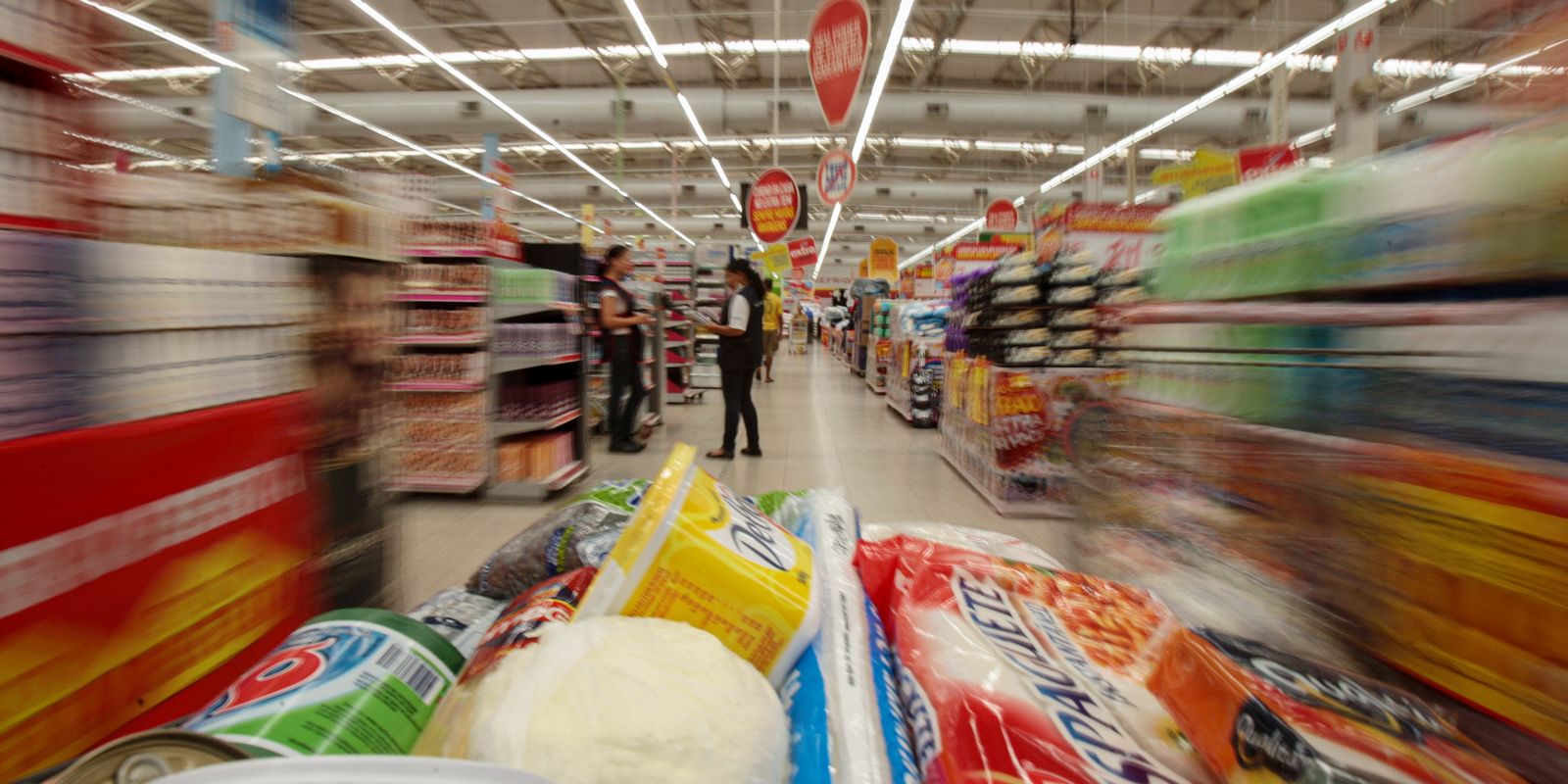
THE growth of 0.4% of the Brazilian economy In the second quarter compared to the first quarter, it was mainly pulled by the consumption of families, which showed 0.5% expansion in the period.
The finding is the performance of Gross Domestic Product (GDP, sum of goods and services produced in the country), released on Tuesday (2) by the Brazilian Institute of Geography and Statistics (IBGE). In the accumulated 12 months, the increase is 3.2%.
One way to calculate GDP performance is from the so -called consumer optics, which includes families consumption behavior, government consumption, imports, exports and gross fixed capital formation (FBCF), which represents investments.
In the passage from the first to the second quarter of this year, these demands presented the following performances:
- Family consumption: +0.5%
- Government consumption: -0.6%
- Investment: -2.2%
- Export: +0.7%
- Import: -2.9%
Family consumption advance is the main engine because this demand component represents 63.8% of GDP. The other expansion component, export, accounts for 18% of GDP.
>> Follow the channel of Brazil agency on WhatsApp
Fees
The result of 0.4% of GDP in the positive field is a slowdown, as the first quarter grew 1.3% compared to the fourth quarter of 2024.
According to IBGE’s national account coordinator, Rebeca Palis, the main reason for reducing the rhythm of growth is the Central Bank’s restrictive monetary policy (BC), which uses high interest rates to contain inflation.
Currently, the basic interest rate, Selic, is at 15% per year, the higher level since July 2006. High interest rates have the effect of discouraging consumption and investment to cool the economy and decrease the demand for goods and services, consequently, taking force from inflation.
However, Palis points out that the Brazilian economy has demonstrated resilience, so much so that families consumption reached the record level in the second quarter. The fuel for this, explains the IBGE researcher, is the behavior of the labor market and the expansionist fiscal policy.
“The dynamism continues in the labor market, we continue with the growth of the total real salaries received by families, we continue with income transfer programs, it is fiscal policy helping,” he explains.
The latest IBGE employment data points out that Brazil reached the vacation rate of 5.8%, smaller already recorded in the historical seriesstarted in 2012. The survey also shows that the country broke record of the worker’s salary, with average monthly income of R $ 3,477.
The main income transfer program of the federal government is Bolsa Familia. The average benefit for low -income families is R $ 671.54. According to the Ministry of Development and Social Assistance, the program reaches 19.19 million families.
Even with Selic Alta, which is reflected in other economy credit operations, Palis says credit for families “continues to grow well.”
“We saw an important slowdown in this balance of credit operations for legal entities, but not for individuals,” he says.
Tariff
The behavior of Brazilian exports in the second quarter does not reflect the Tariff imposed by US President Donald Trumpto Brazilian sales that enter the United States, as they only started in August.
Palis believes that the effects of charging tariffs will be perceived from the third trimester data, but emphasized that exports do not have the same weight as the consumption of families in GDP. In addition, the researcher relativizes the role of foreign trade in the Brazilian economy, specifically with the United States.
“The economy is much more linked to families consumption, not that open. Really the behavior of families consumption determines that of the economy as a whole,” he says.
“It’s been a while since the United States is no longer our main commercial partner,” he recalls.
Brazil’s main commercial partner is China. From 2001 to 2024, American participation in the total of Brazilian exports regressed from 24.4% to 12.2%, ie, fell practically halvedaccording to the Foreign Trade Indicator (ICOMEX), monthly study of the Brazilian Institute of Economics (IBRE) of the Getulio Vargas Foundation (FGV).
According to the vice president and Minister of Development, Industry, Commerce and Services, Geraldo Alckmin, the Trump’s tariff affects 3.3% of Brazilian exports.