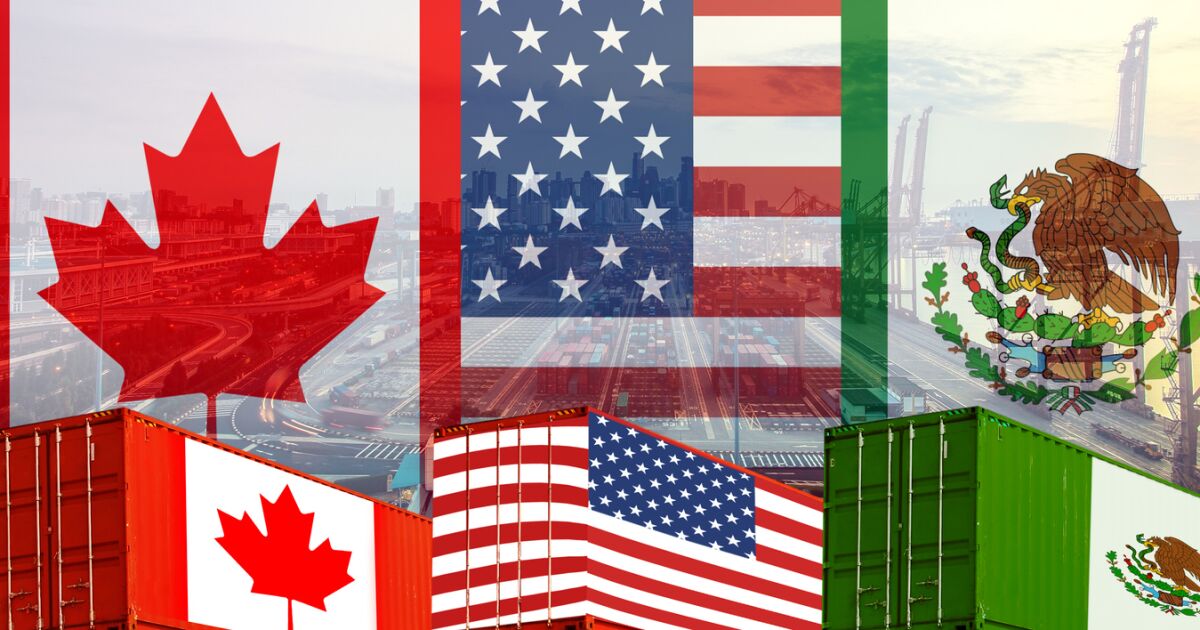
Mexico operates as the main manufacturer as it is the largest source of US imports, especially in automotive, electronics and machinery.
The country leads manufacturing exports with greater technological content in Latin America, supported by lower costs and geographic proximity to the United States.
Canada maintains a key, although different, role. Its commercial relationship with the United States is based on energy, raw materials and specific automotive components. This specialization makes it more sensitive to price cycles and regulatory changes.
An opposite treatment
Politics also played a role. The government of Claudia Sheinbaum, with Marcelo Ebrard leading the economic negotiation, chose to keep the confrontation out of public discourse, reinforce technical cooperation and align itself with Washington’s priorities. Canada chose another path. Mark Carney held stronger positions against Trump and accumulated episodes of trade tension.
Ebrard attributed the export performance to the solidity of the Mexican economy and the competitiveness of its companies, even in an environment of global uncertainty and with a strong peso.
The Ministry of Finance noted that the peso closed as one of the most resilient currencies in the world, with an appreciation of 14 percent against the dollar. A stronger peso usually makes products more expensive for external buyers and slows down demand. Even so, exports resisted.
Inegi data indicate that Mexican exports closed 2025 at 664,837 million dollars, with more than 80 percent destined for the United States.
On the Canadian side, Export Development Canada warns that the main source of uncertainty for its exporters was the recurring adjustments to US trade policy and the persistent threat of sectoral tariffs. Uncertainty reached peaks, subsided and rebounded throughout the year. As a result, many companies chose to accumulate inventories as a defense against Washington’s next turn.
In a trade war, it is not enough to face the same tariffs. The productive structure, the political moment and the reading of power matter. Mexico and Canada share the treaty, but the result.