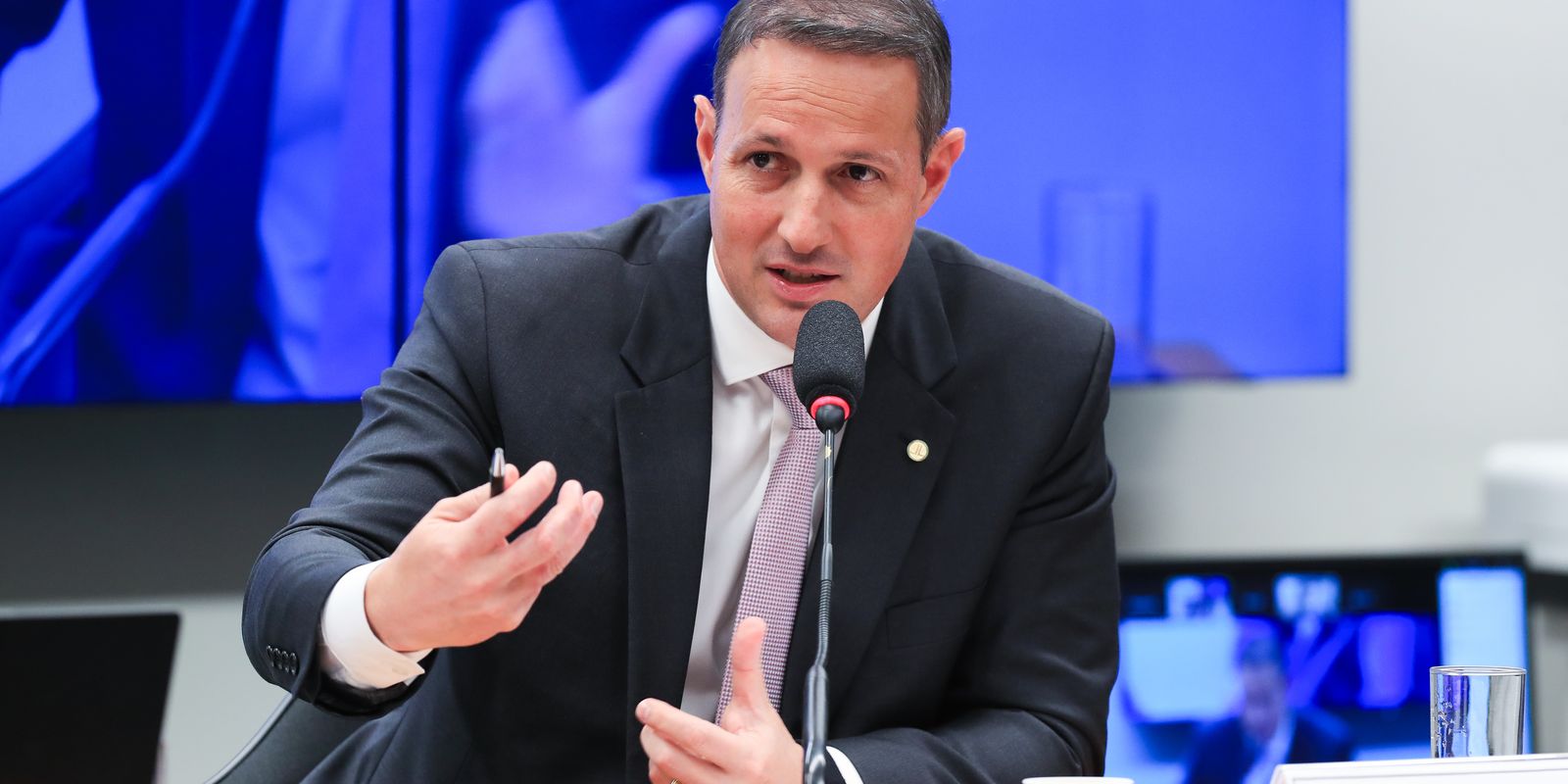
The rapporteur of the bill (PL) Anti-Factiondeputy Guilherme Derrite (PP-SP), presented, this Tuesday (18), the fifth replacement text on the topic after criticism from experts and the federal government, who asked for adjustments to the report. 
Among the criticisms was the forecast included by the rapporteur to distribute resources from assets seized from factions and militias also to state funds, which, according to the Federal Police (PF), removes the corporation’s funding.
Derrite maintained the prediction “that the proceeds or profits from the crime will be reverted to the federal entity responsible for the investigation”. Despite this, the rapporteur changed the Fund that receives resources when the PF participates in the investigation.
In the previous text, Derrite directed the PF’s resources to the Fund for Equipment and Operationalization of PF’s Purpose Activities (Funapol).
Follow EBC’s complete coverage at COP30
In the new text, he forwarded “the portion appropriate to the PF to the National Public Security Fund” after learning, through the press, that the previous measure could harm public accounts and other investments.
Among other changes, the PL increases sentences for faction or militia members to 20 to 40 yearswhich can reach 66 years for the leaders of criminal organizations. The substitute also in 85% of the sentence the time necessary for regime progression. The text also prohibits grace, amnesty, pardon or parole for members of these organizations.
Loss of assets
Another criticism of the Executive was that Derrite’s previous text only allowed the State to assume the assets of the crime after the end of the criminal action, which could take years.
In the new opinion, the rapporteur states that the loss of assets will be possible even during the police investigation phase“in the manner provided for in the initial project, when the legal origin of the seized assets has not been proven, if there is a concrete risk of dissipation of the assets”.
The rapporteur also informed that he included “express provision” in the 5th opinion so that no measure makes “the retention, seizure and forfeiture of goods, values and assets provided for in internal regulations applied within the scope of the administrative process” unfeasible.
According to Derrite, the change allows the Federal Revenue or Central Bank “to continue carrying out their immediate asset forfeiture measures”.
Understand the PL’s processing
Guilherme Derrite took leave from his position as Secretary of Public Security of São Paulo, in the government of Tarcísio de Freitas, just to report on the project, originally sent by the Executive Branch.
The choice of parliamentarian generated friction with the government. The São Paulo deputy was even accused of removing the PF’s duties in combating organized crime by submitting the institution’s investigations to a formal request from the governor.
Despite denying violating the prerogatives of the PF, Derrite deleted the article limiting the action of the Federal Police.
Amidst the criticism, the PL Antifaction rapporteur has received support from the president of the Chamber, Hugo Motta (Republicanos-PB), who came out in defense of Derrite’s 5th opinion.
“I’m happy to see so many authorities with different thoughts contributing to this project that will be the Chamber of Deputies’ biggest response to organized crime in Brazil”, he commented.
MP autonomy against factions
In response to criticism from experts who warned of possibility of the bill limiting the autonomy of investigations by the Public Ministry (MP)rapporteur Derrite informed that he included a forecast expression in the 5th opinion on the participation of the MP in cases of task forces.
“When there is a task force to investigate factions, the Public Ministry will participate, as appropriate, including through the Criminal Investigative Procedures of the Public Ministry, including those conducted by Special Action Groups to Combat Organized Crime (GAECO)”, said the rapporteur.
Law professors heard by the Brazil Agency assessed that the previous text limited investigations to the police inquiry, which could exclude independent actions by public prosecutors.
Ultraviolent organization
Guilherme Derrite maintained the definition of an ultraviolent criminal organizationrejecting criticisms that pointed out that the creation of a new criminal type could generate legal chaos in judicial processes that tend to benefit criminals.
“An autonomous, innovative diploma, with its own structure, coherent system and defined purpose, recognizes the specific gravity of the type of crime regulated in it, without subjecting it to the conceptual limits established in other standards”, explained Derrite.
Custody hearing and collegiate trial
Two other innovations by the rapporteur in relation to the previous version of the Antifaction Bill concern the rules for custody hearings and for the trial of homicides committed by members of a criminal faction.
The rapporteur predicted that the Custody hearings are held, “as a rule, by videoconference, unless a judicial decision is substantiated to the contrary”. For Derrite, the State spends a lot on escorting prisoners.
“It sounds, at the very least, unreasonable, the amount spent on procedural acts that can be covered by current technological means of communication”, stated the deputy from São Paulo.
Derrite also informed that he included a last suggestion from “members of the Judiciary” so that the homicides committed by factions are judged, in the first degree of jurisdiction, by a collegial panel and not by a jury court.
“In several regions of the country, participation in sentencing councils involving factions or militias creates a real risk of coercion, threat or violence against jurors and their families”, he explained.