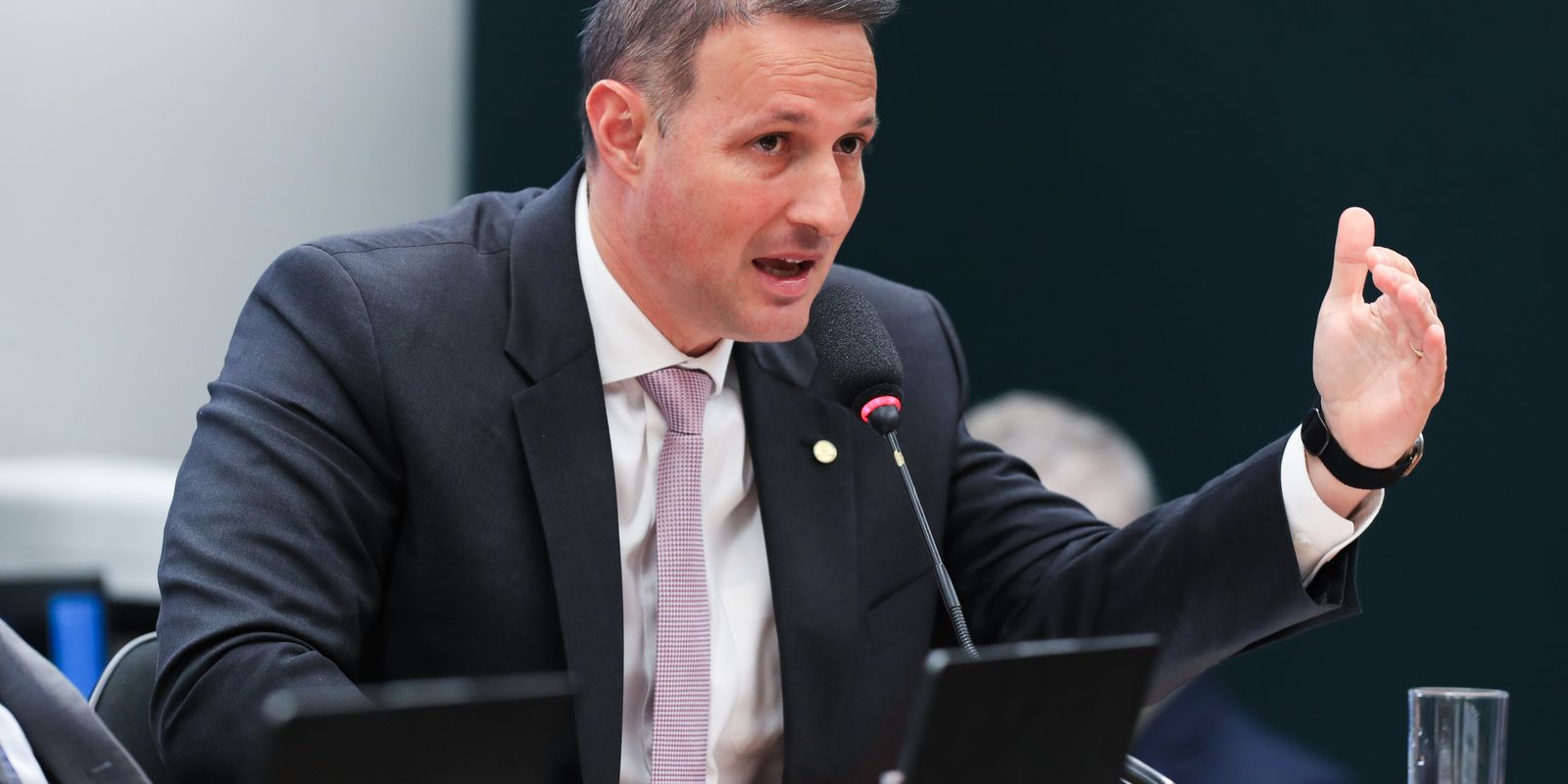
THE rapporteur of the Anti-Faction Law project in the Chamber of Deputies, Guilherme Derrite (PP-SP), deniedthis Tuesday (11), in a press conference, which changes proposed by him will include equating factions with terrorism.
The president of the House, Hugo Motta (Republicanos-PB), also in the interview, stated that he intends to vote on the project this Wednesday (12)which came to be called a “legal framework for combating organized crime”.
Parliamentarians also ruled out that the proposals to be voted on will weaken the role of the Federal Police against organized crime.. Concern has been expressed by government representatives and from PF.
He guaranteed that the proposal maintains the competence of the Federal Police and state police.
Derrite, in the interview, said that there is no idea of submitting PF actions for approval by state governors or equating the factions with terrorism. The president of the Chamber himself guaranteed that no discussion puts sovereignty at risk.
“Since yesterday, a series of untrue narratives have been raised that this House would be interested in taking power away from the Federal Police. That never existed,” said Hugo Motta.
The rapporteur, Guilherme Derrite, admitted that he tried to combine the “good suggestions” of the 2016 anti-terrorism legislation with the Antifaction project, but not to equate the criminal types. He said there was a stir when he made a reservation about the role of state courts.
“That opened the door for the creation of this mistaken narrative, saying that I would be distorting or weakening the work of the Federal Police. This is not true.”
Pen hardening
He defended the text of the project called a “legal framework”, as tough against organized crime.
“While the anti-terrorism law remains as it is, with a provision of 12 to 30 years in prison, within the legal framework for combating organized crime, the sentences range from 20 to 40 years in prison for members of criminal organizations.”
In the bill sent by the federal government, the sentence increase was only provided for up to 30 years. A maintenance of the government’s original text would be to provide for the creation of a national bank of members of criminal organizations. “The deadline for this to be ready is six months,” said Derrite.
He also agreed with the idea that states create these state banks of members of criminal organizations. “The PCC, Comando Vermelho and other criminal organizations do not operate solely and exclusively in one state. They are in several states of the Federation”, he considered.
Derrite also highlighted in the project to be presented for voting that leaders of criminal organizations must serve sentences directly in the federal criminal system, without access to conjugal visits and that dependents do not have the right to incarceration assistance.
Check out the article Reporter Brazilfrom the TV Brasil
heinous crime
“In this context, we seek to dismantle the main leaders of organized crime in Brazil, and hence their articulation when arrested”, stated Derrite. While serving their sentence, these crimes are now considered heinousas the federal government had already defended, and that in cases of more serious crimes, compliance would be 40% in a closed regime.
“We are increasing the sentence to at least 70% in the closed regime, reaching 85% of the sentence if he is a leader, a repeat offender or if he causes death or is carried out against a child, elderly person, members and professionals of public security or a person with a disability,” he stated.
To this end, the rapporteur also understood the need for real integration between Brazil’s security forces. Derrite defended that dialogue until the vote on the project is open with all Congressional benches and also with the federal government.
“My work is technical and I am 100% available. I heard the complaints, in my view, were wrong. They were narratives”, he said.
The president of the Chamber said that he is committed to guaranteeing Brazilian society legislation that can transform the fight against organized crime into a better condition for security forces.
“This is the commitment that the Chamber has and here is a non-partisan demonstration of unity around this issue”, pondered Hugo Motta.