
For decades, Argentina accumulated a dense regulatory framework that made it more expensive to produce, invest and undertake. Since the end of 2023, the country began a process of deregulation aimed at eliminating unnecessary regulations and reducing state discretion, with the aim of moving towards simpler and more predictable rules.
The experience Argentina It is relevant for other countries such as the Dominican Republic. Although its regulatory framework does not reach the levels of historical rigidity of Argentinathis does not eliminate the room for improvement. Postponing reforms until problems worsen tends to significantly increase their economic and social costs.
A central axis of the reform approach has been to recognize that bureaucracy It is not neutral. Excessive procedures generate costs, delays and spaces for arbitrariness and corruption. Simplifying processes improves efficiency and limits capture of the State by rentier interests.
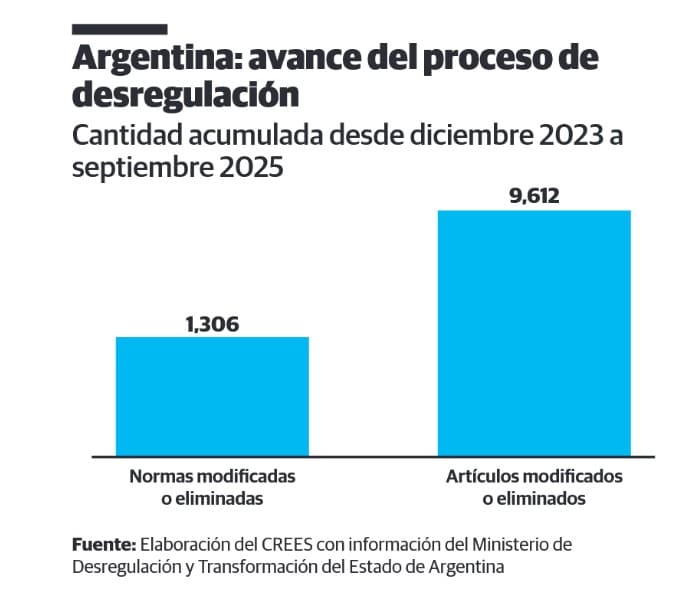
This approach translated into a review of the regulatory framework, fueled in part by citizen reports about regulations that blocked economic activity. Based on this, changes with direct impact were prioritized, such as the reduction of procedures that previously took up to two years and today are resolved in a few months. Among the most visible results, the liberalization of the rental market was associated with an increase in supply and a 26.6% drop in real prices. In the energy sector, the elimination of regulatory obstacles and greater respect for private property contributed to Argentina will reach a historical record for oil production in October 2025, exceeding 850 thousand barrels per day.
The lesson is institutional: simplifying regulations strengthens competition and creates better conditions for the growth sustained.
__________
A collaboration of the Regional Center for Sustainable Economic Strategies (Crees).