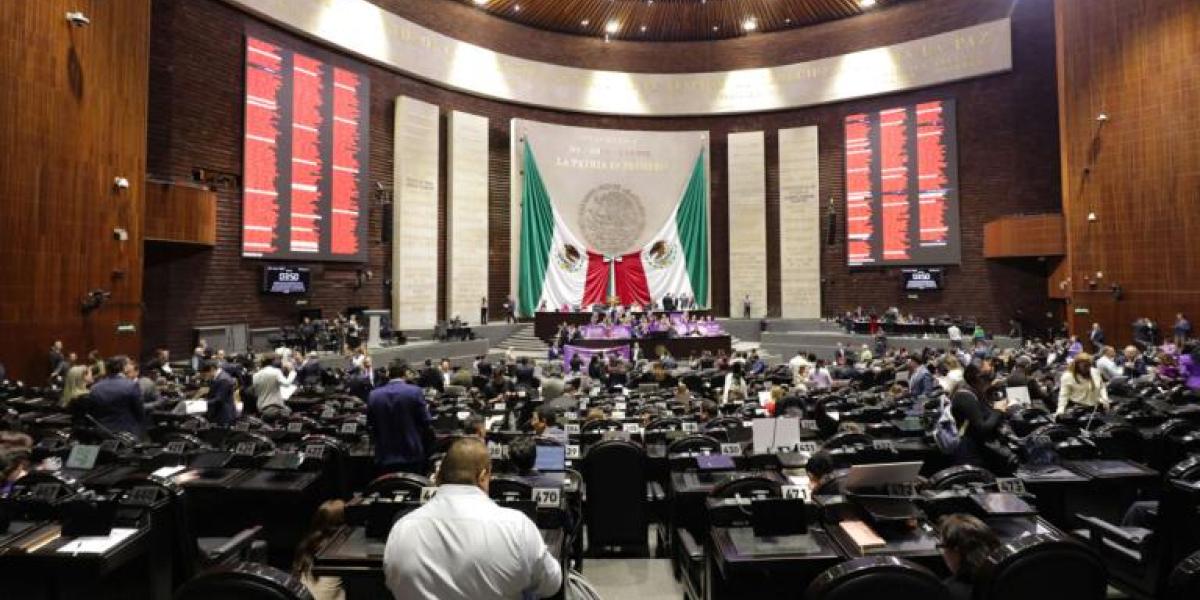
The Finance and Public Credit Commission of the Chamber of Deputies will rule on the Federal Income Law (LIF) and other fiscal provisions of the 2026 Economic Package until Tuesday, after ruling on the Amparo Law.
This is because the Amparo Law includes some modifications to the Federal Tax Code, so this Monday the joint Finance and Justice commissions of the Lower House will meet to rule on it.
The 2026 Economic Package includes, in addition to the Federal Income Law, the Federal Law of Rights (LFD), a reform to the Federal Tax Code (CFF) and also the IEPS Law with the so-called “healthy taxes.”
The Finance Commission, chaired by Deputy Carol Antonio Altamirano, called for the resumption of its second extraordinary meeting in which the LIF, the LFD, the CFF and the IEPS Law will be ruled until Tuesday at 4:00 in the afternoon.
The LIF 2026 contemplates budgetary income for the federal government of 8.72 billion pesos, a real growth of 6% compared to the estimated income for 2025.
From taxes alone, the federal government anticipates that it will collect 5.8 billion pesos, an increase of 5.7% compared to what is estimated for this year.
This historic collection would be achieved with some tax changes such as the increase in the IEPS on some products (healthy taxes), the increase in tariffs on countries with which Mexico does not have a trade agreement and also reforms to the CFF to combat the so-called billing companies.
Regarding healthy taxes, the government of President Claudia Sheinbaum proposes increasing the Special Tax on Production and Services (IEPS) on flavored drinks, manufactured tobacco, games and raffles, in addition to beginning to charge a rate of 8% for the purchase and sale of video games classified as violent.
Last week, representatives of the private sector warned of the possible negative implications that the increase in the IEPS for these products would have on small and medium-sized businesses in the country, as well as on certain formal sectors such as tobacco, betting or the video game industry.
While regarding the reforms of the CFF, the federal government seeks to give greater powers to the tax authorities so that they can combat the invoicers, in addition to seeking to tie said Code with the Constitution so that informal preventive detention can be applied to the invoicers.
One of the powers that is added are the express home visits that the treasury may carry out to verify whether the tax receipts issued by a taxpayer cover real and verifiable operations.
In this way, the authority will be able to carry out these home visits when it has indications that a company is issuing false tax receipts and will have a period of 24 days to carry out the review and issue a resolution.