The Federal Labor Law in its article 87 establishes for all workers in the country the right to an annual bonus that must be paid before December 20, equivalent to at least fifteen days of salary.
Since the approval of the Income Tax Law of 1981, it was established that the bonus is taxable. And currently it is exempt from this bonus tax, but for workers who receive the minimum wage, that is, those who earn 8,364 pesos per month.
But those rules do not apply to deputies.
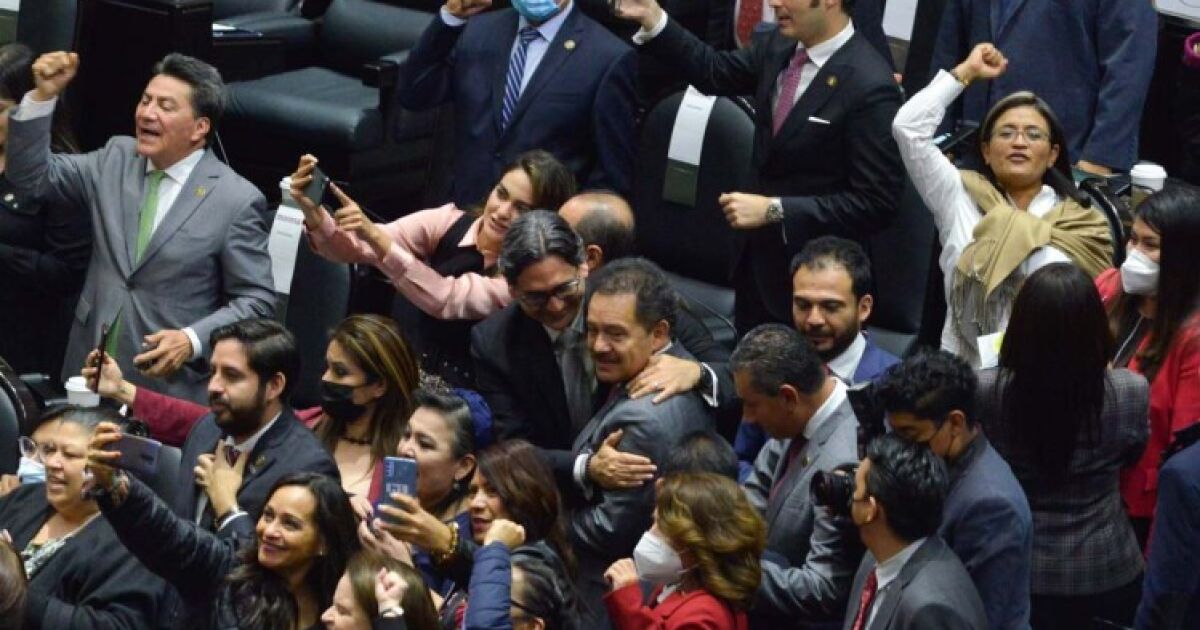
Just today the presidential decree was published that established which officials, workers or pensioners will receive not 15, but 40 days of bonus. The deputies went further, as 53 days of bonuses were authorized.
This 2025 they will take home a bonus of 140,504, equivalent to almost a month and a half, since their diet is 79,000 pesos. For the provision of ISR bonus, they will total 64,587 pesos.
Thus, this Christmas the legislators will have resources, only for the concept of per diem, bonus and refund of ISR for a total of 219,504 pesos.
By 2026, their bonus will be 147,438 and their support package for the ISR that they will not pay, will be equivalent to 67,785 pesos.
In the last discussion of the Income Law, the National Action Caucus (PAN) presented a proposal during the discussion of tax revenues, so that workers in the public and private sectors could enjoy the “free bonus.”
According to the proposal, presented by the PAN deputies Ángel Rodríguez Barroso, Patricia Jiménez and Miguel Ángel Monraz Ibarra, it is that people who receive up to two minimum salaries, that is, 16,728 pesos, do not pay ISR for their bonus.
“That those who earn the least, which are close to 40 million workers, the poor, the people, up to two minimum wages, 16,700 pesos, do not pay ISR, do not pay taxes, receive their bonus 100% free,” Monraz stated.
However, by show of hands the majority of Morena and its allies rejected the discussion of the proposal for it to be incorporated into the 2026 Income Law.
At the beginning of October, the coordinator of the Institutional Revolutionary Party (PRI) Rubén Moreira also began to promote a similar proposal, which could still be ruled and voted on in the future, but with an uncertain destination.
According to the initiative, to achieve this, it is proposed to modify the ISR Law, the Federal Labor Law (LFT) and the Federal Law of Workers in the Service of the State (LFTSE).
According to the tricolor, there would be a significant fiscal impact of 20,000 million pesos per year derived from this collection waiver by the Tax Administration Service (SAT).
The PRI argued that it would be a beneficial measure for the economic reactivation derived from holiday purchases.
That is, the compensation for those income not received would be greater, since there would be more collection of Value Added Tax (VAT) on Christmas purchases.
And they increased their diet
In addition to the free bonus that deputies have already enjoyed for several terms, last January the Chamber of Deputies agreed to “update” their monthly allowance, that is, their perceptions were increased by 4.48%.
That is, the diet was increased in greater proportion to the inflation that was projected for 2025, which was 3.5%, according to the Secretary of the Treasury.
In December 2024 during the approval of the 2025 Budget, legislators assured that they would not increase their perceptions.
But in the PEF 2025, in the section on their remuneration, they left a legend to indicate that “the remuneration of public servants may, where appropriate, if there are budgetary resources, be updated in accordance with the salary policy of the Federal Executive.”
For this reason, in January, via an agreement by the House Administration Committee, it was resolved that the role played by legislators is essential for the consolidation of the Democratic State “so it is essential that they have economic remuneration in line with the responsibility inherent to their legislative work.”
Furthermore, it was stated in the agreement, the amount assigned as per diem for each deputy “has not been updated in more than twelve years” so it was decided to increase it from 75,609.27 pesos to 79,000 pesos.
That sum is not the only income of the deputies, since they have legislative support and travel expenses.
Thus, for 2026 this will be the monthly allowance of the deputies, but again in Annex 23 of the budget, relating to the remuneration of public servants, the same legend was left that there will be increases if resources are available and in accordance with the salary policy of the Federal Executive, so they could have an update as early as 2026.