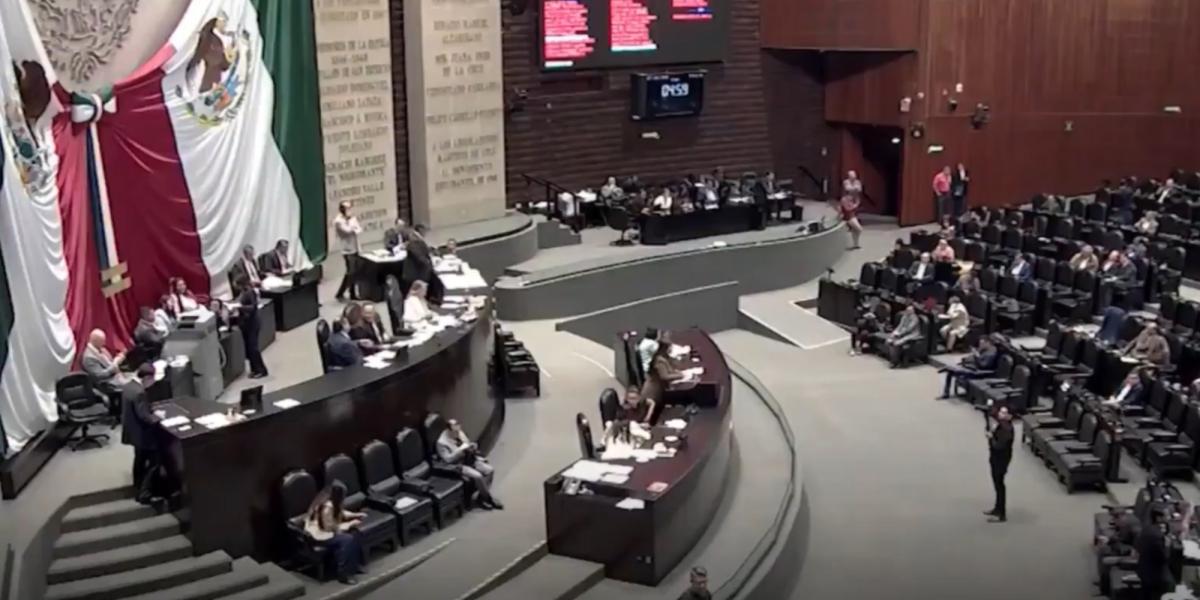
As part of the modifications made to the Special Tax Law on Production and Services (IEPS), the plenary session of the Chamber of Deputies approved taxing oral serums and electrolyte drinks with added sugars or sweeteners with 3.08 pesos per liter as of January 1, 2026.
However, those oral serums that exclusively contain the following substances will be exempt from this payment: anhydrous glucose, sodium chloride, potassium chloride and trisodium citrate; that is, those that have the formula that the World Health Organization (WHO) has established for Oral Rehydration Salts (ORS).
To justify this tax, the deputies indicated that better practices in health matters are sought, derived from the fact that excessive and inappropriate use has been observed in the consumption of oral serums with and without health registration, since in the case of oral serums it is not a requirement whether or not they have a health registration of medicine for sale.
They also assured that excessive intake of oral serum is not advisable, since, in certain cases, such as patients with persistent vomiting, ileus or shock, they are not suitable candidates for oral rehydration therapy since in them the excessive administration of said serums can aggravate the clinical condition.
On this matter, deputy José Antonio López Ruíz (PT), one of the promoters of this tax, together with the Green Party, maintained that this proposal was analyzed by the Finance Commission, “because there was a fiscal limbo in certain serums, in certain drinks with electrolytes and together with my colleague Ernesto Núñez del Verde or with my coordinator Reginaldo Sandoval, it was clarified that the serums that in one way or another were not paid IEPS of first necessity product.”
It was even said that with this measure, a 7% reduction in the consumption of sugary drinks is expected during the first two years, in addition to an additional collection of up to 41 billion pesos, which will be proposed to be allocated to strengthening the health system, especially in preventive policies.
While deputy Ernesto Núñez Aguilar (PVEM) assured that this proposal is to correct a legal loophole that allowed many electrolyte drinks with sugars, with added sweeteners, to be disguised as medicines and evade the IEPS.
“Today, I celebrate that…by clearly distinguishing between oral serums with a World Health Organization formula that will continue to be exempt due to their therapeutic nature and electrolyte drinks with sugars or additives that will now be taxed according to their true composition,” he said.
He added that it is recognized that a medical oral serum, which contains only glucose, sodium, potassium and trisodium citrate, is not a flavored drink, but a therapeutic tool, and prevents commercial products from evading a tax contribution that corresponds to them.
Industry did not go to lobby
The parliamentary leader of Morena in San Lázaro, Ricardo Monreal, emphasized that these types of drinks were not part of the agreement to reduce the tax on soft drinks, for the simple reason that they did not come forward to negotiate.
“With the industry of these oral serums…it was not a negotiation, it is a clarification in how we are applying the law so that it is explicit that, although there is a necessary, relevant medicinal therapeutic use of oral serums for hydration that have the four essential components…Obviously, it affects interests, but it has not been an issue that has not been understood and negotiated and agreed upon with them,” he expressed.
Likewise, Eduardo Clark García, undersecretary of health, indicated that although they have had dialogue with the electrolyte and oral serum industry, it is not to discuss this tax.
“There has also been dialogue with the different manufacturers of electrolytes and oral serum products. With them we have not necessarily approached this type of agreement for a fundamental reason: it is that we have had general agreements on the imposition and drafting of the IEPS law.
“I believe that we can get closer to them, but they also represent a relatively small volume in terms of the burden of cardiometabolic diseases associated with these problems,” he expressed.