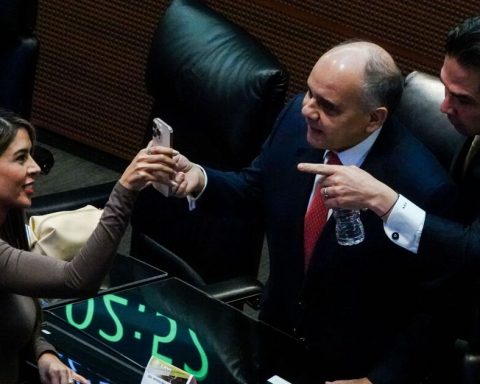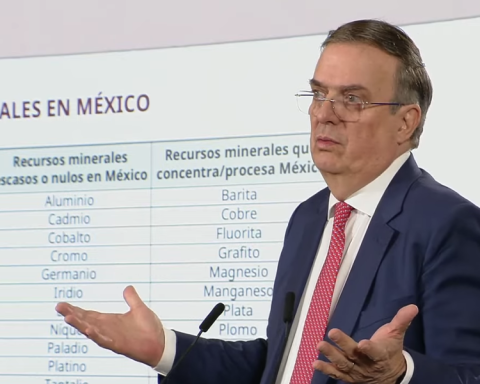
These months of the Legislature were also one of political confrontation. For the opposition it was an ordinary period where Morena moved towards the concentration of power.
In total there were 55 legal opinions or decrees approved and of them 18 initiatives were presented by President Claudia Sheinbaum.
Unlike the two previous legislatures, 64 and 65, in which former President Andrés Manuel López Obrador was the “great legislator,” now the president promoted a smaller part of the reforms that were endorsed, and her proposals did undergo modifications.
Some examples were the General Water Law and the National Water Law (LAN) modified in plenary session, in addition to the reforms to the Amparo Law, or to the Health Law regarding vapers, matters promoted by the Presidency and which had changes.
Given that National Action (PAN) is the first minority in the Chamber of Deputies, as of September 1, one of its members assumed the presidency of the chamber’s board of directors.
The position will be held until August 2026 by PAN representative Kenia López Rabadán, who in her assessment of those months of presidency highlighted that there were relevant reforms that will impact national life.
This process “involved a deep analysis, the presentation of reservations and extensive deliberation among parliamentary groups, given the relevance of these decisions for our country,” he said.
This was possible “by guaranteeing plurality, order, respect, openness and dignity of each legislator. One thousand 71 initiatives were processed and 34 minutes were received from the co-legislator,” he highlighted.
And although for the coordinator of the Morena deputies, Ricardo Monreal, there was openness to plural discussion like never before, none of the hundreds of reservations presented by the opposition to the voted opinions, at least in this period, were admitted.
“Our political system had never had this capacity to process plurality with rules, to deliberate with maturity and to convert majorities and minorities into actors co-responsible for the decisions of the State,” he stated in his legislative balance.
The position was once again marginalized, as in the 64th and 65th Legislatures, in which there has been a majority of Morena and its allies Labor Party (PT) and Green Party (PVEM).
The controversial topics
Among the relevant topics that were addressed, for example, was the formalization of the customs control function given to the Secretary of the Navy, or the imposition of tariff increases on more than 1,600 fractions of imports from countries without a trade agreement with our country.
With this, Mexico marked its support for its northern trading partners: the United States and Canada.
Another relevant issue, but one that was proposed by the deputies and not by the president, was the changes to the Federal Consumer Protection Law regarding the cancellation of subscriptions and memberships with recurring charges, known as “click to cancel.”
The proposal was from Monreal and passed fast track, without an opinion, and seeks to ensure that consumers of platforms and services with automatic charges, such as telephone platforms, sports, movies, music, video games, mobile applications and other online services, are not tied to those services and their payments, and can cancel easily.
Another amendment of this type also proposed by the Morenista leader was to establish that financial institutions cannot charge commissions for services not requested and expressly contracted, such as credit cards that they manage without clients requesting them.