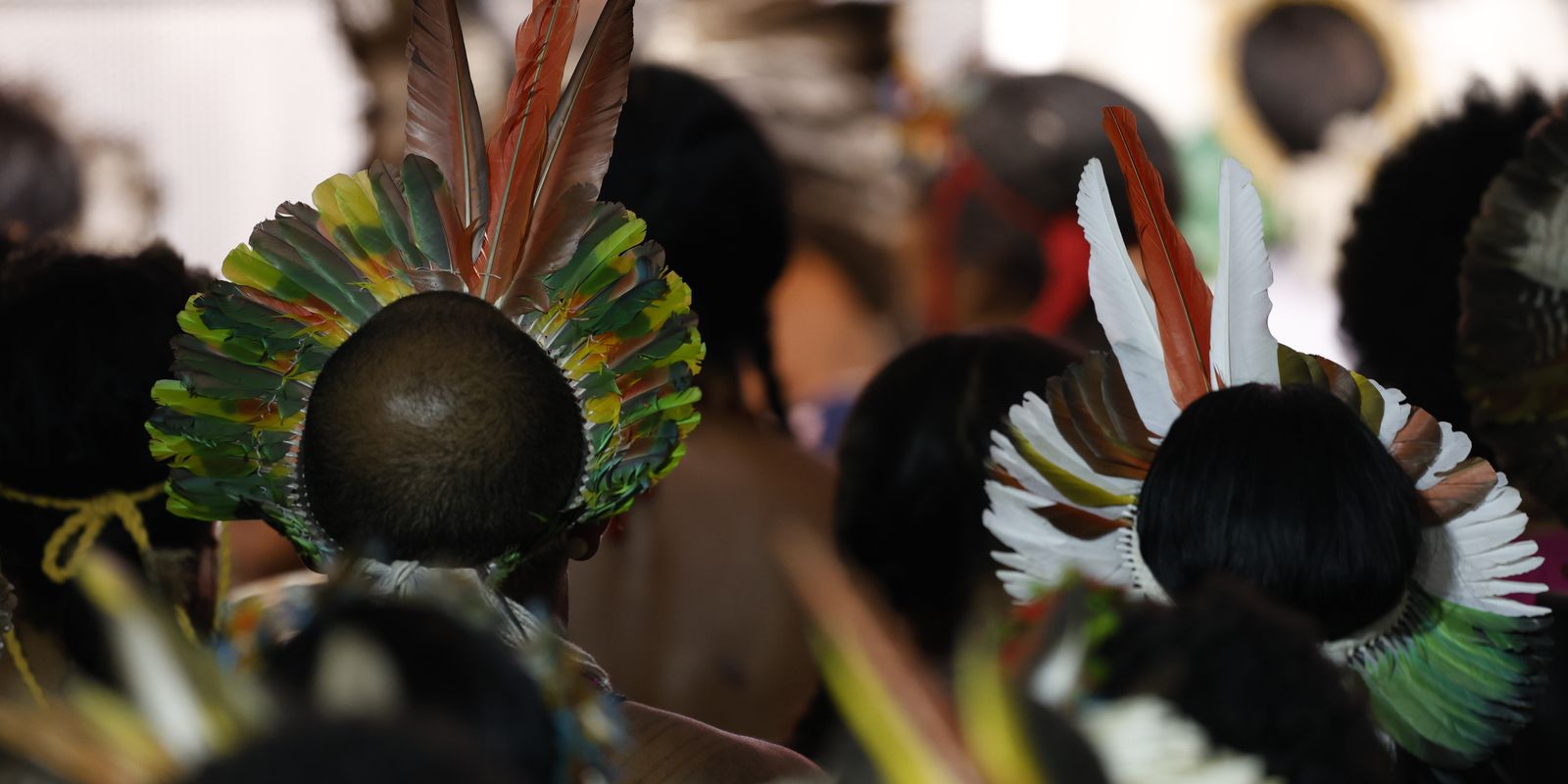
The demarcation of 10 indigenous lands, announced this Monday afternoon (17) by the federal government, helps to face the climate crisis, as it guarantees security for those who protect the environment. This was the assessment of the national secretary of Access to Justice at the Ministry of Justice, Sheila de Carvalho.
“Demarcation reduces conflicts, strengthens socio-environmental governance and blocks the wheels of destruction, such as land grabbing, illegal mining and predatory exploitation”, stated the national secretary, as published in a note by the government.
Last year, there were 11 indigenous lands made official. With these new ordinances signed, 21 indigenous lands are now recognized. Since 2018, there was no demarcation.
The ordinances dealing with demarcations were signed by minister Ricardo Lewandowski. The demarcation represents the recognition of the right to indigenous lands and the definition of the territory’s limits. The process still requires administrative acts from the National Foundation of Indigenous Peoples (Funai), the ministry itself and the Presidency of the Republic.
“The final decision in this process is made by the President of the Republic who, by means of a decree, decides on the definitive granting of ownership of indigenous lands to the communities, through approval”, explains a note from the ministry.
13.8% of the territory
Indigenous lands occupy 117.4 million hectares, around 13.8% of the national territory (areas that are among the largest areas of tropical forest on the planet), according to government estimates.
The government took into account a study of the Articulation of Indigenous Peoples of Brazil (Apib)from the Amazon Environmental Research Institute (IPAM) and the Indigenous Climate Change Committee (CIMC), which expands demarcations and can prevent up to 20% of additional deforestation and reduce carbon emissions by 26% by 2030.
“Ancestral right”
Sheila de Carvalho argued that, more than recognizing a right provided for in the Constitution, demarcation recognizes an ancestral right. The documents signed by the minister in joint action with the Ministry of Indigenous Peoples (MPI).
The act covered indigenous territories: Vista Alegre (AM), Comexatiba – (Cahy-Pequi) (BA), Ypoi Triunfo (MS), Sawre Ba’pim (PA), Pankará da Serra do Arapuá (PE), Sambaqui (PR), Ka’aguy Hovy (SP), Pakurity (SP), Ka’aguy Mirim (SP).
The areas are occupied by indigenous peoples Mura, Tupinambá de Olivença, Pataxó, Guarani-Kaiowá, Munduruku, Pankará and Guarani-Mbya.
Different biomes
During COP30, indigenous leaders argued that there is no robust climate policy without territorial security. “The ten demarcations cover different peoples, biomes and regions, strengthening climate protection, sociocultural diversity and environmental justice”, assesses the ministry.
>> Check out the demarcated territories:
The Tupinambá de Olivença territory is occupied by the people of the same name. The demarcated area covers 47,374 hectares and is occupied by 4,631 people, according to the latest measurements. Last year, the Tupinambá people received back the sacred mantle, kept in the National Museum of Denmark for three centuries. THE demarcation had been promised during the act of returning the historical object.
In Amazonas, there are the Vista Alegre indigenous lands, inhabited by the Mura people. The area recognized by the ordinance covers 13,206 hectares. In 2008, the indigenous population was 160 people.
Comexatiba – (Cahy-Pequi) (BA)
The municipality of Prado (BA), where the Comexatiba – (Cahy-Pequi) territory is located, is home to the Pataxó people. The demarcated area has 28,077 hectares and is inhabited by 732 indigenous people.
In the municipality of Paranhos (MS), the Ypoi Triunfo indigenous territory was demarcated with an area of 19,756 hectares and is home to 869 indigenous people, according to data from the National Foundation of Indigenous Peoples (Funai) from 2009.
With 150,330 hectares, the Sawre Ba’pim indigenous land is home to the Munduruku people, in the municipality of Itaituba (PA). The locality has 62 occupation records, with one property being registered and the other occupations identified as possessions.
Pankará da Serra do Arapuá (PE)
In Pernambuco, in the municipality of Carnaubeira da Penha, there is the Pankará da Serra do Arapuá indigenous territory, inhabited by the Pankará people. The area has 15,114 hectares and is occupied by 4,716 indigenous people.
In the municipality of Pontal do Paraná, the Sambaqui indigenous land is located, inhabited by the Guarani-Mbya people. The demarcated territory covers 2,798 hectares, occupied by 31 people.
In the city of Iguape (SP), the Guarani-Mbya people live in the Ka’aguy Hovy indigenous land, located in the Ribeira Valley, which, together with the coastal area of São Paulo, is home to the largest continuous extension still preserved of the Atlantic Forest in Brazil. The demarcated area is 1,950 hectares and is inhabited by 90 indigenous people.
Inhabited by the Guarani-Mbya people, the Pakurity indigenous territory, in the municipality of Cananéia (SP), was demarcated. The area covers 5,730 hectares and, according to 2016 data from Funai, is home to 133 indigenous people.
Still in the state of São Paulo, in the municipalities of Miracatu and Pedro Toledo, the Guarani-Mbya people had the Ka’aguy Mirim territory demarcated. The area covers 1,190 hectares, is inhabited by 70 indigenous people, and is located in Vale da Ribeira.