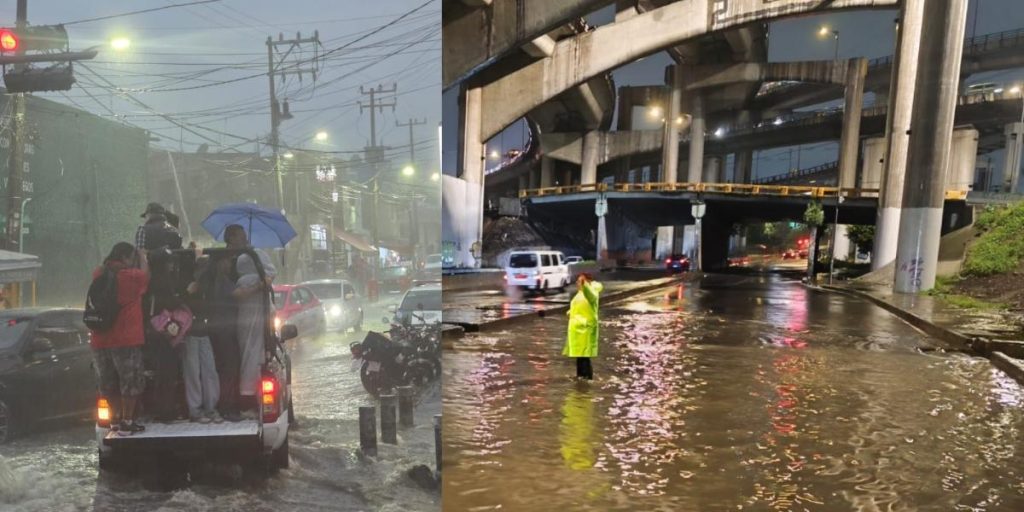
Imagine for a moment that the light left at home. If at the best case it happened in the day, most likely, at least, it cannot shower with hot water, light the wifi or load the battery. Electricity is so important for our lives that the growth of the economy depends on its availability.
In Peru, to guarantee the quality and reliability of the electricity supply, a “transmission plan” is prepared, which based on the projection of demand growth and the production of electricity, the necessary equipment is prioritized to maintain or improve the quality, reliability, security of the electrical system on a 10 -year horizon.
So, if electricity consumption is an economy performance indicator, what can we expect from this in the next 10 years. César Butrón, president of COES, has the answer: “In the base scenario, the demand for electricity is expected to grow, on average, 3% per year. And on the optimistic scenario, 4%”.
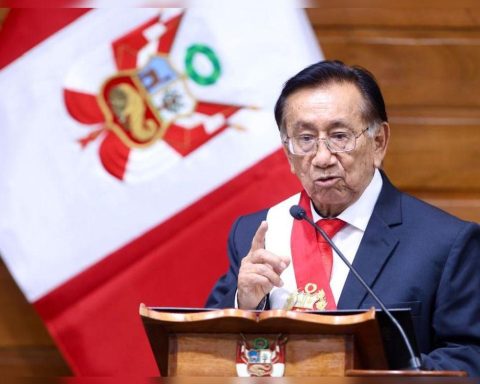
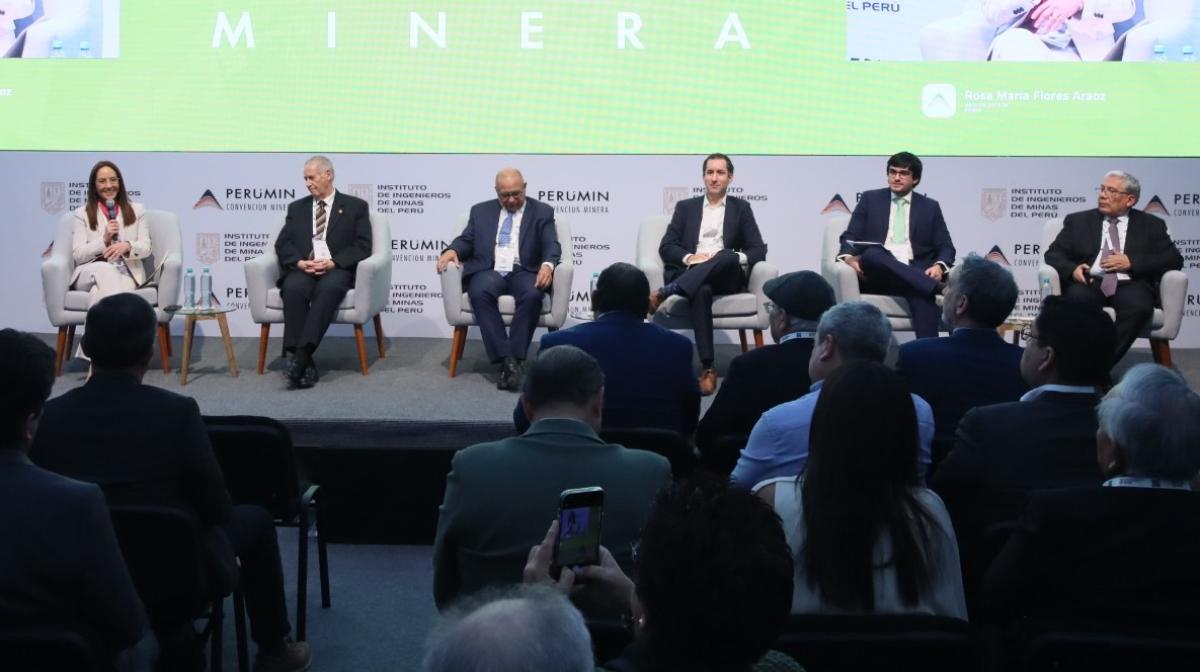
The COES is the Economic Operation Committee of the Interconnected Electrical System and its owner was the speaker in Perumin 37 of the Mining Energy Transition Forum, a space for debate on the future of the energy transition in Peru, where he addressed the challenges of energy policy and mining competitiveness.
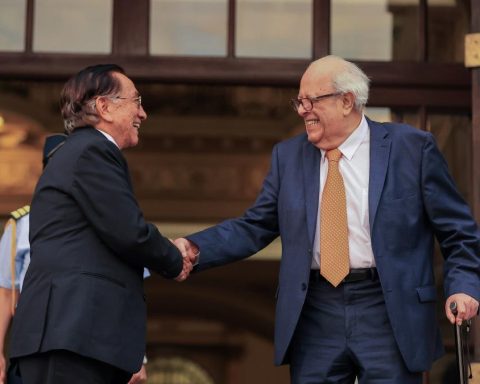
Bundrón’s contributions on the subject were as valuable as those of the debate team that accompanied the presentation. This was led by Rosa María Flores Aráoz, general manager of Kallpa and was attended by former energy and mines minis, Carlos Herrera Descalzi and Gonzalo Tamayo, as well as the Manager of Consulting Projects, Miguel Figallo, and the general coordinator of Videnza Institute, Nicolás Besich.
“And why so low (the expected growth)? And where are all mining investments spoken in this same forum? We ask all the companies in the country to send us their projections of when and how much they will consume (of energy) in the future. And the conclusion is that none sends us great projects in the future”said Butrón, leaving an auditorium of hundreds of people speechless.
But this is not the only finding that should worry a country that due to the impulse of raw material prices should grow at 5%rates, the COES representative ensures that the growth of electricity demand is about to achieve the generation of efficient energy, that is, the one from sources other than diesel; With which, starting next year, “at peak hours” we will have to supply the demand based on diesel, which in addition to polluting is expensive.
What happens if the gas takes south?
Regardless of the transport mechanism, if the gas reaches south in 2031, 1,500 megawatts of two thermal plants would operate with natural gas and provide new efficient generation. “If that is done, no additional sources would be needed to meet the demand in 2036”Butrón said.
Thus, this factor would be decisive for any investor in the sector, because there would be no place for renewable generation plants with sources such as wind and sun.
“This should already be resolved, but in the current government we do not see signs that will be resolved”indicated the head of the COES.
“Every day or month that passes without that decision being made (if gas is going to be taken to the south) the uncertainty for the rest of the investors of other technologies,”Tamayo commented.
Future projects
To avoid the use of diesel in energy generation, assuming that the gas does not reach the south, Butrón said that 3,000 megawatts generated by thermal or hydroelectric machines or double (6,600 megawatts) are needed if the generation comes from solar or wind plants.
But what are the investments that currently exist in the market for future supply? According to COES, preoperative studies, a step prior to the request for concessions to generate electricity, account for an offer of 33,067 megawatts in projects presented. Of these, most come from wind and solar sources.
The challenges
A problem inherent in these unconventional renewable sources is the variability in energy generation. This means that, at some point in the day, the electric fluid can be interrupted because a cloud covered the sun or other causes, so it is difficult to predict its production.
And an electrical system to be stable requires attending the contingencies of variability in the generation for which it must have something called “primary frequency regulation”, in other words, a source of energy that helps compensate the gaps.
“Just the blackouts that occurred in Chile and in Spain responded to the fact that many energy generators with renewable sources did not have frequency regulation capabilities, so the system did not endure and collapsed.”said Butrón.
For Butrón the solution for Peru is simple, the renewables that face the variability problem should provide the frequency regulation service. And for this it is necessary that the regulation requires it.
“However, in our current regulations all renewables that face this problem (of variability) are exempted from providing primary frequency regulation. Then they introduce variability, but do not collaborate in controlling it”he explained.
“That exoneration must disappear so that they have the obligation. Our recommendation is that as only renewables will come, we have to take care from now on through the rules”Butrón sentenced.
Other complexities
To the lack of supply of services to compensate for interruptions in the generation of energy by the lots and wind, there is the exhaustion of gas reserves and barriers for exploration.
A study by Perupetro estimates that we have gas reserves for 10 0 12 years, but investments have not been made in the search for new reserves because the price of this resource depends Camisea, that is, on a source of energy that was certain of its amount and that only required an operator to extract it, so it pays royalties of 37.24%.
On the other hand, a new exploration, due to the lack of certainty of the gas reserves that it can find, the price of the resource should be higher than that of Camisea.
“You cannot continue paying 37.24% royalties. No one is going to make an effort to find gas if what is expected is that the future of the future of generation are those of Camisea”said Herrera Descalzi.
To this problem is added the finite period of contracts generates discouragement for investment in exploration as the end of the contract approaches. “There is an urgent need to adapt our standards,” said Tamayo.
“Perupetro has to do your job, you have to devote yourself to promoting exploration investments, you have to review whether current contracts can continue to be in force with such high royalties in the current scenario and we have to boost that this happens and not be thinking so much in the short term, but to demand that the authorities think more about the medium and long term”said Flores Aráoz.
Regulatory challenges
Other challenges for the safe and efficient provision of electricity are in the regulatory field. Figallo said that public policy linked to the energy sector is made by MINEM without the participation of those involved as generating companies, distributors and consumers, “What leads him to make many mistakes and not have it on time”.
An example of this is the prepublication of the Regulation of Law 32249. According to Besich, as published, it does not benefit consumers. He explained that if the rule starts from the objective of reducing rates to residential customers and MSMEs (regulated users), tenders should ensure the lowest price for 24 hours a day and not only in time blocks such as the regulations want to establish it.
“It is said that the tender for independent time blocks is efficient because it reflects the demand at every moment of the day; however, it could end generating an average price for the highest 24 hours if that balance is not guaranteed” Besich said.
“It seems like a sovereign to be a nonsense of the time demands. I do not know anyone who requires electricity in a strictly time.said Herrera Descalzi.
For Besich, another aspect of concern of the regulation is the powers provided to Osinergmin so that, in certain cases, only new players are allowed and not established. “This will favor solar and wind sources, but not to the final customer”he said.
In addition, he highlighted as another problem in the institutional sphere to the interference given to the Osinergmin in the definition of policies, when this is the exclusive function of Minem. He explained that it provides discretion to the regulatory body that affects investments.
“Law 32249 is a model closer to interventionism than one that promotes competition”he said.
“There are urgent needs in Osinergmin de Zapatero to your shoes”Tamayo said.
In turn, Flores Aráoz said that consumers must be calm, because although there has been talk of future risks, today the industry has efficient, safe generation, at good prices and with a robust transmission system that works.
“The truth is that many investors in the generation and transmission sector are willing to continue betting on this country. The reform we need is limited to the occasional regulatory standard that we hope to lead and that is well, as we have always done throughout our history. So, to the mining sector, we tell you: continue to invest, because we, the energy sector, will always be with you always time”Flores Aráoz concluded.
Receive your Peru21 by email or by WhatsApp. Subscribe to our enriched digital newspaper. Take advantage of discounts.
Recommended video