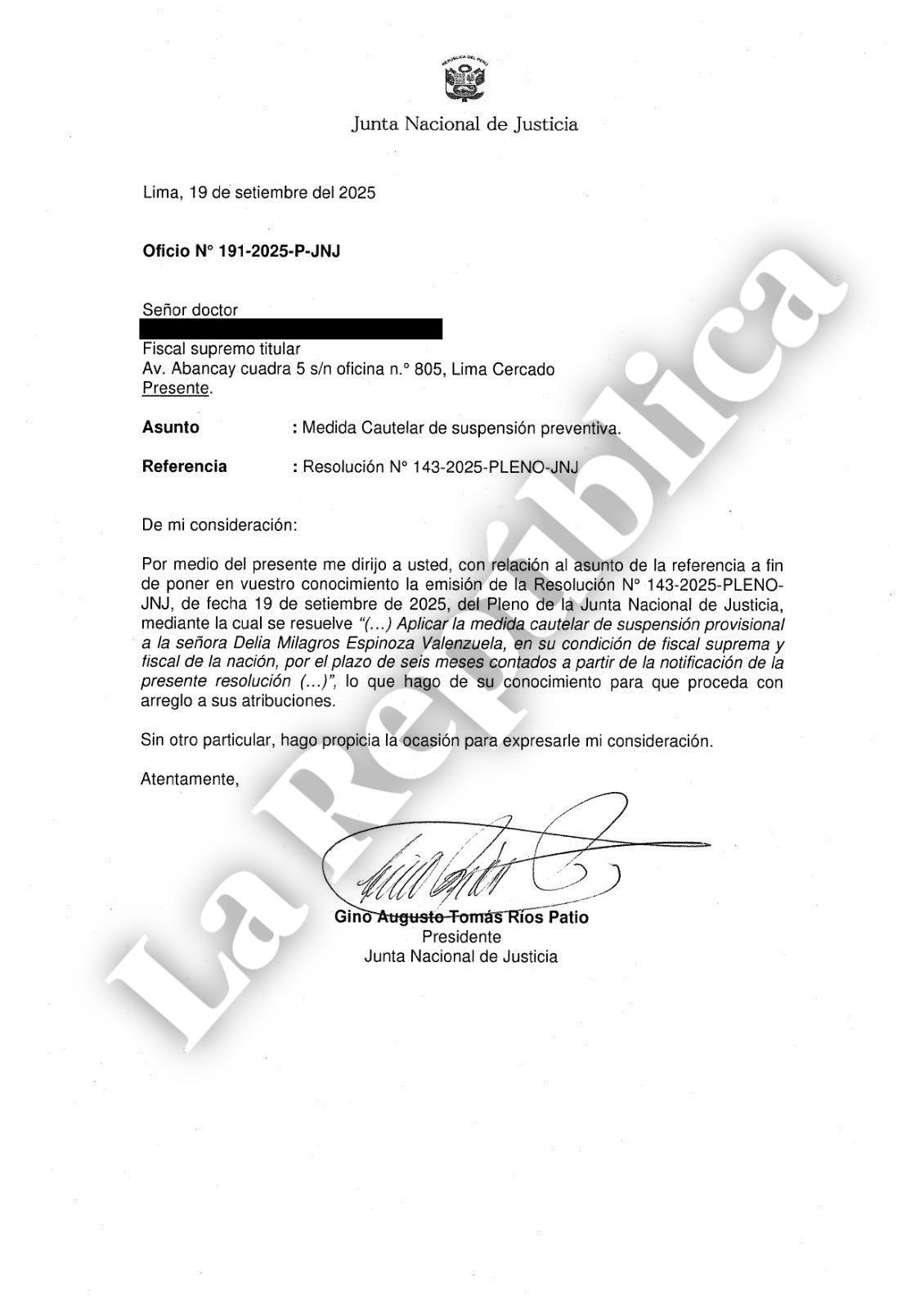
The National Justice Board (JNJ) He decided to suspend the prosecutor of the Nation, Delia Espinozafor a period of six months, considering that he failed to replace Patricia Benavides as head of the Public Ministry.
“Plenary of the National Justice Board Solve Apply the precautionary measure of provisional suspension to Mrs. Delia Milagros Espinoza Valenzuelaas a supreme and fiscal prosecutor of the Nation, for a period of six months from the notification of this resolution, “reads the document.
Delia Espinozathrough his legal defense, he had requested that María Teresa Cabrera, member of the Jnj, who proposed his suspension, was separated from the process against him because he considered that there is a conflict of interest that would be detrimental to impartiality in the case.
“This is part of a campaign that began since January because they began to see the fruits of our work: duly supported constitutional complaints. They took advantage of the microphones and insulted and threatened us but I have always faced crime and something they have in common is that they attack who investigates them,” Espinoza said at a press conference while the JNJ session was given, which he rejected.
Jnj discussed Delia Espinoza’s suspension in a session that lasted just 2 minutes
The National Justice Board He opened the debate to define the future of the Prosecutor of the Nation, Delia Espinoza, but the session lasted just two minutes. The agency evaluated to suspend it for six months because it did not comply with the resolution that ordered the restitution of Patricia Benavides. Espinoza did not attend the debate and his defense denounced that the procedure was arbitrary and unconstitutional.
“We will not attend. We will not validate its arbitrary and unconstitutional actions. There is no clean play or guarantees of due process. We will resort to constitutional justice,” said his lawyer through a statement published on social networks.
The Plenary of the JNJ also separated the counselor Francisco Távara for having previously opined on the case, so they argued that he compromised his impartiality. Finally, the decision was the vote of the counselors, amid questions about procedural guarantees and the impact it could have on the autonomy of the Public Ministry