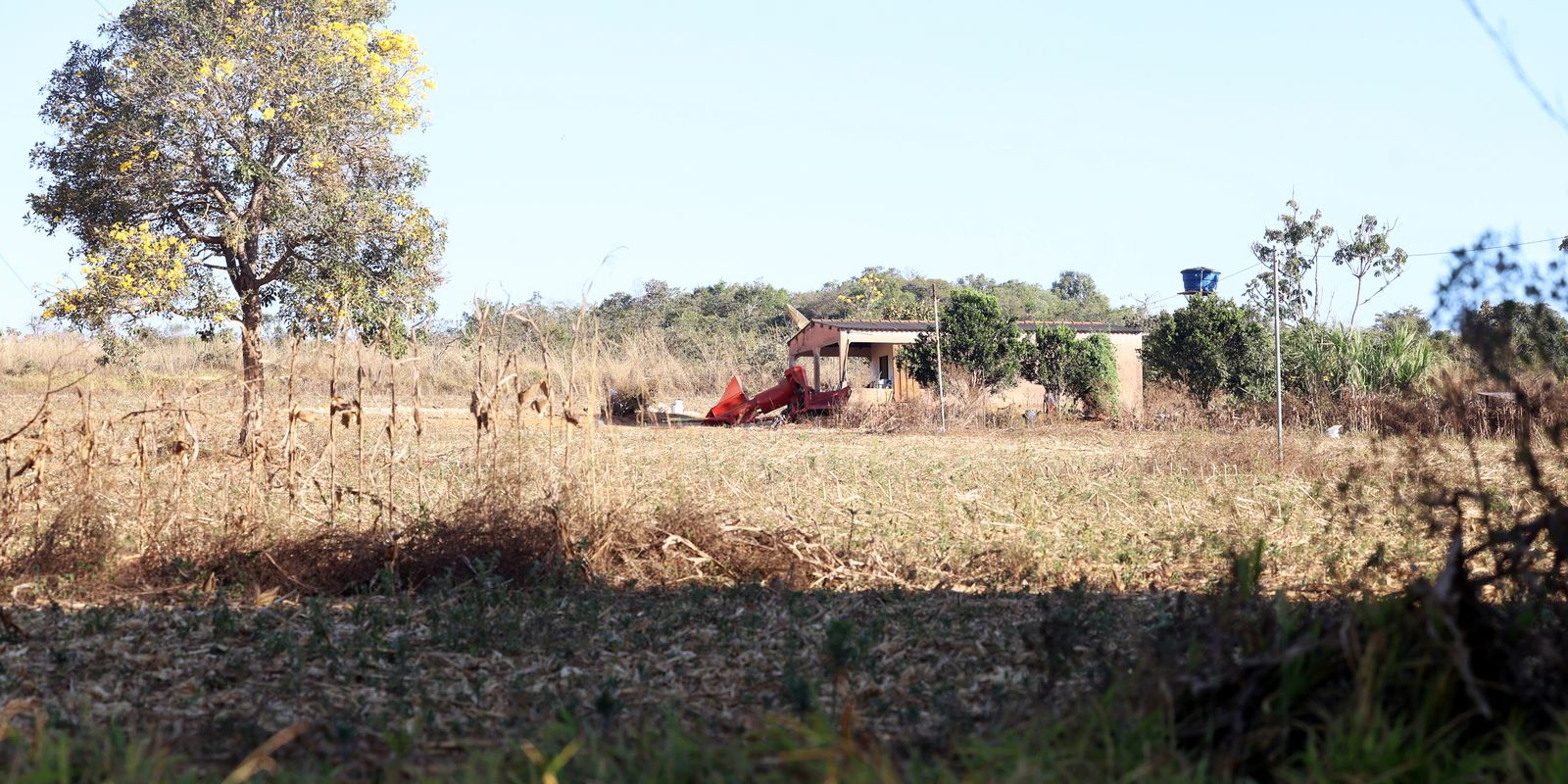
The defense of rural producers in an extensive area of the community of Antinha de Baixo, in the city of Santo Antônio do Discoberto, in Goiás, criticized, this week, the investigation of the National Institute of Colonization and Agrarian Reform (Incra) about the presence of quilombolas in the region of 1,500 hectares. 
“The owners became ‘Glileiros’ and the invaders, who have made clandestine allotment and sold dozens of leisure farms with pool in the last 5 years, became ‘Quilombolas’,” said lawyer Eduardo Caiado in a letter to the report of the report by Brazil agency.
He represents the spoils of Raul Alves de Andrade Coelho, Luiz Soares de Araújo and Maria Paulina Boss, who would be, according to the defense version, owners of the area, in a judicial dispute that would have begun in the 1940s.
Self -deficiency
On the other hand, families who identify themselves as quilombolas, even with Certificate of Self -default published by the Palmares Foundation on August 1argue that the presence of their ancestors is at least 200 years in the area.
Farmer Joaquim Moreira, 86, upon receiving the document, assured that he was born and created in the rural community of Antinha de Baixo. He recalled that his parents and grandparents, with whom he lived in the last century, were also created there, which rebuts the version of the farmers.
In report of Brazil agencyIn early August, residents who identified themselves as a quilombola remaining population showed the cemetery and other brands of the past.
Twist
After a favorable decision in the state court and the beginning of the vacancy of residents of the territory at the end of July this year, the self -declaration document from families who identified themselves as quilombolas, published by the Palmares Cultural Foundation on August 1, caused the Supreme Court (STF) to refer the case to the Federal Court.
The lawyer of farmers Eduardo Caiado criticized this decision.
“Someone self -identified as quilombola and the area was interested in Incra. We did a survey of Internet websites and search engines and found no mention of any remnant quilombo or slaves in the region,” he said.
He argued that the judge determined the suspension of compliance with the sentence, paralyzing the eviction of the area, referring the process to the Federal Court, “on the same day that Incra’s qualification in the process, which alleged interest because 20 days earlier a person self -identified as quilombola.”
The lawyer, in his version, added that the farmers did research in “numerous and old court proceedings” and that there would be no record that the Anti de Baixo farm was occupied by slave descendants.
“On the contrary, Mr. Saturnino da Silva Moreira and the Pereira Braga family, who would have given rise to Quilombo established at Fazenda Antinha, wrote in the legal process of adverse possession who bought land on site and moved there in 1957,” says Eduardo Caiado.
The lawyer stressed in a letter to Brazil agency that there is a “narrative creation that in the area there has already been a quilombo to suspend compliance with the court decision”.
Supposed interests
For him, the turnaround in the case is related to the political exploitation by representatives of leftist parties and also of interest to the Federal Government because beneficiaries of the decision would be relatives of the Governor of Goiás, Ronaldo Caiado.
According to Eduardo Caiado, the process has dragged on for decades due to delaying measures in court. But, according to him, sentences favorable to his clients date from 1990, and with first res judicata in 1994, even with rejection of two appeals at the time.
“It is reported that 11 owners of the Antinha de Baixo farm had their domain titles recognized by the court and had their areas demarcated,” said Eduardo Caiado.
10 years ago, according to the lawyer, there was the filing of adverse possession actions by other farmers in the area. After the subpoenas at the time for voluntary eviction, the judge turned back and suspended the court order, as he understood that the judgment of another adverse possession was still missing.
The trial of the case occurred in 2021. But the lawyer argues that there was clandestine sales of land and illegal allotment in leisure farms, “most pool and summer houses.”
Also, as the lawyer recalls in January last year, Judge Ailime Virginia Martins ordered voluntary eviction.
In March last year, the eviction was suspended for analysis by the TJ-GO Land Solutions Commission, until the new determination of the judge of vacancy, and suspension by the Federal Supreme Court in sequence.
Policy
The lawyer understands that the latest decision arose from political interests, “since the presidential elections approach and a relative of the governor would be one of the owner’s heirs who would have the small part of 1/11 of the farm.”
Eduardo Caiado ends the letter to Brazil agency With the consideration that the Anti Fazenda de Baixo was illegally subdivisinated in small leisure farms, where they appeared overnight for the day by the day, without any license or authorization for land parceling in areas lower the rural module, constituting a crime of illegal land parcel.
Occupation by quilombolas
Researcher of the presence and occupation of quilombolas in the surrounding region of the Federal District, Professor Manoel Barbosa Neres, from the University of Brasilia (UnB), explains that these remaining populations occurred from the 19th century during the period of mining exploration in the Midwest.
He explains that the region was occupied mainly after the attacks suffered at Quilombo do Ambrose, Minas Gerais.
“These quilombos were constituted (near Goiás and surrounding the Federal District),” he said.
The teacher explains that the mesquita quilombolas (in Western city, Goiás) mention that, in the past, there was a connection of them with the quilombola communities of St. Anthony of Discovered. The village of anti of blacks was the first to receive the investigation from Incra.
The researcher understands that this is a common conduct to be pressure against Incra’s anthropology teams when they will investigate whether a territory has quilombola presence.
“The anthropologist who made the Quilombo Mesquita report, for example, suffered threats,” he recalled.
The researcher ponders that people who claimed to live for over 80 years in the place have a consolidated situation.
“But there were also some situations where people had the earth and they lost and had to leave. There are many cases like that. People are no longer on earth, but they know that that land belonged to them.”
For anthropological work, the researcher points out that the survey identifies the marks of people in a given region.
“Elements that bring documentary reminiscences. But also immaterial records, such as memories, stories told, kinship bonds and forms of production. All this is a type of cultural dossier,” he explained.