Havana/December ends with our ears glued to the ground and our eyes focused on the cracks of the country. This month, like almost all in Cuba, cannot be understood without the rumor: that parallel form of information that circulates from corner to corner, from WhatsApp to WhatsApp, navigating between hopelessness and humor, between fear and desire. In a country where secrecy continues to be state policy, the balls function as a compass, as a relief and, sometimes, as a prophecy.
This December has been especially noisy. While the country is going through an endless economic crisis and growing social unrest, street voices do not remain silent and signals are crossed; some smell of panic, others of hope and still others of a simple need to explain everything or to get ahead of state announcements.
The publication of the official floating exchange rate between the Cuban peso and the dollar caused an avalanche of speculation. From the fact that the new mechanism was only a “fool catcher” to be able to have a clear database of who handles currency in Cuban society, to the rumor that it is only an operation so that the ruling leadership can fill their suitcases before getting on the plane. There were noises for all tastes.
The publication of the official floating exchange rate between the Cuban peso and the dollar caused an avalanche of speculation
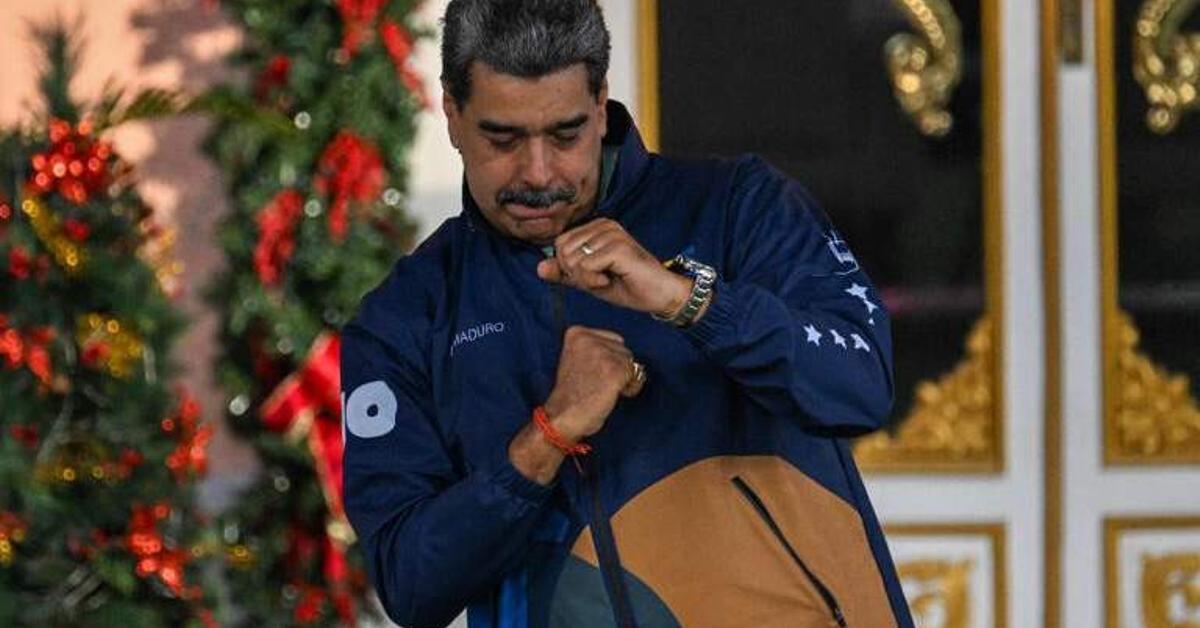
Another of the most insistent gossips talked about Venezuela. For weeks, and before the arrest of Nicolás Maduro by the United States last Saturday in an operation, it was repeated that the military operation launched by the United States in the Caribbean would not only aim at the fall of Maduro, but at the dismantling of the political apparatus of Havana. The idea has spread through neighborhoods, lines, markets and chat rooms: if Caracas falls, Havana falls. If the Bolivarians collapse, the Castros will be left without artificial respiration.
In those street whispers, Maduro had already fallen. Others claimed that he was negotiating his departure. Others claimed that he flew to Doha. Others placed it in Moscow. And some added that he would land in Havana, where he would be an uncomfortable guest and a prisoner surrounded by luxury.
In more than one Telegram thread it has been possible to read: “The problem is not Venezuela, it is Cuba.” There is no shortage of those who assure that the collapse of Chavismo would be like pushing a domino on the regional stage. Others, more cautious, remember the long-standing ability of the Cuban regime to survive any shock, as occurred after the implosion of the Soviet Union. But the anxiety is there: Caracas is one of the last columns that supports Castroism, and many think that it is already cracking.
Another rumor has established itself, harsh and dark, in Havana, related to the synthetic drug crisis. The whispers are already talking about a silent epidemic and the complicity of the Police who turn a blind eye. From the State only vague statements and exemplary responses come but no proposals to rescue addicts. On the other hand, there is fear on the street. And not only to the drug, but to what it means: loss of social control, extreme impoverishment, family breakdown and rapidly increasing violence.
There is also talk of a hurricane much longer and more destructive than Melissa. In the Chicharrones neighborhood, several neighbors reported irregularities in the distribution of materials for victims. Among the phrases that are most repeated: “the tiles are not reaching those who lost their homes.” According to anonymous voices, part of the resources would have ended up in the hands of officials and people close to the regime who receive the privilege of these supplies. The complaints point to favoritism, corruption and abuse. “They took what was mine,” says a mother who sleeps at her in-laws’ house. As always, the natural disaster was just the beginning: the most devastating thing came later.
If a rumor gained strength in December, it was the one that points to possible succession movements in power
Another of the rumors highlighted this month has a first and last name. It spread like wildfire that Vicente de la O Levy, Minister of Energy and Mines, had been dismissed by Miguel Díaz-Canel and Raúl Castro. Many celebrated the “news” as if it were confirmation, but time crushed it: there was no dismissal, no resignation, no change of position. De la O Levy continues to be visible, giving statements and appearing at public events. The rumor was born more from collective desires, from Cubans overwhelmed by the endless energy crisis, than from a real sign of political movement. The people want those responsible, and they want to see them fall. It is no coincidence that the balls return again and again to the same names.
But if one rumor gained strength in December, it was the one that points to possible succession movements in power. There was already speculation that Oscar Pérez-Oliva Fraga, great-nephew of Raúl and Fidel Castro, would be on his way to the presidency. This month that possibility gained muscle with his appointment as a deputy to the National Assembly, in addition to maintaining the positions of Minister of Foreign Trade and Foreign Investment and First Vice Minister, reinforcing what 14ymedio described as a carefully designed generational continuity operation.
For many, this incorporation into the parliamentary apparatus seals the suspicion that the dynasty did not end with Raúl. “Castro is here for a while,” is heard with discouragement in the streets. Others believe that it is just noise, something like the illusion of the future in a system that only recycles paintings. But the idea was established: if the family tree comes to power again, the Island will be a closed political board.
And since December would not be complete without rumors of death, the most macabre arrive: in Puerto Padre, Las Tunas, it is said that they are reusing coffins at wakes due to the increase in deaths from arboviruses. Others claim they are making coffins from cardboard boxes of chicken imported from the United States. The authorities have not said anything; The neighbors, on the other hand, talk a lot. The rumor seems to be a mirror of poverty: if there are no medicines, if there are no ambulances, if there is no bread, why would there be wood for the coffins?
January is waiting in line, also full of new balls. Because in Cuba, reality is not announced: it is suspected.