Charanga Habanera gained absolute popularity among the Cuban public—especially the youth—during the 1990s and early 2000s. Proof of this are the seven Lucas Popularity Awards obtained consecutively, a record that to date has not been surpassed by any other artist or group.
This week, David Calzado and La Charanga Habanera reappeared in Cuba, after an almost total absence in recent years, a period in which the orchestra settled in Peru and, from there, undertook the rest of its international commitments.
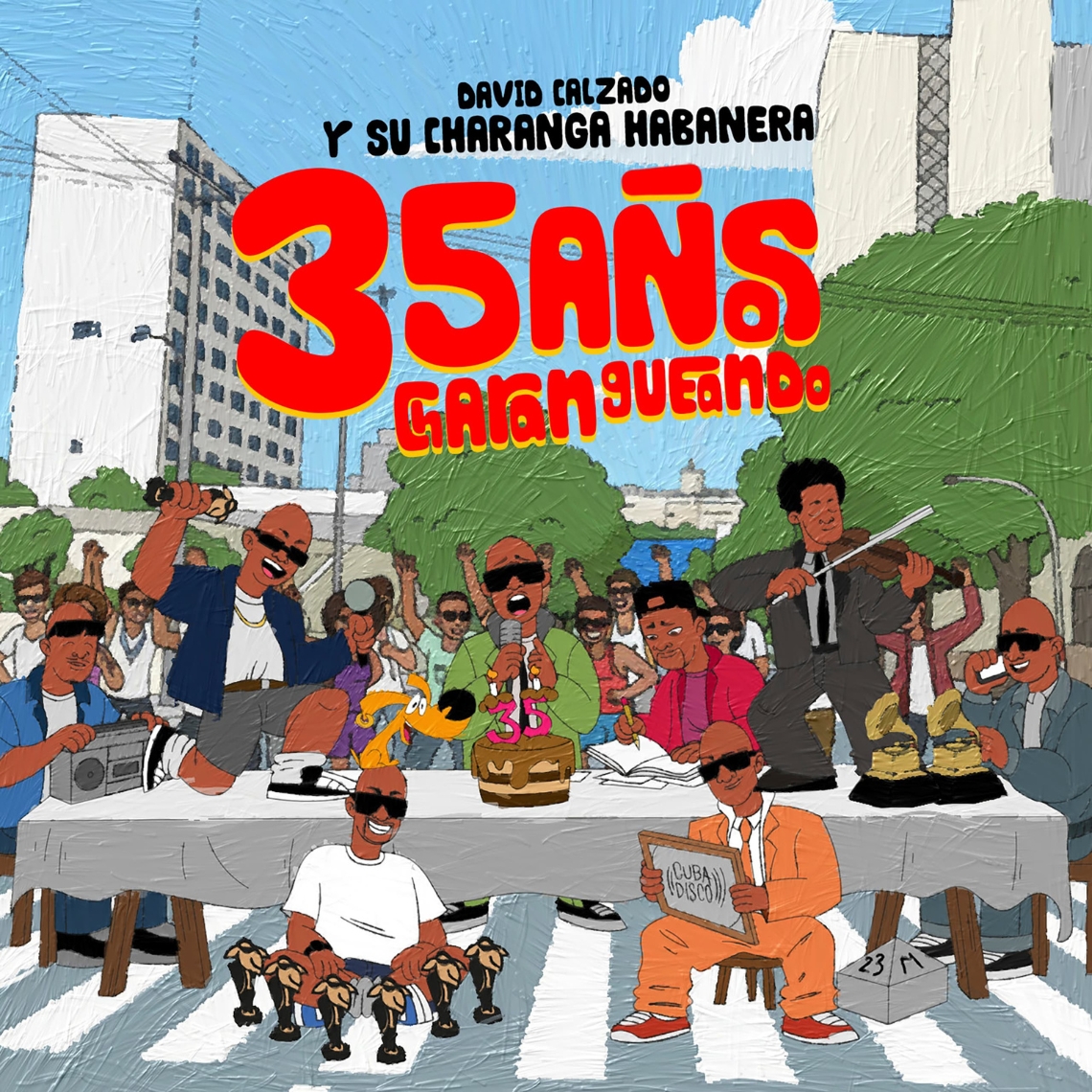
The return to the island coincides with the release of his new album, 35 years charangueatinga double album that brings together many of the songs that once sent Cuba into frenzy, but that also includes new features with which the group seeks to demonstrate that it continues in full creative force.
Additionally, this Saturday, December 20, La Charanga Habanera will offer its first concert at the Karl Marx Theater. Despite its success and years of career, the group had never taken on the largest theater in Cuba alone. The concert is part of the Bis Music Fest, an event that the Cuban record label is launching these days and under whose label this new album is presented.
At the head of the most sensual timber group in Cuban music is David Calzado, a trained violinist, an instrument that he abandoned more than two decades ago to establish himself as a creator, director and living image of what, for a long time, we Cubans have defined as “being a charanguero.”
A concept that transcended the musical to become a symbol of virility, aesthetic taste in men’s fashion, way of dancing and lifestyle.
La Charanga is a reference for several generations, and its director has been considered, on more than one occasion, a daring figure, who has never been afraid to take the step or call a spade a spade.
How long had it been since you recorded a new album and why?
We haven’t made an album since 2021. With so many international tours we’ve had, we couldn’t find the time to get into the studio and prepare a new work.
This album took us about a year and a half. We had to do it between Cuba and Peru: we mixed and mastered in Peru, we recorded a part in Cuba and coordinated with all the guests, looking for the moments in which each one could contribute their interpretation. I am happy, because everyone responded with great affection and professionalism. In some way I felt respected, because those artists said yes very strongly.
Why take the risk of bringing together great hits and premieres in the same production? Isn’t that too ambitious?
No. When I thought about making an album for 35 years, I wanted to collect the greatest hits, but with completely different interpretations, with renewed arrangements, without losing the essence of the songs. Being a double album, it also seemed logical to me to include new, unreleased songs that could become a hit.
Times are complicated now. Making a dance music hit today is almost a miracle. We live in a moment marked by other musical trends, where timba and popular dance music are not in the foreground. Luckily, there are still great exponents, with very high quality, who continue to defend that sound. But if you analyze the panorama, almost all exponents of dance music have ended up incorporating elements of what is trending, something that no one allowed themselves before.
But La Charanga Habanera has made this type of crossover since urban music began to become popular…
Since 2000 I started working with urban people. I mixed my timba with that universe and I had success with all of them: Eddy K, Gente de Zona, El Chacal, Baby Lores and Insurrecto, El Micha, El Yonki, the deceased The Taiger…in short, with everyone.
I was very criticized by my colleagues, and I always responded the same: I am not a timbero, I am not a salsero, I am a musician. That has always been my concept, although not that of many of them. Today, over time, everyone has had to recognize that we must join the supposed enemy, who in reality is not. No musician is my enemy. When a genre is successful, you have to give it credit, whether you like it or not.
Why have they been so far away from the Cuban stages?
It is true that I have been far from the Cuban stages, but for a beautiful reason: we have had total success outside of Cuba. That has given us many results, not only musically, but also economically and in life. My musicians are happy and I am crazy to return.
Unfortunately, that success does not allow us to spend much time in Cuba. Still, I can’t complain: many musicians would like to have this possibility. Today it is not easy to achieve such a strong international reception. We are lucky ones. Not because we are better or worse than others, but because in life you also have to have a touch of luck, and we have had it.
Hence the decision to release this new album in Cuba and with a Cuban record label?
It’s not a need, it’s a desire. I have to admit that I am 150% Cuban, and I love this country, with its virtues and its defects.
I love this country, I love its people, my friends, my dominoes at home with my brothers in life. Cuba is my land, that is my wine, the wine that I have and that I love. That’s why I said: the album is released in Cuba. And that success will also be transferred to the new moments of Charanga Habanera outside the country. This album is going to go a long way, and the DVD that will be recorded at the concert will give us even more work content.
Are you aware that La Charanga Habanera no longer has the same level of popularity among young people that it once had? How do you measure success today?
Right now, La Charanga Habanera cannot be the icon of youth, even if it does the same thing it has always done, because what we timba groups do is not the trend.
None of us, no matter how great musicians we are, can compete with what dominates the market today, nor can we fall into doing exactly that. I can venture with an artist, make one or two songs that could be hits, but I cannot turn Charanga’s career into that, out of respect for what I have always done and out of respect for my feelings.
Sometimes we don’t want to admit it, but music moves in cycles. Today you are in fashion, tomorrow there is another trend. The important thing is to remain a respected artist, that when you introduce yourself people say: “they are the best.” That is what I try in every presentation and that is what I am going to try at the Karl Marx: that those who enter leave saying “there is no doubt, they are the best.”
The musicians who make up La Charanga Habanera today, especially the singers, are not well known to the Cuban public. How do you think they will be received at that concert?
It’s funny, because those kids right now in Peru can’t go out on the street, they can’t take a step: it’s crazy. But in Cuba, since we have not been able to act, we have not made videos or appeared on television, many people will wonder who these kids are. What I’m telling you is that they are escaped.
In these 35 years many musicians have passed through La Charanga. Who do you consider to have been fundamental in the history of the group?
First, thank everyone who has passed, because everyone gave their hearts, worked hard and suffered a lot with my essays and my level of demands. But, of course, there are always some who are key: Leo Vera, the greatest singer that La Charanga Habanera has ever had. Also important were Michel Maza, Dante, Leoni Torres, Yulien Oviedo, Ebblis “El Boni”, who was a scandal in Cuba, and Aned Mota, who in addition to being a singer with great qualities had something even more important: charisma, flavour, the true charanguero spirit.
There are also very important musicians, like Osmany Collado or Juan Carlos González, from the first stage. Many key people have passed, even some who are not musicians, like Roberto Hernández, one of the most important managers we have had in history, or Alejandro Otero, another fundamental manager.
And something very important: all my life companions, who have been great inspirations and, in a certain way, my advisors. People who look from the outside and can give their opinion. Sometimes I pay attention, sometimes I don’t, but the important thing is to know that there is someone who thinks about you and looks out for you.
Masculine sensuality is one of the hallmarks of La Charanga Habanera. At what moment did you realize that this had to be part of the show?
I didn’t realize it, that was emerging on its own. The dedication, the strength of the songs, projected movements that later became common and that today are part of the concept of what it is to be a charanguero.
Now they are full steam ahead. I think those people lose kilos at a concert. They are crazy, but organized, because everything is thought out. Although it may seem crazy, it is not. There are things that are not rehearsed, but that are already part of the concept and happen on stage. Then I say: I didn’t like this, I did like this, and we clean up.
Charanga Habanera has always been one of the most controversial orchestras. How have you handled that constant judgment?
La Charanga has always been in question. And many times I think that has had to do with a feeling among some colleagues, seeing the success and madness that has been generated around us. They have criticized us for the movements of the singers, for the texts… and if you compare what was sung then with what is sung now, that was nothing. Still, they wanted to kill us.
But I don’t conduct an elitist music orchestra. That’s what Beethoven, Bach, Mozart, Tchaikovsky are for. La Charanga Habanera is an orchestra made to make the public enjoy. Of course it is important to have suitable musicians and adequate singers, but this works like a basketball or baseball team: everyone plays and everyone wins. A single player does not win the game.
In the end, we have been criticized by a small circuit and cheered by a huge mass. And the masses, almost always, are right.
How do you define the charanguero feeling?
Being a charanguero is being an enjoyer of life and not fighting with anything.