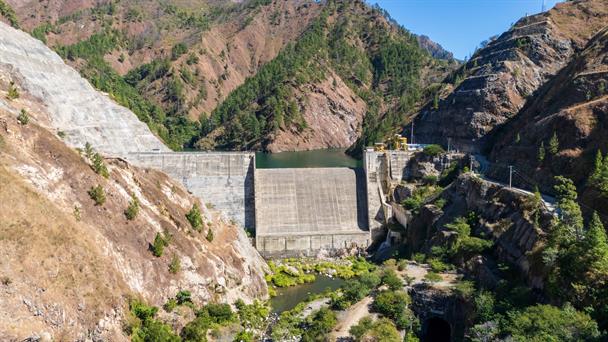
The Bohechío mountainsin the province of San Juan, hide one of the vital works for the National Interconnected Electrical System (SENI). The southern municipality houses two generators deep in its soil—427 meters above sea level—that helped restore energy service after the general blackout that the country suffered in mid-November 2025.
Composed of a reservoir that rises to 760 meters above sea level and that dams the waters of the Yaque del Sur Riverthe Palomino hydroelectric plant —together with Jigüey, Valdesia and Aguacate, in the southern region, and Tavera, Pinalito, Río Blanco, Monción and López Angostura, in the north of the Dominican Republic— was among those responsible for restoring energy service.
-
But, beyond providing support for the “black start” of the SENI, the main task that the reservoirs of the country’s dam system fulfill is to regulate the floods of the rivers they dam and guarantee water for the population and agricultural production. To these functions, in recent years another one was added: serving as an ecotourism attraction.
Palominowhich came into operation in 2012, is the last of the hydroelectric plants built by the State, contributing from that year until last September 1.6 million megawatts (MWh) to the system, also managing to be one of the plants that provides greater stability to the SENI in terms of frequency regulation and black start, according to information provided by the Dominican Hydroelectric Generation Company (Egehid).
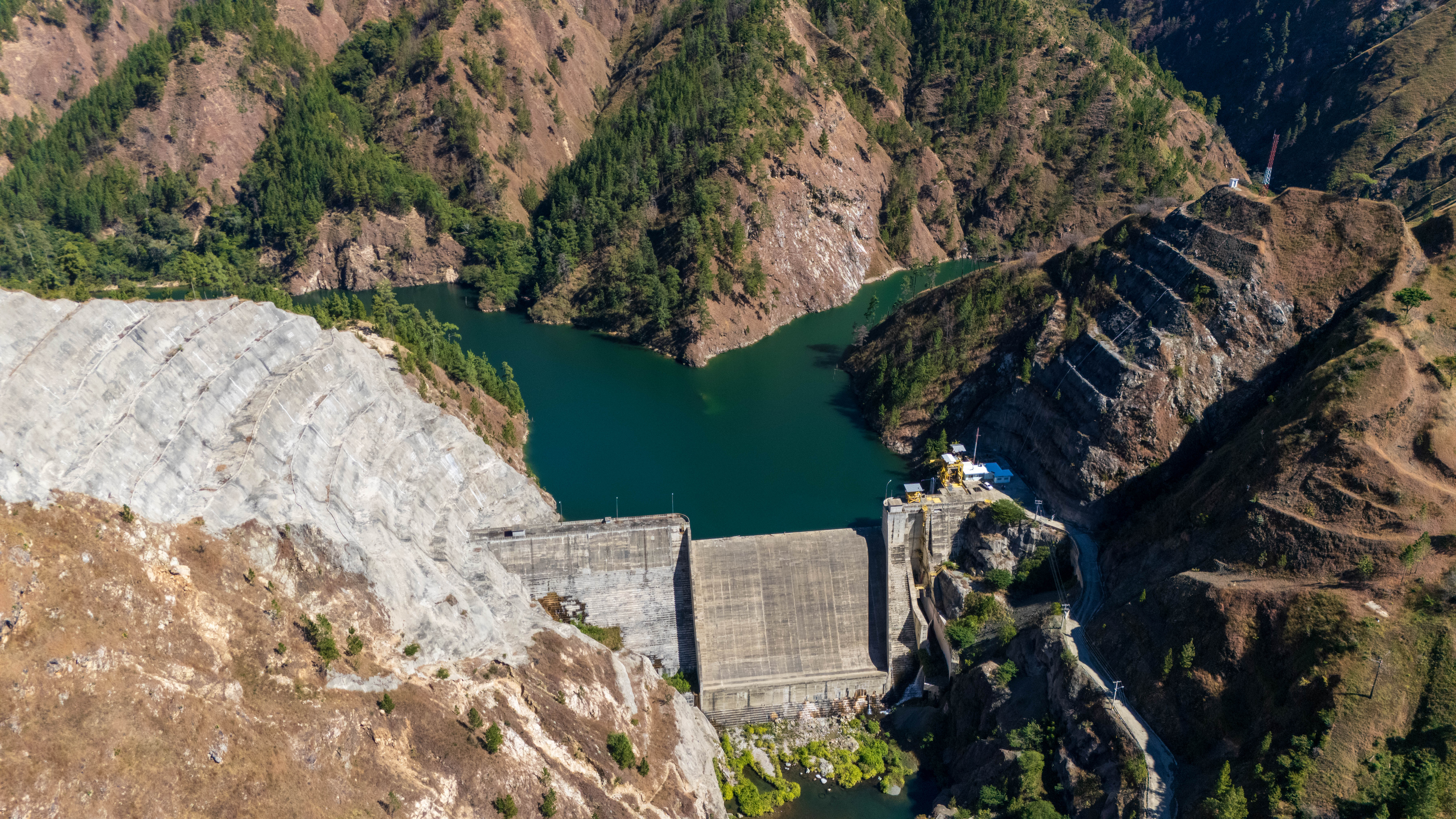
Since its commissioning, the plant generated savings for the country, only in terms of imports of barrels of oil for energy production, for 68.4 million dollars and avoided the emission of more than two million tons of carbon dioxide, in addition to being considered the most modern within the hydroelectric system.
The work was built at a cost of 450 million dollars, of which 130 million were the first financing made by the country with the Central American Bank for Economic Integration (CABEI).
-
CABEI also financed the construction of the Monte Grande dam, inaugurated in 2024, with 249.5 million dollars, according to the Open Data Portal of that multilateral organization. The main function of the work is to prevent flooding in the low areas of Yaque del Sur and guarantee the supply of drinking water and for agricultural production.
Until June 2024, the State paid 189.8 million of dollars: 58.6 million in interest, 1.1 million in commissions plus the capital, according to details provided by the Ministry of Finance and Economy to a request for information through the Portal for Access to Public Information.
The 27 hydroelectric plants operated by the Egehidbetween small and large, have an installed capacity of 624 MWh, although the power plant PalominoTavera and Valdesia are the three with the highest production, as highlighted Rafael Salazaradministrator of the generation company.
Generation and economic value
The records of Coordinating Body (OC) of SENI indicate that, by 2024, these generation sources represented 10.4% of the country’s installed capacity, although they only accounted for 5.69% of all the electricity generated by the system last year.

However, despite not being the predominant source within the generation systemhydroelectric plants contributed to Dominican state 43,317.1 million pesos from 2020 to November 2025, only in the amount of energy injected into the SENI.
“People cannot imagine the impact they (dams) have on energy every time there is a crisis. For example, in the hot months, when a deficit is generated due to increased consumption or when a generator goes out, we are the ones who can make the effort so that there is no deficit”General Administrator of Egehid
The official highlights that the 2025 production of public hydroelectric plants translated into more than 200 million of dollars, with most of the generation being sold to state electricity distribution companies (EDEs) and “to other clients that handle development issues.”
Between January and November 2025, the plants of the Egehid they contributed 1,334.7 gigawatt-hours of energy to the national electrical system, a figure that represents 6% of the 21,962.4 gigawatts generated during the aforementioned period.
Construction costs
He dam system Dominican has works that exceed 50 years of construction, such as that of Tavera, built in 1973 at a cost of 73 million dollars, and that of Valdesia, located in San Cristóbal, whose construction amount was 55 million dollars in 1974.
But, despite the economic cost that represents its construction, Salazar points out that “the preys are paid“.
“Valdesiafor example, has been paid many times. Energy alone has paid for it many times over. Imagine the water of the capital (part of which is supplied by that reservoir), if we quantified it in money. Tavera and Hatillo They have also been paid several times. They pay for themselves,” he says.
Valdesia had, at the end of 2024, a nominal production capacity of water potable water of 155.2 million gallons per day, according to data from the Santo Domingo Sewer Aqueduct Corporation (Caasd). In addition, it has an installed electrical generation capacity of 54 megawatts.
In the opinion of René Mateo, deputy administrator of the Egehidhe dam system of the country is a blessing, although it suggests that the Dominican Republic should store 40% of its water available, a figure that is currently around 13%.
“We should have a national construction plan dams because they are paid and are necessary. The country has to build all the dams that can, there has to be a constant planning that cannot be paralyzed,” considers Mateo.
Meanwhile, Rafael Salazar maintains that the key for the nation to have a dam system enviable for the rest of the countries is the execution of the Pact for Water.
Limitation due to drought
Having the water as “fuel” to generate energy, the production of hydroelectric plants It is affected by the periods of drought that the country usually suffers, reducing generation by up to 200 gigawatts.
The owner of the Egehid reports that in years of severe drought the energy production drops to 1,100 gigawatts, when the average tends to exceed 1,300 gigawatts per year.
“When there is little water translates into less energy because there is regulation: the priority, by law, is the water drinkable for the population and we produce the possible energy by dispatching that water potable. The second use is for irrigation and the third is for generation. When there is a severe drought, the energy production“he explains.
His statements agree with the generation hydroelectric 2023, a period in which the country experienced a strong absence of rain, causing that during that year the energy production from these sources only reached 1,136.2 gigawattsaccording to the records of the SENI Coordinating Body.
Palomino is an example of how the lack of water limits generation. Simón Cepeda, in charge of that plant, indicates that during daylight hours the reservoir remains storing water to operate at night, due to the low flow provided by the Yaque del Sur.
“Now we have an input flow of 3.5 cubic meters and the machine consumes between 11 and 12 cubic meters. What we accumulate in the day is to produce six hours, more or less, for peak hours, with a generator. When we have a lot water Well, we both went in, but the issue of water always limits production,” says Cepeda.
To deal with the situation, the administrator Egehid call strengthen a protection plan for the upper river basins and control in the lower areas of the tributaries.
With little impact
“Wherever there is a dam, the dam becomes the economic engine of those nearby communities.” The appointment corresponds to the administrator of the Egehid, Rafael Salazar. With it, it defines the impact that these works generate in the communities where they operate, also highlighting the jobs they create and the benefits for agriculture.
But in Bohechío, where it is located Palominoresidents and Mayor Domingo Suzaña Abreu have different opinions about the benefit of the hydroelectric power station in the community.
Suzaña Abreu denounces that a series of works by social investment that the plant entailed for the benefit of the community were not done, including the construction of irrigation canals and reservoirs to modernize agricultural irrigation, which has meant that more than 80% of agricultural land is currently not in production.
The municipal official regrets that those who had to leave the agricultural production have become a burden for the State through the different social support programs of the Dominican government.
Likewise, Miselania Alcantaraa resident of the San Juan municipality, complains that the community was only taken into account for the construction of the plant, indicating that in the case of the employees they come more from the main municipality than from Bohechío.
In this demarcation the Egehid build a municipal market and a softball stadiumalthough its residents report that both works have been paralyzed for months.
In 2024, President Luis Abinader inaugurated the campus of the ISA Universitybuilt by the Dominican Hydroelectric Generation Company in the surroundings of Palomino hydroelectric complex. The work involved an investment of 508.5 million pesos.
Although Suzaña Abreu recognizes the regional impact and national of that academic campus, ensures that local investments are minimal. While the SENI continues to receive cheaper and cleaner energy from Palominothe 2,523 inhabitants of the main municipality of Bohechío are still waiting for part of the benefits it brings to be returned to that town.