After its recent escalation in Cuba’s informal market, the currencies have retreated again amid the clash of complaints and statements between The Touch and the Government of the island.
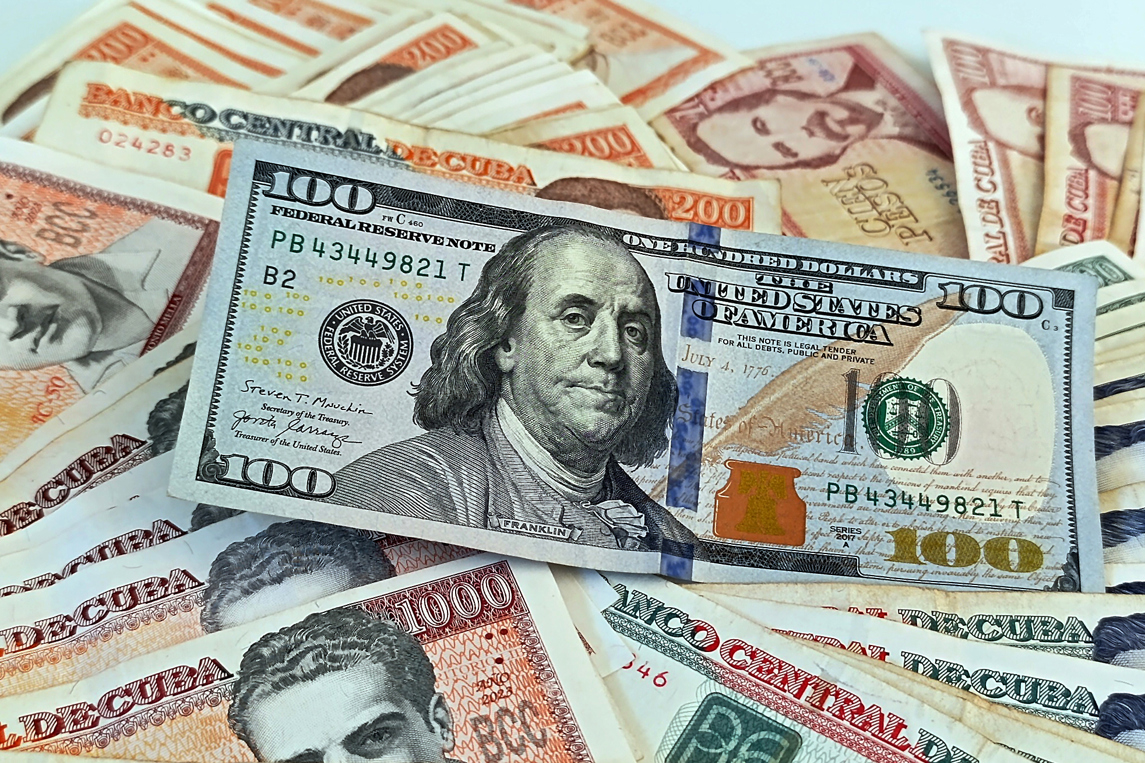
The dollar, which the weekend had reached 470 pesos (CUP), it fell 35 pesos in recent days to stand at 435 CUP, the value with which it woke up this Thursday according to the rate published by the independent media, accused of manipulation by the Cuban authorities.
Meanwhile, the euro fell again from 500 CUP, a price it had reached last Friday, when currencies were experiencing a new bullish wave after the previous fall due to the passage of Hurricane Melissa and a network campaign that called for a boycott of The Touch.
Now its value is 490 CUP, after descending this wednesday until that quote.
The decline also affects the MLC, which after fluctuating for weeks around 205 CUP—in a panorama marked by the worsening of the socioeconomic crisis and the authorities’ commitment to dollarization on the island—had experienced a rise to 220 CUP.
However, it has fallen again and this morning it was trading at 210 CUP, according to the rate calculated from purchase and sale offers on digital platforms.
Update of informal currency market rates in Cuba
Date: 11/20/2025Image 1: Representative rate of the informal market (elTOQUE)
EUR: 490.00 CUP
USD: 435.00 CUP
MLC: 210.00 CUPThere are offers in the ranges:
EUR: from 420.00 to 560.00 CUP
USD: from 390.00 to 485.00 CUP
MLC:… pic.twitter.com/HYjr99NOUN— The Touch (@eltoquecom) November 20, 2025
Government vs. The Touch
The new downward movement of currencies in the Cuban informal market comes in the midst of controversy over the interest rate. The Touch and the complaints against him by the Government.
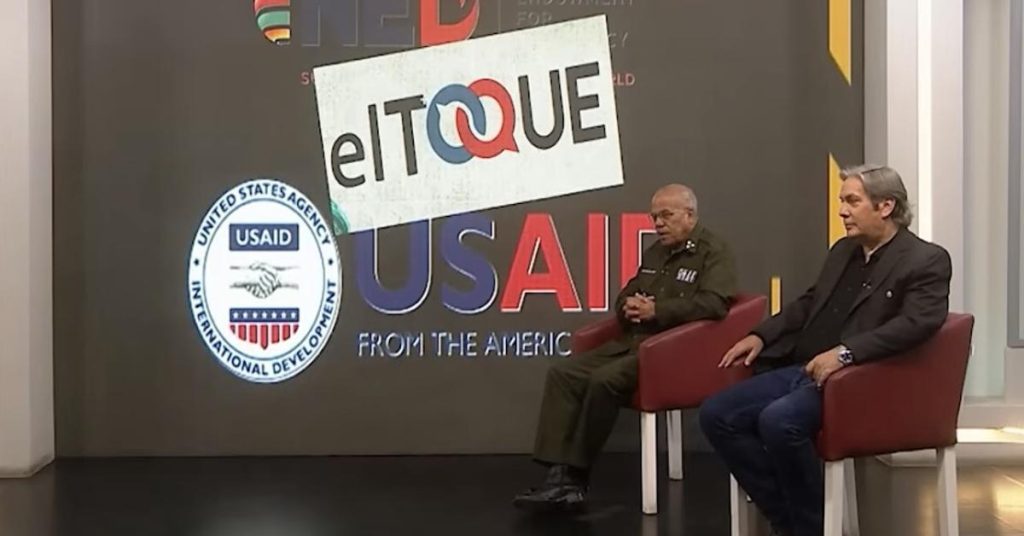
Last week, Prime Minister Manuel Marrero and other authorities accused the media of currency trafficking and tax evasion, while a special program on television targeted the publication for these crimes and for receiving US funds.
Since then, in the official media and in profiles on related networks, accusatory articles have continued to appear against The Touchwhich they consider an actor in Washington’s economic and political war against Cuba, whose rate would seek to induce inflation and depress—even more—the purchasing power of the population to stoke social discontent.
This Wednesday another official program spread on the networks and Cuban television reiterated the government’s complaints against the opposition media, which accused of a “Trojan Horse” of a “fourth generation war” against the Cuban Government and of attempting with the disclosure of its tax to “create discontent, divide the Cuban family and promote civil disobedience.”
The publication, for its part, has not hidden its position of opposition to the Cuban Government or the receipt of money from United States entities, but has denied the accusations of manipulation of the rate and currency trafficking and has maintained that the island’s authorities seek to turn it into “a new scapegoat to divert attention from its resounding failure.”
Likewise, he has defended his rate against the questions against him and requests that he stop publishing it, ensuring that it aims to be “a transparent and verifiable reference of the value of the Cuban peso in a context in which there is no official rate that reflects the reality of the currency market.”
In his opinion, even though many Cubans check their rate daily “To guide their decisions, the direction of the exchange rate is defined based on the shortage of dollars, expectations of devaluation and the economic policies of the Cuban Government.”
Other opinions
For their part, several economists and other experts, even from state entitiesagree that the behavior of the informal exchange market cannot be attributed to the actions of a media outlet, a criterion that seems oversized from the official perspective.
The journalist Ariel Terrero consider that argument “lacking any financial support”, while – while questioning the ethics and journalistic independence of The Touch— recognizes that the publication knew how to take advantage of the absence of an updated and coherent formal rate to become a reference.
“He saw a key information gap and filled it,” he said, while maintaining that, in contrast, “the Central Bank of Cuba (BCC) has shown itself incapable of creating a flexible exchange market, instead of the inoperative monetary and exchange system with several currencies and rigid exchange rates, consequently inept to provide the information that the population urgently needs.”
He is not the only one who thinks this way. The economist and professor Juan Triana also recognizes that, beyond his motivations, “The Touch took advantage of the opportunity” and its rate became the guide that the Government and the monetary authorities should be.
It, explained to OnCuba“it has to do with a monetary market in which the monetary authority has refrained from acting, and that has happened to us for five years.”
Faced with this vacuum, voices have multiplied calling on the Government to “take control” of the exchange market and establish once and for all the floating rate announced for the second half of the year by Prime Minister Manuel Marrero before the National Assembly and which, however, remains undefined and unenforceable.
In this sense, Deputy Carlos Miguel Pérez Reyesfounder and president of the private MSME Dofleinicalled on authorities and institutions to unite in “a truly transformative project, for the benefit of the majority of Cubans.”
It is, he said, “a genuine demand from our people, the National Assembly, the business sector and everyone who wants this country to move forward.”
His words came to light after, following the accusations against The Touchthe BCC will ensure that “it works to consolidate an official, orderly and transparent exchange market, whose rate allows, gradually, to objectively reflect the current situation of the economy.”
However, this claim has also been challenged by academics and analysts. For example, the economist Pedro Monreal estimated that “it is not feasible to establish a formal floating exchange rate and maintain its value within a reasonable range if it does not have support from the real economy, mainly internal food supply.”
In this regard, the expert warned that “if the exchange market promised by the Central Bank is not preceded by a plausible program of productive transformation that provides an anchor to the stability of the Cuban peso, the floating rate could transfer a social cost that is politically unaffordable.”