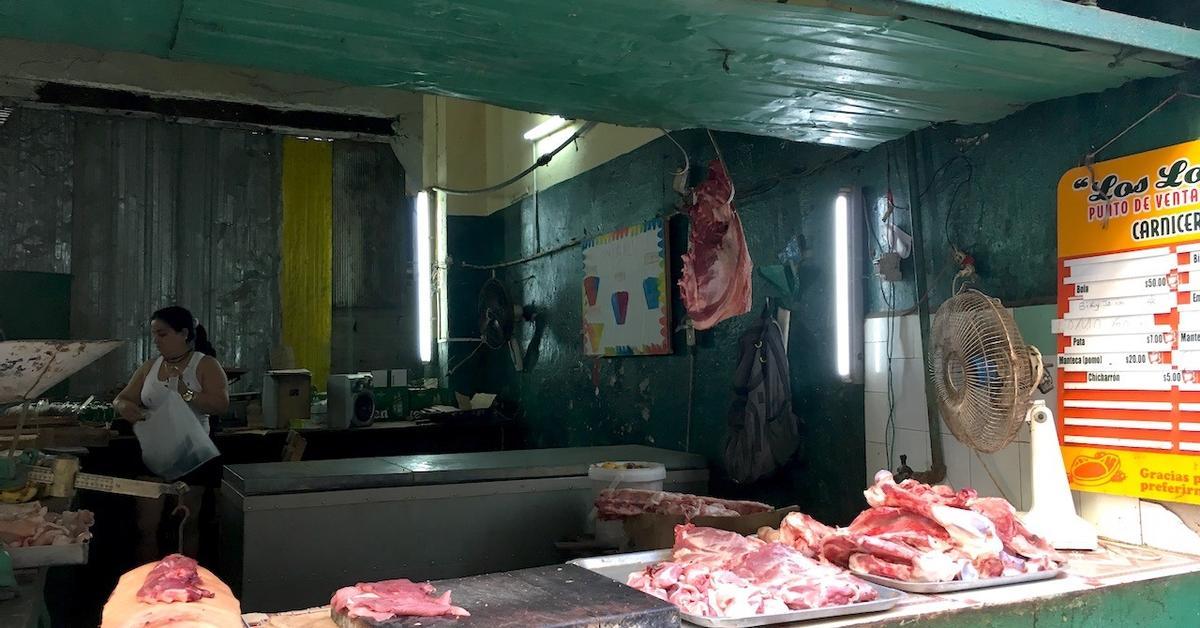
Havana/The food sovereignty and the United States embargo, mantras that the Cuban authorities repeat every day, have been dismantled, even more, so far this year. During the first nine months of 2025, Cuba imported 355 million dollars in agricultural products from the United States, 15% more than what was registered in the same period last year, according to figures from the Department of Agriculture of that country.
One of the products that reported the greatest increase was pork. Between January and September, the Island bought 33.6 million dollars of this input from its northern neighbor, more than double the same period in 2024, the year in which it spent 16.3 million dollars.
The increase in the import of this protein from the United States occurs in the midst of the crisis that the Island is experiencing in that sector. Last year, the country only produced 9,000 tonsalmost half that of two years before, when there were 16,500; and 95.5% less than in 2018, when the sector reached 200,00 tons. The poor numbers, according to the guajiros, are due, in part, to the lack of food for the animals, in addition to the difficulty in obtaining labor.
Sugar, of which the country was once the world’s leading producer, today comes from abroad
The dependence on the United States market touches sensitive fibers of products that, in other times, were Cuba’s flagship. Sugar, of which the country was once the world’s leading producer, today comes from abroad. This year, the Island bought from the United States for 14.9 million dollars, while in 2024 it will disburse 11.1 million.
Traditionally, Cuba consumed 700,000 tons and exported the rest, but with current production, the panorama has changed radically: now it has been forced to import a large part of the sugar it needs for its population and is unable to comply with export contracts. And there is a more serious symptom: since at least 2020, each harvest that takes place on the Island is classified as the worst in the last 100 years.
Coffee imports also grew, another sector that is in decline. The increase in imports was 32% from the United States, going from 8.4 million dollars in 2024 to 11 million in the first nine months of the year. The dependence on American grain is due to production collapsewhich, according to the National Office of Statistics and Information, fell by 51% in the last five years.
As for the little production in the country, it is prioritized for sale abroad, which has left Cubans helpless, since the coffee does not reach the warehouses, it is sold very expensive in the informal market or it is of poor quality if it can be purchased – with a poor mix of coffee and peas in equal parts.
Tobacco also reported a considerable increase in imports from the United States. Cuba bought $355,000 of the leaf, an increase of 83%
Tobacco also reported a considerable increase in imports from the United States. Cuba purchased $355,000 worth of paper, an increase of 83% compared to last year, when $194,000 was spent. This purchase occurs after the country had a historic peak in sales of high-end tobacco – in the international market -, although the demand for cigarettes on the Island is not enough to be covered by national production, as was the case before.
Another item with greater imports from the United States were grains and feed. This year the figure almost quadrupled, going from 6.8 to 23.8 million dollars. This increase is also a record in the last five years, since since 2020 it had fluctuated between 6 and 9 million.
Today, Cuba depends on more than one 80% of imports to cover basic food needs. They arrive in the country rice from Guyana, Vietnam or China, pasta from Türkiye, canned sardines from Venezuela, grains from Portugal, among others.