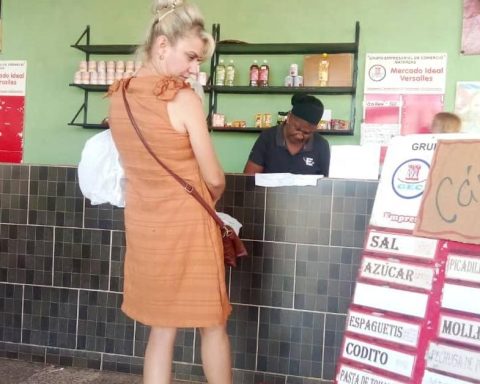
Madrid/A wave of Cubans, discreet and silent, has been arriving in Nicaragua for a year. This time they are not passing through, they are not ready to leave here heading to the United States by land, like those who took the “volcano route”nor to buy to resell on the Island, like the mules that became common since 2019. The toughening of Donald Trump’s measures in his second term, which included shielding the border to not let any irregular migrants through, largely eliminated the Central American country as a “springboard,” but not as a destination.
“My husband who lives in Miami took us out of Cuba last year so that we could be here for the moment, but the way things are now in the United States, we are thinking about him coming here too,” says a Havana resident in Managua with her two children – a boy and a girl –, referring to the uncertainty that her husband faces, with an I-220A permit that could lead to deportation to the Island. if you lose your asylum case.
Nicaragua, he says, “is a poor country, but there are no shortages that there are there, no blackouts, no hours waiting for a bus. In short, those simple things in life that one should take for granted.” The woman says that she did not have any problems obtaining her permanent residence, and that is why she thinks that it may be easier for the family to settle here. Nothing minor, in the case of another authoritarian regime, that of Daniel Ortega and his wife and co-president, Rosario Murillo, who in turn has expelled thousands of its citizens into exile.
There are many compatriots who think like her, although there are no official figures. It is a fact that until 2020 there were only 984 Cubans in Nicaragua, according to data from the UN International Organization for Migration, and that this changed drastically with the elimination of the visa for them by Ortega – in common agreement with Miguel Díaz-Canel to facilitate the emigration of dissidents – in November 2021.
The vast majority of the hundreds of thousands of Cuban nationals who have since passed through the Central American country only used it for transit –almost 300,000 crossed the US border in 2022 – but Trump’s new rules changed the game. As published The Press Last November, in 2025, from January to that month, 32,043 Cubans entered Nicaragua from Honduras in an irregular situation. It does not mean that everyone stayed, but taking into account the difficulty of reaching the United States, the number gives an approximate measure of the volume of the Cuban migratory wave.
Along with Nicaragua, they are also receiving nationals from the Island of Costa Rica and El Salvador, as demonstrated by countless videos posted on social networks. “These publications may cause a pull effect,” says Julia, a Nicaraguan who has made friends with many Cubans. “Everyone is surprised when they arrive in the country. Since it is also a state socialista very friend of the Cuban regime, the logical thing is to think that the living conditions are similar to those there, and they are not.
Along with Nicaragua, they are also receiving nationals from Costa Rica and El Salvador.
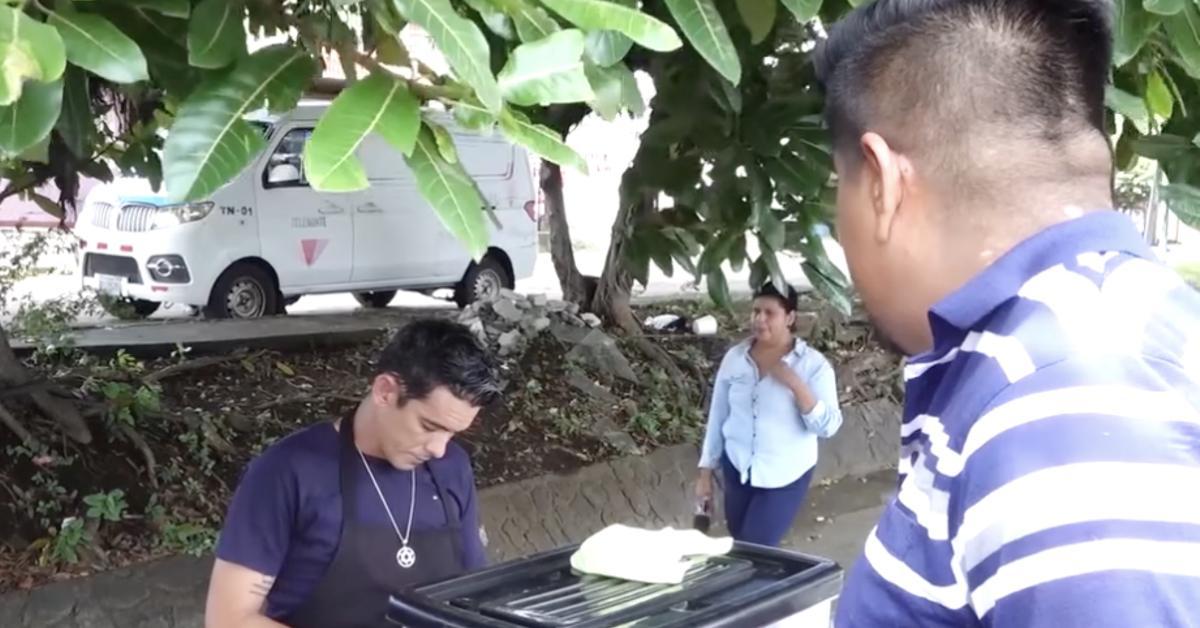
The testimonies on different platforms are counted in dozens. Small restaurants where croquettes, baked pork ribs, Moors and Christians are served without the shortage of fuel or raw materials stopping their operations; young people who sell suckling pig on the street in the hope of eventually having their own establishment; waiters between 18 and 25 years old who “colonize” the premises and serve with enthusiasm and friendliness. “These people are going to go far,” Julia estimates, “because starting from humility they don’t put any buts in life.”
And this, not to mention the most highly qualified personnel. A wide range of the island’s community has come to settle in Nicaragua, from “millionaires who have set up large businesses with all the law, to those who have almost completely colonized Estelí tobacco“, says a knowledgeable source, “even people who come with just enough to survive.”
In Managua, he dares to say, “there is not a single hospital, public or private, that does not have at least one Cuban doctor.”
“That accent is unmistakable and it is everywhere,” says Darío, a Nicaraguan who sympathizes with this unexpected “Trump effect.” They are very recognizable not only by their voice. “Today I met a couple of doctors in the supermarket (they were in uniform) filling two carts as if there were no tomorrow, and they looked like Gulliver and his wife shopping in Lilliput, because they were both very tall and we are a country of hobbits”, he relates with grace.
Darío continues: “Here they are very loved and supported by the people. It is a workforce that is already prepared and that generally has an educational level higher than the national one.” That is the reason, adventure, why, although Managua established earlier this month the end of the visa exemption for Cubansthis one is still free.
“And if it weren’t for the suspension of flights due to lack of fuel, Cubans would continue arriving, despite the new measures, because the truth is that sometimes the witch “It suits them,” he says, alluding to co-president Murillo, “hence the wink of not charging the visa only to them.” In fact, he concludes, “if Cuba is fixed and those who are here return, the blow for many small and medium-sized businessmen is going to be hard.”